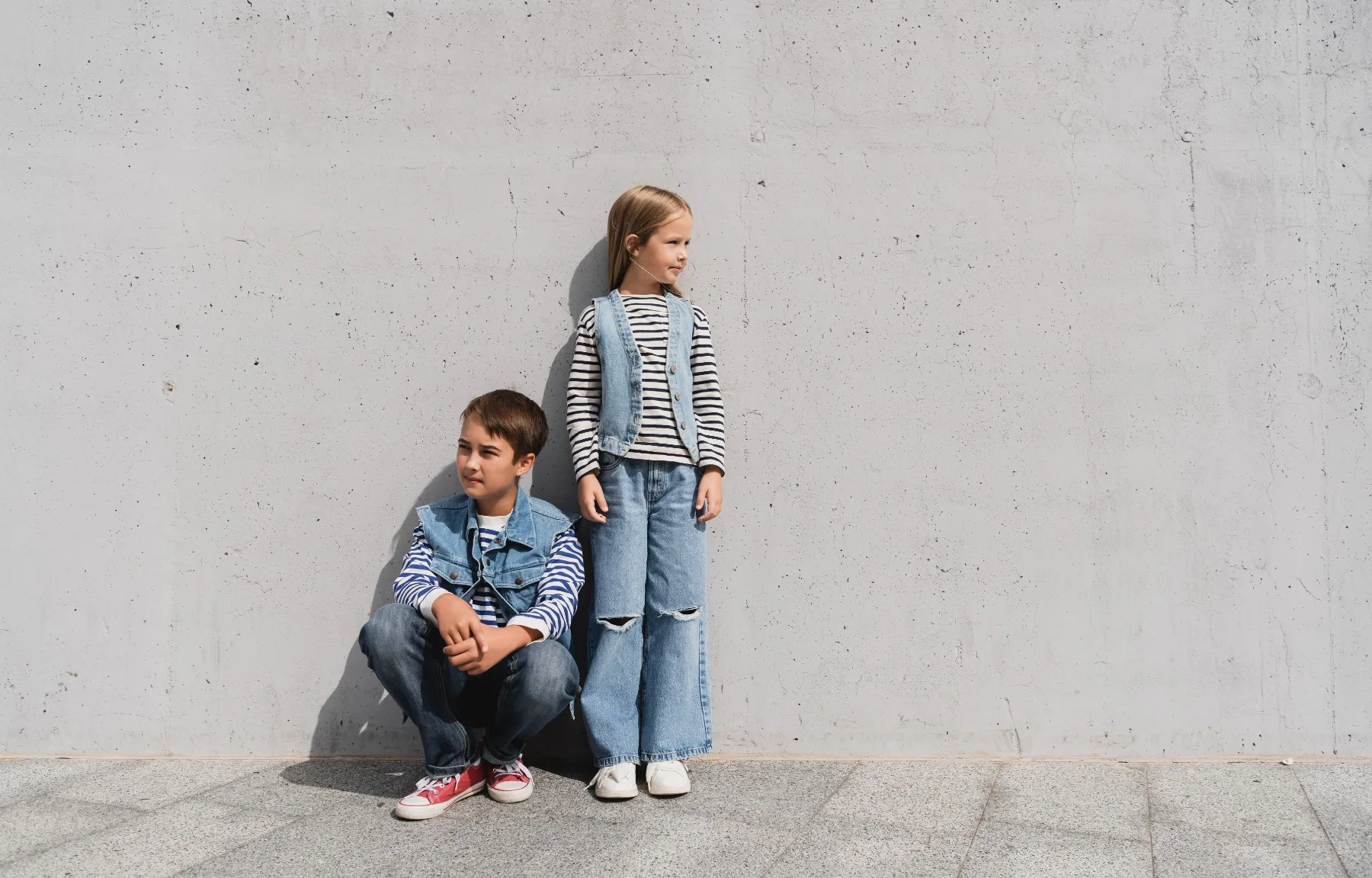
Some kids will wear whatever they’re given, and others have firm opinions by age five; the second group gets called difficult, even though they’re the ones who get dressed without being asked twice.
Those kids need a drawer with enough to get through a week of school and sport, where the pieces already go together, so the outfit they want is still there on a Tuesday when the rest is in the wash.
Getting there depends more on which pieces you choose than how much you spend.
Stick to Three or Four Colors
One child looks put together, and another doesn’t, and most of the time that has nothing to do with what either wardrobe cost and everything to do with whether the colors in it match.
Pick three or four colors your kid chooses on their own, usually a couple of plain ones and one brighter one, then buy inside that range from then on. Navy, gray, olive, and a bright red will get a child through a year without much thought from anybody.
You’ll see the difference on mornings you’re not there to help, because whatever they pull out of the drawer will go together, and nothing sits unworn, waiting for the one shirt it matches.
Shoes Matter Most to Kids
Ask a nine-year-old what somebody wore to school, and you’ll hear about the sneakers long before the jacket.
So let them choose the everyday pair and keep your say in the color, because one pair of sneakers that works with most of the drawer does more than three new tops would, and a pair they chose themselves gets worn until the sole falls off.
For younger children, practicality matters just as much as style. Whether you’re choosing a toddler Air Force 1 or another everyday sneaker, look for a comfortable fit and a design that’s easy for little hands to manage. Wide openings and adjustable straps can make getting dressed much easier, especially as toddlers begin learning to put on their own shoes.
Sports footwear requires a different approach, since the playing surface determines the type of support and grip children need. Cleats are designed for grass fields, while indoor court sports call for flat, non-marking soles with good traction. Add a pair of waterproof boots for rainy days and muddy adventures, and you’ll have a practical footwear collection that covers most of a child’s activities throughout the year.
Let Them Choose What People See
Half the arguments about clothes aren’t about clothes at all, and they tend to stop once a kid gets the decisions everyone else can see.
Color, print, the sneakers, the hoodie, the backpack, and whether the sleeves are pushed up can all be theirs. Fit, fabric, school rules, and whether a coat is warm enough stay with you, because those are the parts a child can’t judge and won’t notice until they’re already standing at the bus stop.
Narrow the options down before they pick, though, because two or three jackets you’re happy to pay for, laid out on the bed, get you a kid who chose their own jacket and a jacket that lasts past January.
What the Drawer Needs to Hold
A wardrobe that works is built around pieces you can mix and match. A dark hoodie, four or five plain T-shirts, a couple of long-sleeve tops, joggers, jeans in a color that works with the shoes, a rain jacket, and one outfit good enough for a birthday party will cover most of the year, and buy that in quantity rather than once over, because school and sport go through clothes faster than anybody plans for.
Then add one or two brighter pieces, a graphic tee, a bright jacket, or the cap they wear everywhere, because one standout piece in an outfit looks planned, while five of them stop looking tidy.
Socks, caps, and bags do more than people give them credit for: a different bag can change the whole outfit for a few dollars, and kids notice that long before the adults around them do.
A Few Checks Before You Pay
Clothes stay good-looking only for as long as they last, and the checks that decide it take almost no time.
Pull the fabric a little to see whether it stretches, look at the seams on the inside, and read the care label, because anything that needs hand washing stops being worn fairly quickly. Dark colors and prints hide a spilled lunch in a way pale ones never do.
Fit matters more than everything else on the label, because anything tight at the waist, itchy at the neck, or needing pulling up all day gets rejected by the second wear, no matter how good it looked in the store.
Clear It Out Every Couple of Months
No wardrobe for a growing kid stays right for long, so the families who find this easy are the ones who keep sorting through it.
Every couple of months, take out what’s outgrown or hasn’t been worn, then ask which three things they’d keep if they could keep only three. The answer will be blunt and accurate, and it will tell you what to buy next.
Sell or pass on the well-known brands while somebody still wants them, then replace what’s gone in the same colors you started with. Everything in the drawer gets worn, the pieces keep working together, and your kid leaves the house looking the way they wanted to.