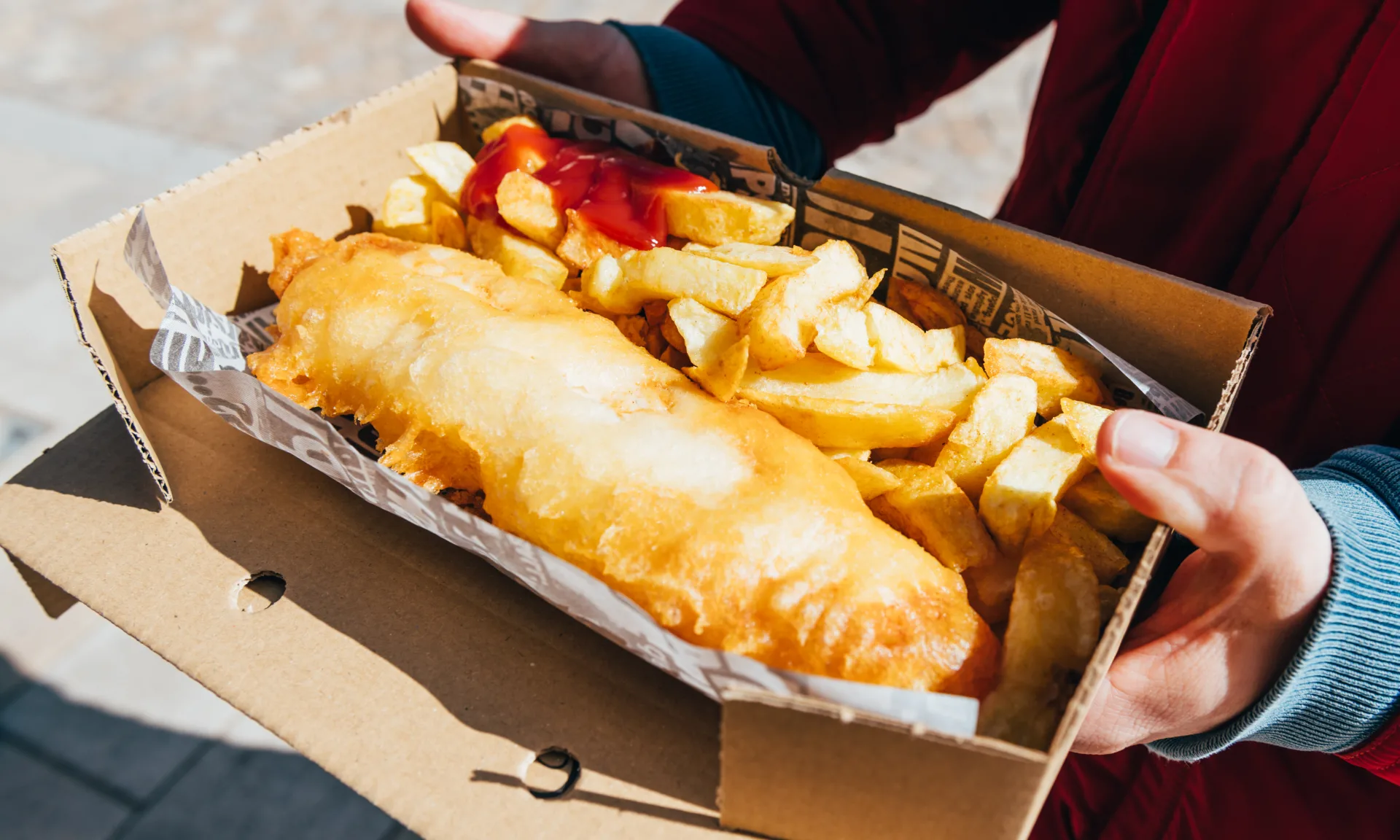
There is a particular masochistic pleasure found in eating fish and chips from a polystyrene tray in the drizzling rain, on the seafront somewhere in Britain. You know the sort with vinegar and dripping fat soaking through the paper, all while seagulls dive-bomb you over head. It used to cost about £8, take thirty seconds to order, and nobody asked if you have any dietary requirements or allergies. That experience is under quite a lot of pressure from spiralling cost of living and an industry that may have ideas above its station.
Chains like Simpsons and Quayside, along with a growing number of independent operators positioning themselves as premium, are now listing provenance on their menus. MSC-certified cod. Line-caught hake from Cornish day boats. Beef-dripping double-fried chips finished in a branded fryer. Craft lager on tap. With prices to match! Anything from £14 to £22 for a standard fish supper in the more self-consciously elevated spots, which is roughly what you’d pay for a decent pub main in London. At the seaside in Suffolk, that stings a bit differently.
The argument for going upmarket is not entirely fuelled by capitalism and ideas of grandeur. British fishing has sustainability problems, and sourcing better fish from traceable stocks costs more. I welcome a more varied menu than simply small or large. I remember my first Aussie chippy experience. It was over the bay in Manley, Sydney. The choice was staggering, it had a better selection on offer than Billingsgate Market. I ended up having Red Snapper with a side of Calamari (What a W-Anchor!). I may have felt like a pretentious prick, but it was yummy. Over here, you’ll be lucky to find anything exotic like snapper, but Whitebait and Sea Bass are starting to show up on menus, even Oysters!
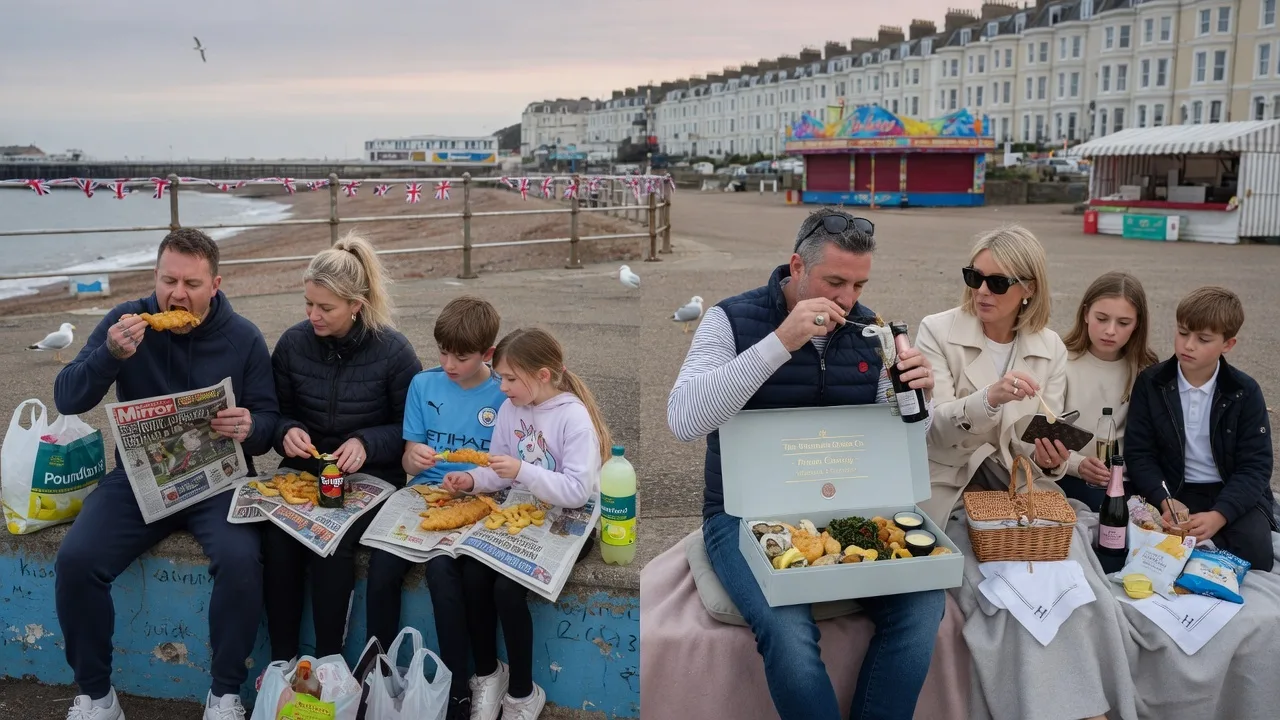
The argument against is that chips shops are one of the last truly classless eating experiences Britain has left, and premium positioning tends to kill that faster than anything Rachel from Accounts could throw at small business cashflow. When the menu has a wine list and the staff describe the batter as “Yorkshire ale-infused,” something has shifted from fish supper into dining occasion, which is a different thing entirely and not always a better one.
The chains feel this tension most acutely. Harry Ramsden’s spent years sliding downmarket before repositioning itself again; the brand has changed hands and format enough times that it’s hard to say what it actually stands for now. Regional chains with loyal local customer bases are smarter about it, keeping a cheap takeaway option alongside the sit-down menu so they don’t price out the people who’ve been coming since 1987.
The real test is whether the upmarket version of fish and chips is replacing the original or sitting alongside it. In most seaside towns right now, you can still find a chippy doing a perfectly good cod and chips with no pretension whatsoever, but it will still not give you change from a tenner. The premium operators are largely picking up tourists and day-trippers who have the same rampant disregard for the cost of things, as a crackhead struggling to find his next fix. I mean they just paid £10 to park their car next to the beach for a couple of hours
So is there space for both? Can battered Oysters served in a cardboard box with a slice of lemon and a sprinkle of flat leaf parsley coexist with good old cod and chips or should the last stand be taken up with chip forks to protect the last truly affordable fast food treat!