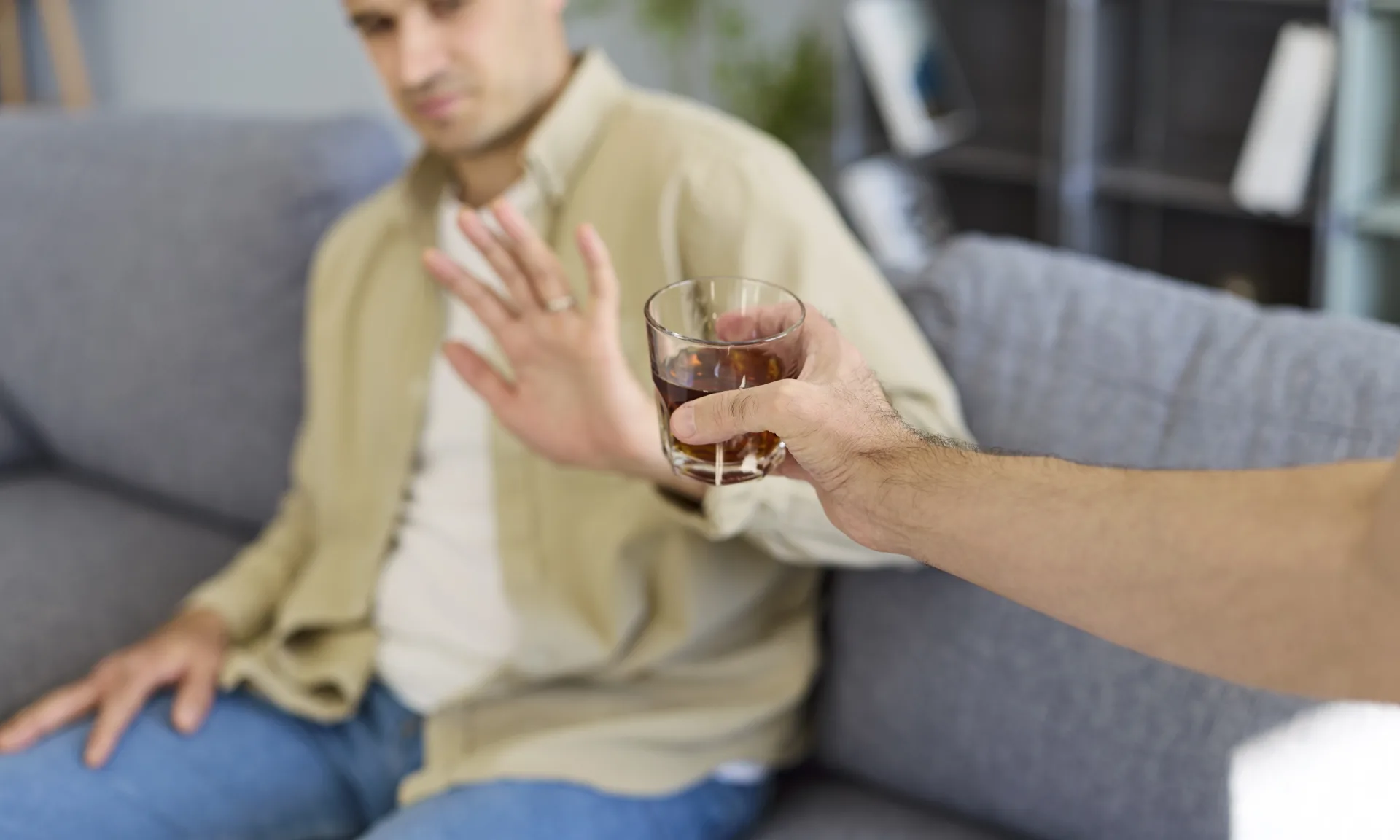
Deciding to get sober can be one of the best decisions of your life. But it can also be one of the hardest, especially if you’ve used alcohol or drugs to cope in the past. This is why having strong coping mechanisms to deal with the difficulties, especially in early recovery, is essential to your success. Keep reading for some helpful tips!
Why Early Recovery Makes Social Pressure so Intense
The brain during early recovery isn’t simply psychological. It’s physiological. Substance use changes the dopamine reward pathways, and the absence of the substance results in the brain needing time to readjust and recover. Neuroplasticity, the brain’s ability to alter neural connectivity, is hard at work during this time. Yet this same principle means the brain is also more acutely and abnormally sensitive to cues and stressors.
When you walk into a room and see alcohol, your nervous system doesn’t simply register the alcohol. It reacts to the alcohol. In socially awkward situations, where cortisol is already elevated, the stress response translates directly into craving in someone whose dopamine system is in recovery. This isn’t a character flaw; it is biology.
Early recovery also happens to be the time when you will, for possibly the first time in years, have your very first sober social experience. The muscle memory of how to engage socially without drink in hand simply isn’t there yet. That discomfort is real, and saying “just power through it” doesn’t help anyone. What would help is providing a framework, within a health care context, for you to deal with it.
The Dual Diagnosis Factor
Many people in recovery experience intense social pressure. This may seem counterintuitive: if you’re going sober and getting clean, shouldn’t others be supportive of that, rather than pressuring you to fall back into old habits? The hard truth is that for a significant portion of people in recovery, social pressure hits harder than it does for others. The reason is often a co-occurring mental health condition, most commonly social anxiety disorder, depression, or trauma from an abusive or invalidating social environment (often in childhood). Co-occurring conditions don’t pause during recovery. In many cases, they become more visible once substances are removed, because the substances were functioning as a coping mechanism.
Social anxiety disorder, for example, creates a particular kind of pain in social settings. The anticipation of being evaluated negatively, the fear of saying something embarrassing or ‘wrong’, the deep sense of not fitting in, these were feelings that were often temporarily numbed by alcohol or other substances. It’s not just that you felt relaxed or euphoric or carefree while drinking, you also felt less like everyone must secretly hate you. When the true function of an addictive substance was to manage unbearable shame or anxiety, the absence of that substance will unfortunately make social events actually feel less safe.
Approximately 9.2 million adults in the United States have a co-occurring mental health disorder and substance use disorder. That’s not a small edge case. It’s a substantial part of the recovery population, and it shapes how social navigation needs to be approached. This is why treating the addiction in isolation often falls short. The anxiety, the depression, the trauma, these are the conditions that made substances feel necessary in social contexts. Specialized clinical programs like Legacy Healing Ohio are built specifically to treat both the substance use and the underlying mental health conditions at the same time, which is the only approach that actually addresses why social situations became dangerous in the first place.
Auditing Your Social Circle
Not everyone in your life poses the same level of risk to your recovery. Part of building a sustainable social life is being honest about who fits where.
Think about your contacts in three categories. The first is people who actively support your sobriety, they don’t push drinks on you, they don’t romanticize your using days, and they’ll check in on how you’re doing. The second is people who are neutral and adaptable, they don’t especially understand recovery, but they’re not actively working against it either. The third is people whose social habits, expectations, or behaviors consistently put you in high-pressure situations.
This isn’t a permanent sorting of people as good or bad. It’s a risk assessment. Some high-risk relationships can shift over time. Some will need distance. The point is to go into any social situation with clear eyes about what kind of support is available in that room, and what isn’t.
One friend or family member in the first category matters more than a room full of the second. Having a sober accountability partner, either present at the event or reachable by text, is one of the most consistently effective tools in early recovery. This is sometimes called the “sober wingman” system: someone who knows what you’re navigating, can read your signals, and is available when a situation starts feeling difficult. That pre-arranged connection can be the difference between a manageable evening and a crisis.
Refusal Scripts That Actually Work
One of the stumbling blocks for people is just not knowing what to say. The advice that you should “just decline” offers of alcohol or drugs is generic, and it doesn’t actually address the social mechanics of why that’s easier said than done. There is pressure in those moments, and having language ready to go before you need it means you’re not also asking your brain to improvise in an increasingly difficult social situation.
The best refusal scripts are low-friction and don’t ask the recipient to then consider whether they can pressure you into changing your mind. In most settings, “I’m driving tonight” is one of the most socially acceptable deflections. It’s concrete, verifiable, and requires no elaboration. The implicit “so no thanks” is also built right in. “I’m on medication that doesn’t mix with it” functions in exactly the same way. It’s concrete, verifiable, and again requires no further information from you, and none about your recovery status either.
If you are in a setting where a more direct response feels appropriate, “I don’t drink anymore” is clean. It’s final, and it’s pretty hard to argue with it or engage with it in bad faith. If somehow that does happen, sometimes a simple, neutral repetition like “No, I’m good” without elaboration works best. A lot of people won’t push any further than that. The ones who do are letting you know what kind of person they are and they’re saving you time.
The Exit Strategy as a Recovery Tool
Leaving early isn’t a sign of weakness. It’s just planning your exit in advance to reduce unnecessary stress and anxiety. It’s a way of taking control of your well-being. When you plan to leave early, it doesn’t mean the event beat you, or that you couldn’t handle it. It means you won. You marked the amount of time you would comfortably spend, and stuck to it.
Ending an event early means you’re successfully managing your time and stress levels. You’re not hostage to an event that’s causing you discomfort. You’re trusting your gut when it tells you it’s time to go. You’re taking care of yourself, before you reach your breaking point.
Most importantly, understand that someone out there thinks you’re the life of the party. There’s no reason to believe that showing up a little late or leaving a little early is a black mark against you. And you’re not burning any bridges by opting out of an after-work gathering, or sneaking out of a wedding reception before the heartfelt final dance. They, as they say, will get over it.
Reframing FOMO in Recovery
Fear of missing out is a real psychological experience, and it becomes particularly loaded in early recovery when there’s already a sense of loss around the lifestyle you’ve left behind. The social events you’re skipping or leaving early can start to feel like evidence that your life is smaller now.
That framing is worth examining directly.
What CBT offers here is cognitive reframing, not pretending the feeling isn’t there, but questioning whether the story attached to it is accurate. The question isn’t “what am I missing?” It’s “what was I actually getting?” Anxiety, impaired judgment, conversations you don’t fully remember, mornings that felt like punishment. That’s the actual inventory of what substances provided in social settings.
The sober curiosity movement, which has grown considerably in recent years, has helped shift cultural norms around non-drinking. There are more people choosing not to drink now than at any point in recent memory, for reasons that have nothing to do with addiction. That shift means less social isolation for people in recovery, and more spaces where sobriety doesn’t require explanation.
Building a New Social Calendar
The best defense against peer pressure in social settings is offense: You must have a separate social life that doesn’t involve substances at all.
That may include peer support groups or recovery communities, but doesn’t have to. The goal is to actively build connections with people who also socialize in environments where the common “glue” is not a drug. The more you invest in such relationships, the more you realize this kind of endeavor is not measured in days or months but years.
Be serious about finding or creating these kinds of social settings. Running groups, art classes, sports leagues, hiking clubs, volunteer work, cooking classes: these aren’t just nice things to do. You’re building connections in a context where the “thing” is not a drug and consequently, the connections tend to be more stable and deep. That’s your real-life pressure valve.
Over time, those become the social foundation, and the high-pressure situations are just occasional circumstances that you’re strong enough to handle.
Recovery is a healthcare process, not a test of moral strength. Social navigation is a skill, one that can be built, practiced, and refined. The neurological sensitivity of early recovery makes these situations genuinely harder, and that deserves an honest, clinical response rather than a motivational one. Go in with a plan, have support in place, and give yourself credit for doing something that takes real work.