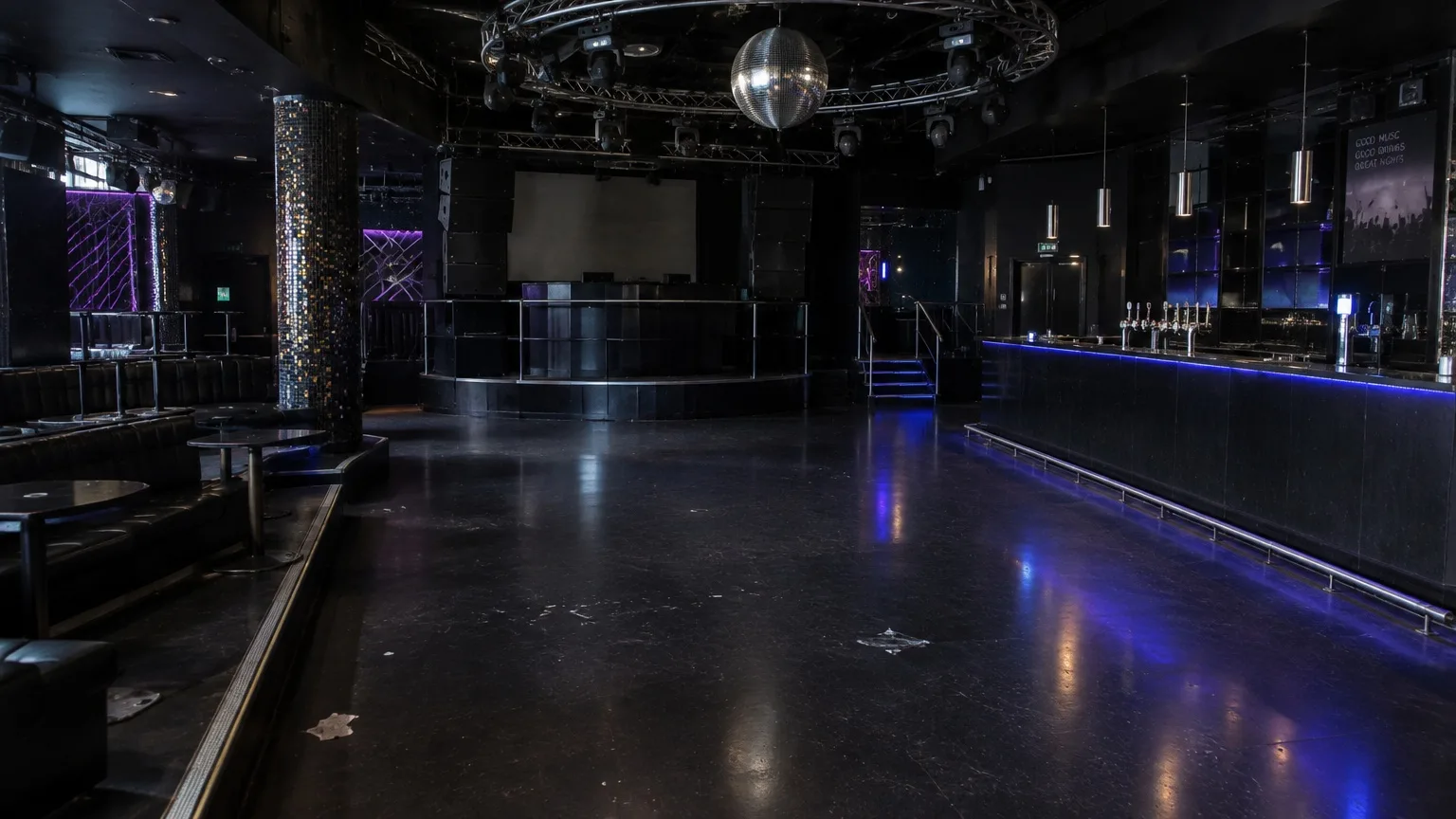
Since March 2020, Britain has lost 448 nightclubs. Not closed temporarily, not rebranded, gone. Nightclub numbers fell from 1,247 to 792 by June 2026, a decline of 36.1% in six years. Across the wider hospitality market over the same period, the decline was 14.4%. The night-time economy, according to figures compiled by the Night Time Industries Association using NielsenIQ/CGA data, has shrunk at almost exactly double the rate of the sector around it. In the first six months of 2026 alone, the tracked night-time economy recorded a net loss of 350 outlets, more than 13 businesses disappearing from the operating stock every week.
That is the collapse. The policy that sits alongside it is harder to explain away.
From 1 April 2026, the government’s Pub and Live Music Venues Relief gave eligible venues a 15% reduction on their daily business rates charge, with bills then frozen in real terms for a further two years. Nightclubs were explicitly excluded. Then, on 23 July 2026, Prime Minister Andy Burnham announced a further 20% cut to business rates for pubs, clubs and live music venues in England from next April, a package expected to benefit nearly 32,000 venues. The word “clubs” appeared in that announcement. Treasury subsequently confirmed it means social clubs and qualifying live music venues. Dedicated nightclubs do not qualify. Skipped once, skipped twice. At that point the word oversight stops being available.
The concrete cost of that exclusion is not abstract. For a nightclub carrying an annual business rates liability of £40,000, the 15% relief would be worth £6,000 a year. A pub next door, with an equivalent or lower bill, receives exactly that. The nightclub receives nothing. The venues closing fastest are being taxed as though they were the venues closing slowest.
The regional picture adds a different kind of weight. Newcastle and Liverpool are only 5.5% below their pre-Covid venue levels, a relative resilience that suggests the problem is not universal. Greater London’s night-time economy is down 15.5%. And a quarter of British towns and cities now have no nightclub at all, according to the NTIA. Not fewer clubs. None.
The NTIA is calling on Chancellor John Healey to correct the exclusion at the Autumn Budget on 28 October 2026. The ask is direct: bring dedicated nightclubs inside the scope of targeted business rates relief. The association’s argument is that the classification doing the damage is arbitrary, that a venue hosting amplified music and charging admission late at night is not a categorically different economic actor from a pub with a live music licence, and should not be treated as one when public money is being distributed to keep venues open.
What the data does not support is the idea that nightclubs are a declining taste that policy is simply following. The sector employs people, anchors late-night economies in city centres, and is vanishing at a rate the government has not seen fit to treat as a crisis. Two rounds of targeted relief, two deliberate exclusions. The Chancellor has a third opportunity on 28 October. The NTIA’s figures make the cost of another no fairly easy to calculate.