Airports have spent years finding increasingly elaborate ways to confirm that you are, in fact, you.
First came the passport. Then the boarding pass. Then the boarding pass on your phone, which inevitably refuses to load just as you reach the front of the queue. Now, in parts of the UK, your face has joined the paperwork.
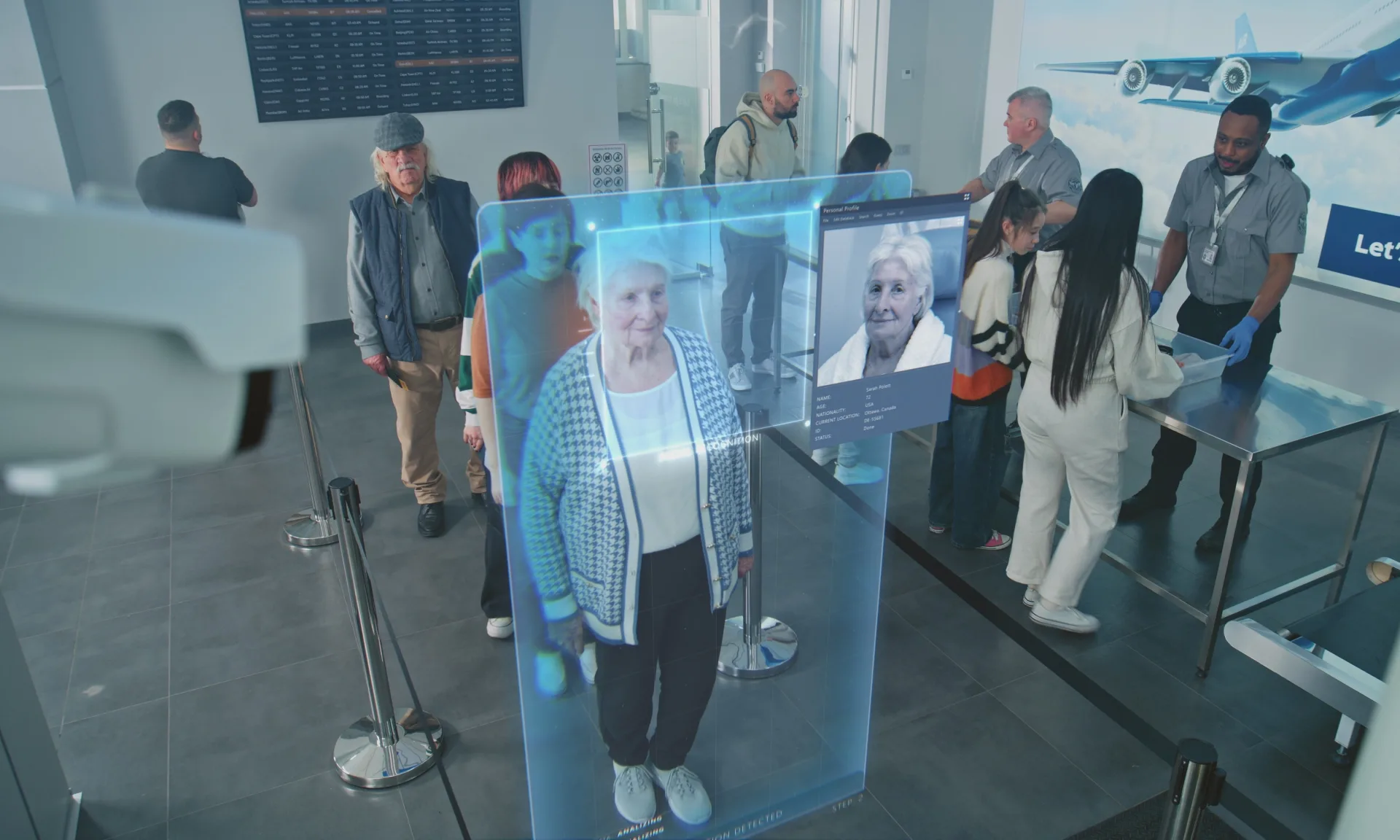
For passengers flying from Heathrow to somewhere else in the UK or the Republic of Ireland, facial scanning is not an optional glimpse of the future. It is already part of getting through departures. A camera captures your image before you enter the lounge and checks that the person travelling matches the identity attached to the journey.
There was no grand announcement when this became mandatory. No minister appeared at Heathrow grinning beside a large novelty camera. The rules emerged properly in 2025, after documents obtained through freedom of information laws revealed that the Home Office had been instructing airports to collect facial images using powers under the Immigration Act 1971.
In other words, the technology did not arrive through a shiny new Facial Recognition Act that everybody could argue about. It was introduced through conditions placed on airports under legislation passed when Edward Heath was prime minister and most luggage still had handles rather than wheels.
The official reason is fairly straightforward.
At airports where domestic and international passengers share departure areas, Border Force wants to prevent someone arriving from abroad from slipping past immigration controls by swapping identities or boarding passes with a domestic traveller. The facial scan creates a record of who entered and left the lounge.
That makes sense as an anti-evasion measure. It is also a compulsory biometric check introduced with so little public attention that most passengers probably assume it is simply another airport machine they are expected to obey.
Take off your hat. Remove your sunglasses. Stand on the footprints. Look into the camera. Try not to appear wanted.
Not All Airport Cameras Are Doing the Same Thing
Part of the confusion is that several different facial recognition systems are arriving at once, all of them involving cameras, passports and the mild suspicion that you have done something wrong.
The familiar passport e-gates compare your face with the photograph stored in your biometric passport. More than 290 of them now operate across UK air and rail ports, and when they behave themselves they can get you through the border quickly.
When they do not, they flash red and send you towards an officer while the people behind you quietly speculate about your criminal history.
The domestic departure checks at Heathrow are slightly different. They verify that the passenger entering the lounge is the person linked to the travel document and boarding information.
Then there is live facial recognition, which is more controversial.
Immigration Enforcement can use cameras at ports to compare people passing through an area against a predetermined watchlist. The Home Office says this is aimed at specific targets, including people suspected of returning to the UK despite a deportation order, those wanted on warrants and people liable to arrest for immigration-related offences.
That is not the same as checking your face against your own passport photo. One confirms a claimed identity. The other searches a crowd for possible matches.
Both involve your face being processed, but the distinction tends to disappear once everything is described as a smooth, frictionless biometric journey.
“Frictionless” is one of those words technology companies use when they would rather not say “unavoidable”.
But Does It Actually Work?
Facial recognition technology has had a grubby history when it comes to accuracy.
Older systems were repeatedly shown to perform less reliably with certain demographic groups, particularly darker-skinned people and women. Ageing, poor lighting, camera angles and low-quality images can also make a difference. Identical twins remain unhelpfully identical.
The technology has improved substantially, and recent government testing has reported very high accuracy under controlled conditions. That does not make every camera infallible, nor does it mean every system behaves equally well in a crowded airport at six in the morning.
There is also a difference between getting your identity wrong and briefly failing to recognise you.
An e-gate rejecting your face is annoying. A live recognition system incorrectly suggesting that you resemble someone on a watchlist has rather more serious potential consequences.
The Home Office says safeguards are in place and that human officers make decisions rather than blindly accepting the software’s verdict. That is reassuring, although “a person checks what the machine says” is not quite the same as the machine never getting it wrong.
The Passport Is Not Dead Yet
Despite the steady march towards facial travel, you should still carry your passport.
The UK’s Electronic Travel Authorisation scheme does not change that. Eligible visitors from visa-free countries must obtain digital permission before travelling to the UK, currently costing £20 and generally lasting for two years or until the linked passport expires.
The application includes identity information and a facial image, but the ETA is attached to the traveller’s passport. It is not a replacement for it.
So while the long-term ambition may be an airport where passengers simply stroll through and allow cameras to recognise them, we are not there yet. For now, the future still requires you to rummage through your bag because you cannot remember which pocket contains your passport.
Border Force has been quite open about where it wants to end up. Its director general said in 2024 that the eventual goal was a system where travellers would need only their biometric identity rather than repeatedly showing a physical document.
For airports, the appeal is obvious. Facial recognition could reduce queues, speed up checks and make it harder for people to travel using somebody else’s identity.
For travellers, it might mean fewer documents to present and less time trapped behind a family who appear to have discovered passports for the first time at the boarding gate.
The concern is what happens once the infrastructure is everywhere.
A biometric system introduced to stop immigration evasion can later be adapted for policing, security, ticketing or general passenger tracking. Each expansion may have a sensible explanation of its own. Collectively, they create a border environment in which being continuously identified becomes normal.
That does not automatically make the technology sinister. It does mean the public deserves a clearer conversation about where the limits are.
At the moment, the arrangement is largely one-sided. The airport knows who you are, the camera knows who you are, Border Force knows when you entered the lounge, and you know only that the gate will not open until you look directly ahead.
So smile.
You are not necessarily being photographed, exactly.
You are being processed.