There is a particular kind of clarity that comes with facing a life-threatening situation. It’s not a situation many of us have to reflect on, but as more people venture out into the wilds with the confidence gained from a TikTok reel or inspiring YouTube video, these incidents are becoming more common, and sadly more people are finding themselves underprepared.
I’ve put myself in plenty of life-threatening situations over the years, and after a few close calls, I became much better at planning and preparation. But there will always moments that catch you off guard or a chain of unfortunate events that take you off plan and into unknown territory.
For me, one life threatening event stands out. It was back in the day, when I thought squeezing through tiny gaps in rock, deep underground was a fun way to spend the weekend! This particular weekend took me to the caving mecca that is Ingleton in North Yorkshire.
We were a group of 5 experienced cavers, so we were far from heading into the unknown. But when the water started rising in the Great Douk cave system on the western flank of Ingleborough, things got a little bit sketchy. We were in a 900-metre stream passage that was filling with water faster than it should have been. We were also very hungover, which is where things started to fall apart.
The previous day had been brilliant. A proper trip into Gaping Gill, the vast collapsed cavern on the slopes of Ingleborough where the Fell Beck plunges 100 metres into a chamber big enough to engulf St Paul’s Cathedral.
A serious outing, well planned out, with a group who knew what they were doing. We emerged satisfied and buzzing from the excitement and as all good caving outings tend to end up ending up, we found ourselves at the bar of the Marton Arms, which in those days had a whisky selection that deserved a lot more respect than we gave it that night. We attempted to work our way across the shelf of single malts and to be fair we did a pretty decent job of it. But that was where the events of the next day started to unfold.
By morning, the group consensus was that we’d had enough excitement, and with our jaded heads, a nice gentle outing was needed. Great Douk was the obvious choice: a beginner’s cave, a gentle stream passage, straightforward. Perfect for a recovery day.
What we didn’t do, was stop at Bernie’s Cafe for breakfast. Bernie’s is the kind of place where cavers gather in the morning, compare notes, and pick up on whatever’s being talked about. What was being talked about that morning, had we gone in, were the flash flood warnings. The limestone of the Yorkshire Dales drains fast. Rain falling on the fells several miles away can reach cave stream passages in under an hour. We went into the cave without knowing any of the weather predictions.


The experience that followed was thankfully not a disaster. We got out. We were experienced enough to make good decisions quickly under pressure, and we were lucky with the timing. But there was a window of perhaps twenty minutes where the outcome could have gone the other way. That wasn’t the sort of cave disaster film I want made of my life (or peril). We felt very grateful to escape any serious harm, but were very mindful that we had made some piss-poor decisions that had led us blindly into to this situation.
That is the thing about outdoor incidents. They are rarely caused by a single bad decision. They are a culmination of small ones, each of which seems insignificant in isolation, until you add them all together. Our tale of misfortune (or misadventure) is not unique, the stats are getting hard to ignore!
Mountain Rescue England and Wales recorded 3,842 callouts across England and Wales in 2024, a 24 per cent increase on 2019 figures. It was the first year in the organisation’s history with a callout on every single day of the year. In Scotland, mountain rescue teams handled 636 incidents across 1,000 call-outs, including multiple simultaneous operations. Llanberis Mountain Rescue Team, covering the Snowdon massif, is now the busiest team in the UK and regularly deals with several callouts in a day.
Teams across the Lake District and Snowdonia are, in the words of one spokesman from the Lake District organisation, dangerously close to a breaking point. These are unpaid volunteers. They leave their jobs, their families, their evenings and their weekends to go out in the dark and the cold and find people who need help. The BMC has noted that some teams are handling more calls than professional fire and rescue services receive, with no equivalent public funding.
The MREW annual review lists the causes of callouts in order: human error, weather, inexperience, unfamiliarity with the activity, tired or unfit participants, poor visibility. What that list amounts to is mostly this: people who were not adequately prepared for what they had taken on, in conditions they had not properly accounted for.
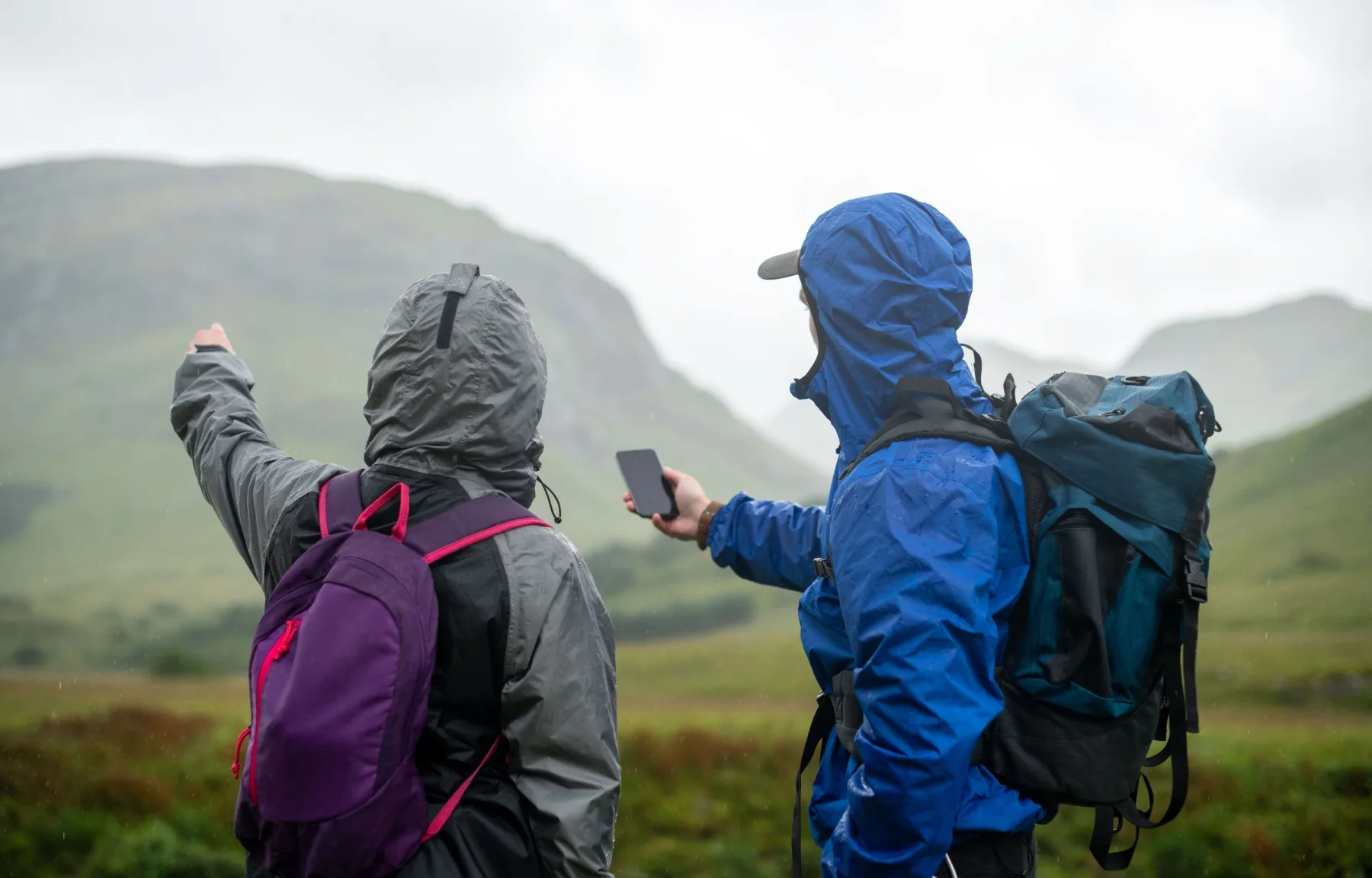
For the first time in 2024, 18 to 24 year olds became the most-rescued demographic. Mountain Rescue England and Wales and Ordnance Survey, who jointly published the data, attributed the shift to social media and the growing use of navigation apps as primary tools in terrain that demands much more than a screen can offer. A route that looks achievable in a 30-second reel looks the same whether conditions are safe or lethal. The map does not show you what February frost does to a knife-edge ridge.

All the gear and no idea!
Better equipment has not produced better judgement. That is the uncomfortable reality behind almost every preventable rescue.
A GPS device may tell you where you are. It does not tell you that the ridgeline ahead is about to disappear into cloud and that visibility will drop to nothing in ten minutes and in many cases it won’t tell you how steep that ridgeline is in reality.
A lightweight waterproof jacket keeps the rain off, but it won’t warm you up when your energy has run out at and you still have a long way to go.
A walk review on Instagram tells you something about what you’re getting into providing it’s also a clear day in sunny conditions when you go out (Low odds of that in most of the UK’s hilly bits). The same trail after a week of rain with darkness closing in and a tired walker a few hundred metres behind the rest of the group, and the Insta’reality is long forgotten.
That last detail appears consistently in Lake District mountain rescue data. One of the most common themes in avoidable callouts is groups separating, with less experienced members trailing further and further back. People lacking the equipment or knowledge to manage what they have taken on.
The peak time for rescues across England and Wales is mid-afternoon, catching 78 per cent of all callouts. That is the descent window, when energy is lowest, concentration has drifted, and daylight is thinning.
The same pattern holds abroad, at greater cost. The mountain rescue infrastructure of the UK, overstretched as it is, exists because people built it. In the Alps and Pyrenees, helicopter rescue is typically charged for. In the Atlas Mountains, Patagonia, New Zealand’s Southern Alps, or the backcountry of Iceland, there may be no rescue service at all within a useful timeframe. An ankle injury in Snowdonia could mean an uncomfortable stretcher carry and a night in A&E. The same injury in a remote valley in Morocco could mean you are not coming home.


By the time you finish reading this section. You would have lost most of your blood supply if you were suffering an Arterial bleed!
Injuries are generally bad, we all know that. But do you know what specific injuries do? how fast, and what can be done about them before help arrives? This matters more than almost anything else in remote terrain, because help may be an hour away or several hours away, and the difference between a survivable situation and a fatal one is often what happens in the first ten minutes.
Arterial bleeding will kill you fast. The femoral artery runs through the inner thigh and is the one most likely to be damaged in a fall or a cycling accident involving a sharp impact. A severed femoral artery can cause fatal blood loss in three to five minutes. The body holds roughly five litres of blood. Lose a litre and a half to two litres and the body goes into haemorrhagic shock. The bleeding is bright red and pulsing with the heartbeat. Apply pressure, or stick something in to stop the bleeding, if it’s on limb then a tourniquet applied correctly, above the wound, tightened until the bleeding stops, will save a life and not necessary sacrifice that limb.
A broken femur can bleed internally without any visible wound. The thigh absorbs one to two litres of blood into the surrounding tissue as the bone bleeds into it. The person may look stable and then go downhill fast as the blood loss builds. Severe pain, inability to weight-bear, swelling or deformity in the thigh, pale and clammy skin. In the field, immobilise the leg, keep them warm, call for rescue immediately and do not wait to see if it gets worse. It will.
Broken arms and wrists are more common in cycling and scrambling incidents. They look less dramatic but they carry complications. A fracture near the elbow or wrist can cut off circulation below the break. After immobilising the limb, check that the person can still feel their fingers and that there is a pulse at the wrist. Loss of either is a second emergency on top of the first.
Hypothermia catches people out because the early stages look like tiredness and mild confusion. Below 35 degrees core temperature, you are clinically hypothermic. Shivering, poor coordination and difficulty thinking clearly come first. Below 32 degrees, the shivering often stops, which can be mistaken for recovery. It is the opposite.
A person who has stopped shivering and seems calm may be dying. Get wet clothing off where you can, insulate from the ground and the wind, and generate heat. Get them inside a bivvy bag alongside warm bodies if that is what it takes. Keep doing it until professional help arrives or the situation improves.


What actually helps?
This isn’t intended to put you off that adventure. Pushing yourself into unknown territory, or going beyond your perceived fitness level or capability. Far from it, this will hopefully make you realise that even if 70% of the time you could just jump in the car, pick a big hill, and head up it with very little preparation and be fine. You could do it in crocs too if you really wanted to.
The point is, unless you are prepared for the other 30% potential for drama, it could bite you on the arse in ways that you may struggle to deal with. So don’t just wing it, get your shit together and prepare for the worst. Here are some sensible things to consider –

Essential Kit
The emergency bivvy and the space blanket do different things and it’s useful to know the difference. A space blanket is a thin reflective sheet that bounces radiated body heat back towards the person and gives basic wind protection. Useful for keeping an injured person insulated while you wait for help.
An emergency bivvy is a waterproof bag that you climb inside, giving windproof, waterproof and thermal coverage all at once. In wind and rain, a bivvy bag does far more than a blanket. Both weigh an insignificant amount in a bag full of snacks.
A head torch with fresh batteries is not a nice-to-have. The majority of mountain rescues happen after midday, peaking mid-afternoon. Carrying no light is fine until that wrong turn, weather deterioration or an injury. Some head torches are tiny and kick out a serious amount of light when needed.
Emergency food carried in reserve rather than eaten at lunch gives you that energy if your day extends by three or four hours, as days in the hills sometimes do, you have something to keep functioning, and those aching legs moving in the right direction. A few hundred grams of something full of calories will do the job nicely!
Learn some first aid
A standard workplace first aid qualification covers almost nothing useful for a remote outdoor incident (some might say for any incident…). I know this because I’ve sat through plenty of them. CPR on a rubber dummy in a conference room, a laminated checklist, a certificate to show you turned up. None of it prepared me for what happened when I arrived at Glenmore Lodge in the Cairngorms, running on almost no sleep after stepping off a plane, and was thrown straight into a scenario involving a casualty trapped under a vehicle with major trauma injuries. That was the start of what was going to be a fairly intense few hours.
The course was Sandstone Communications’ “Save a Life” programme, run in partnership with Vango as part of the outdoor brand’s 60th anniversary and a display of its commitment to safety beyond their iconic outdoor product catalogue. Apart from some bright orange umbrellas, the Vango presence was pretty low-key.
The same couldn’t be said of Sandstone’s trainers, Mike Hope and Tim Bradshaw. These boys come from military, security and emergency services backgrounds, and they’re all about making a big impression. Their presence isn’t the traditional squaddie bravado, it’s actually part of the training. They teach a system for prioritising action when everything around you is loud and confusing and your hands are shaking. There are no PowerPoint slides. There’s very little classroom learning. It’s very scenario-based, physical, and built around the kind of pressure that makes the theory really stick.

Tim Bradshaw & Mike Hope from Sandstone Training *

Getting to grips with a Tourniquet *
The day built from that opening shock into progressively more complex scenarios, all outdoors, all physical, culminating in a full multi-casualty crisis in the snowy hills above Glenmore with chaos engineered around the group to replicate the disorientation of a real incident. It is the most effective first aid training I have ever done. It changed how I think about training itself, and it changed how I think about what first aid actually means when someone is bleeding and you are the only person there. I walked away confident that if I found myself in that situation, I could help.
Sandstone run their courses across the UK for groups and individuals. They also produce a range of first aid kits, including the “Save a Life” kit that mirrors the philosophy of the course itself. I was given one at the event and have carried it in my car boot since. Where most first aid kits try to cover everything and end up full of things you never reach for, this one is designed around the same principle that Mike and Tim drill into you on the day: strip out the noise, focus on what actually matters in a serious incident, and make it simple enough that you can act under pressure without hesitation.

I may appear to be standing around looking like a spare part, but I was offering critical emotional support to the poor fella under the truck. My sympathy did diminish for him the 2nd and 3rd time he got run over that day. *

Give me Scottish sleet and a bright orange Vango brolly for a classroom over any stinky village hall or community centre! *

I’ll give this lad his dues, he’s maybe accident-prone, but he’s a resilient little bugger. Even I couldn’t kill him off with my novice CPR technique. *

Shame the same couldn’t be said of Tim. One shandy at lunch time and he was on his arse. I have to say I expected more of someone who’d scaled Everest, trained spies and survived a bike crash during the Dakar Rally. *
The trauma training didn’t stop with Sandstone, we were really lucky to spend some time with the safety team on Cairngorm Mountain. Who gave us an insight into the types of injuries they deal with all too frequently up on the slopes. The team give us a great demonstration of the types of injuries, and some of the specialist equipment they use to secure and transport people with ski related injuries. https://www.cairngormmountain.co.uk/

If you’re going to break your fibula anywhere, then I’d do it at Cairngorm Mountain, these guys will look after you! *

The Cairngorm Mountain safety team putting us through our paces. *
If a full course is more commitment than you are prepared for, the Mountain Training AdventureSmart initiative provides free guidance on trip planning, emergency procedures, and self-rescue principles. It is not a substitute for training, but it beats going in totally unprepared.
I don’t need a map, I’ve got an iphone!
With all the tech in your pocket, it’s easy to think that a paper map is surplus to requirements. But in reality, a mobile phone with GPS on and frequent screen viewing, will drain its battery before you get back to the car. So it’s important to take a map and have some idea of how to use it. For serious hill action you need to be considering The Explorer (orange cover, 1:25,000 scale) as it shows contour lines at five-metre intervals, displays all rights of way and footpaths, and provides the detail needed to locate yourself precisely when things are not going to plan. The Landranger (pink cover, 1:50,000) covers more ground per sheet and is great for planning, but won’t give you the detail you need out in the thick of it.
Both are available in Active versions with a waterproof laminate coating. It is worth the extra cost, as they can put up with much more abuse (even if they do take some effort to fold up the first time). Both map series can be downloaded to the OS Maps app for offline use, which is a bonus and will avoid the temptation of trying to work out where you are with Google maps.
Map-reading is a skill that can be learned in a couple of hours, it’s not complicated. A navigation course run by any qualified mountain leader is the best investment most walkers will make in a year. Knowing your grid reference, and being able to give it accurately to rescue services, has saved lives.
Emergency communications
A smartphone is useful. It is not a communication plan in remote terrain. Cold drains batteries. Touchscreens become unresponsive in rain and gloves. Signal in remote areas is unreliable. I had no phone signal the moment I hiked out into the Scottish Mamore’s a while back. I had a pretty poor signal in Fort William too.
A PLB (Personal Locator Beacon) is a single-purpose emergency device that, when activated, transmits your GPS coordinates via a satellite network to emergency services, worldwide, regardless of mobile signal, without any subscription, and without complexity. Devices such as the Ocean Signal rescueME PLB1 are available for around £140-£170, have battery lives measured in years, requires registration once, and weigh under 90 grams. They don’t get you on TikTok, but they can summon a rescue from anywhere on earth.
Garmin’s inReach range adds two-way satellite messaging, so you can communicate with rescue services to describe your situation or update your location. The inReach Mini 2 retails at around £330-£350 and requires a monthly subscription. If you are going regularly into remote terrain, especially abroad, it earns its keep. Spot Gen 4 is a similar device which can send out a message, beam your location or send an sos, with a fairly cheap subscription, it’s an attractive proposition compared to the others.
These might seem like extravagant purchases for a summer hike in Snowdonia, and it probably is unless money is no object to you. But for any more ambitious treks it’s a literal lifesaver and that’s priceless.
February 2026 on the Snowdon Horseshoe
I contemplated leaving this section out, but I think it’s possibly the strongest way to really hammer home how serious things can get. In February this year, Eddie Hill, aged 20, and Jayden Long, aged 19, both from Dereham in Norfolk, set out to walk the Snowdon Horseshoe. Concerns were raised for their safety on the afternoon of 18 February. Llanberis Mountain Rescue Team, with support from Aberglaslyn Mountain Rescue, the RAF Mountain Rescue Service and HM Coastguard, searched through the night in full winter conditions, snow and ice, across some of the most demanding terrain in Wales. The following morning, both men were found dead on Crib y Ddysgl, the knife-edge ridge at 1,065 metres between Crib Goch and the Snowdon summit. The route is described by Eryri National Park as not suitable for inexperienced mountaineers or in wet and windy weather, with the warning that accidents are common.
Their families paid tribute to them as kind, caring and full of plans for the future. An online appeal raised more than £17,000 for the Llanberis team that spent the night looking for them. You can support the team here.
I intentionally left this until the end, as it’s far from a story about recklessness or poor preparation. It’s inevitably a story (much like my cave crisis) about a chain of decisions that seemed reasonable at each step, in conditions that are potentially volatile and unforgiving. These lads didn’t set out to die that day in February, they set out on an epic adventure doing something they loved to do. I prefer to imagine their joy to be out in the elements living life to the full, rather than dwell too long on their young lives cut so short. So to reflect. Don’t think for one minute, experience or youthful resilience are any kind of protection from mother nature when she takes a swing at you. Prepare for the worst, and be grateful when it doesn’t turn up. RIP Eddie and Jayden

Crib Goch, is still quite a challenging route when the ice has melted.
Vango
Vango has been making outdoor gear in Scotland since 1966, when it was founded in Govan on the Clyde. The name is an anagram of the neighbourhood. Sixty years on, the company is still headquartered in Port Glasgow and still builds kit for everyone from DofE groups to expedition mountaineers.
Their product range covers a vast array of tents, sleeping bags, rucksacks, storm shelters and camping accessories. In 2026, Vango partnered with Glenmore Lodge (Scotland’s National Outdoor Training Centre) and Sandstone Communications to put safety education at the centre of their 60th anniversary programme, including the Save a Life course and kit partnership covered in this article. They also supply kit to the Duke of Edinburgh’s Award scheme and disaster relief charity ShelterBox.
Glenmore Lodge
Glenmore Lodge is Scotland’s National Outdoor Training Centre, run by sportscotland and based at the foot of Cairn Gorm in the heart of the Cairngorms National Park. It has been operating for over 70 years, delivering courses in mountaineering, climbing, paddle sports, mountain biking, backcountry skiing, and avalanche awareness.
The Lodge runs everything from personal skills courses for beginners through to instructor and mountain leader qualifications to national governing body standard. It was the base for the Vango and Sandstone “Save a Life” training covered in this article. The accommodation, food and bar are a cut above what you’d expect from a training centre, and the location, with Loch Morlich and the northern corries of Cairn Gorm on the doorstep, is hard to beat anywhere in the UK.
It’s not exclusively just for training, their excellent accomodation is also available to independent guests via their listings on Airbnb.
* Image credits: Robbie McDonald @ Vango
Sandstone Training
Sandstone Communications is a training company specialising in first aid, leadership and resilience, founded and run by people with military, security and emergency services backgrounds. Their chief instructor Mike Hope is a former mountain rescue team leader. Tim Bradshaw, head of operations, is a former intelligence officer and all round adventure seeker. Sandstone are a professional partner of the ATACC Group and their courses are approved by the Chartered Institute of Logistics and Transport. They run Emergency First Aid at Work (1 day), First Aid at Work (3 day), Save a Life (half day), and continuous professional development courses. They deliver training across the UK at client locations and partner venues, with a focus on scenario-based learning in real environments rather than classroom PowerPoint sessions. Sandstone also run the Sandstone Foundation, a SCIO that works with schools and young people on STEM, resilience and expedition skills.
I’m not one to endorse training companies very often, but if you want to build confidence and proper practical skills, then Sandstone should be on the list to speak to. I’ve done more First Aid training than I thought I would ever do, and this is the only one which I’d do again by choice!
Cairngorm Mountain
Cairn Gorm (1,245m / 4,085ft) is the sixth highest mountain in the British Isles and the peak that gives its name to the Cairngorms, the highest mountain massif in the country. The Cairngorms National Park covers 1,748 square miles of the Scottish Highlands and contains 55 of Scotland’s 282 Munros, including four of the five highest peaks in the UK.
The mountain has been a ski resort since the 1960s. Scotland’s only funicular railway runs 2km up Coire Cas to the Ptarmigan Top Station at 1,097 metres, where the UK’s highest restaurant and bar serves views across Strathspey and, on clear days, all the way to Ben Nevis. A condition of its construction was a visitor management plan to protect the arctic-alpine plateau above, so funicular passengers cannot walk out onto the mountain unless booked onto a guided walk or, as of March 2026, holding a ski touring uplift pass when conditions allow.
In summer the mountain becomes a year-round destination. The Cairngorm Bike Park, opened in 2023, spans over 3km across nine flow trails graded green through red, with two conveyor belt uplifts repurposed from the ski operation. MBR Magazine named it one of the six most important UK trail developments in 2024. Commencal hire bikes are available on site, from balance bikes through to adult e-bikes. Tubing slides, an adventure play park, wooden ball runs, guided walks into the Northern Corries. The mountain also hosts live music events at the Ptarmigan, making it the UK’s highest music venue.
Above the ski area the terrain is exposed arctic plateau. Conditions change fast and the weather at the top station bears little resemblance to what you left in the car park. It is one of the windiest places in Britain.

Vango Storm Shelter (from £39.99). Orange emergency group shelter with reflective roof strips for rescue visibility. Available in 200, 400 and 800 sizes. A UL (ultralight) version is also available for smaller packs.

Sandstone Save a Life Kit. Compact trauma kit designed to pair with the Save a Life course. Includes the items you actually need in a serious incident, nothing you don’t.

Spot Gen 4 (around £125). Low cost satellite messenger. Tracking, check in’s and SOS alerting. This unit does require a service plan, but can be on a ad-hoc basis so pretty cost efficient.

Garmin inReach Mini 3 – (around £330-£350 plus monthly subscription). Two-way satellite messenger with GPS tracking, SOS function and the ability to text rescue services or contacts from anywhere on earth. Their Fenix E/8 watch also has inReach built in, although I’m not sure what the battery life is like in comparison to a stand-alone device.

Ordnance Survey Explorer Maps (1:25,000 scale, orange cover). The standard for serious hill navigation. Available in waterproof Active editions. Downloadable to the OS Maps app for offline use.