Image credit: RuslanKphoto / Shutterstock.com
Budapest has some of the best thermal baths in Europe, and a couple of them have doubled as meeting spots for gay and bisexual men for generations. This is not a secret, not a scandal, and it did not start with a travel blog. It is part of how the city’s bath culture has always worked. Walk into one of the men-only sessions without knowing the context and you will be, at worst, mildly confused.
The thing to get right first is which baths and which hours, because two of the names that used to come up are currently out of action. Király, the oldest and most storied of them, the 16th-century Ottoman bath that carried the strongest gay reputation of any in the city, has been closed since 2020 with no sign of reopening, snagged on a funding dispute rather than the building work. You can take a clothed guided tour. You cannot bathe there. Gellért, the Art Nouveau one everyone photographs, shut in October 2025 for a renovation that runs to 2028. Any guide still sending you to either for a soak is describing a memory.
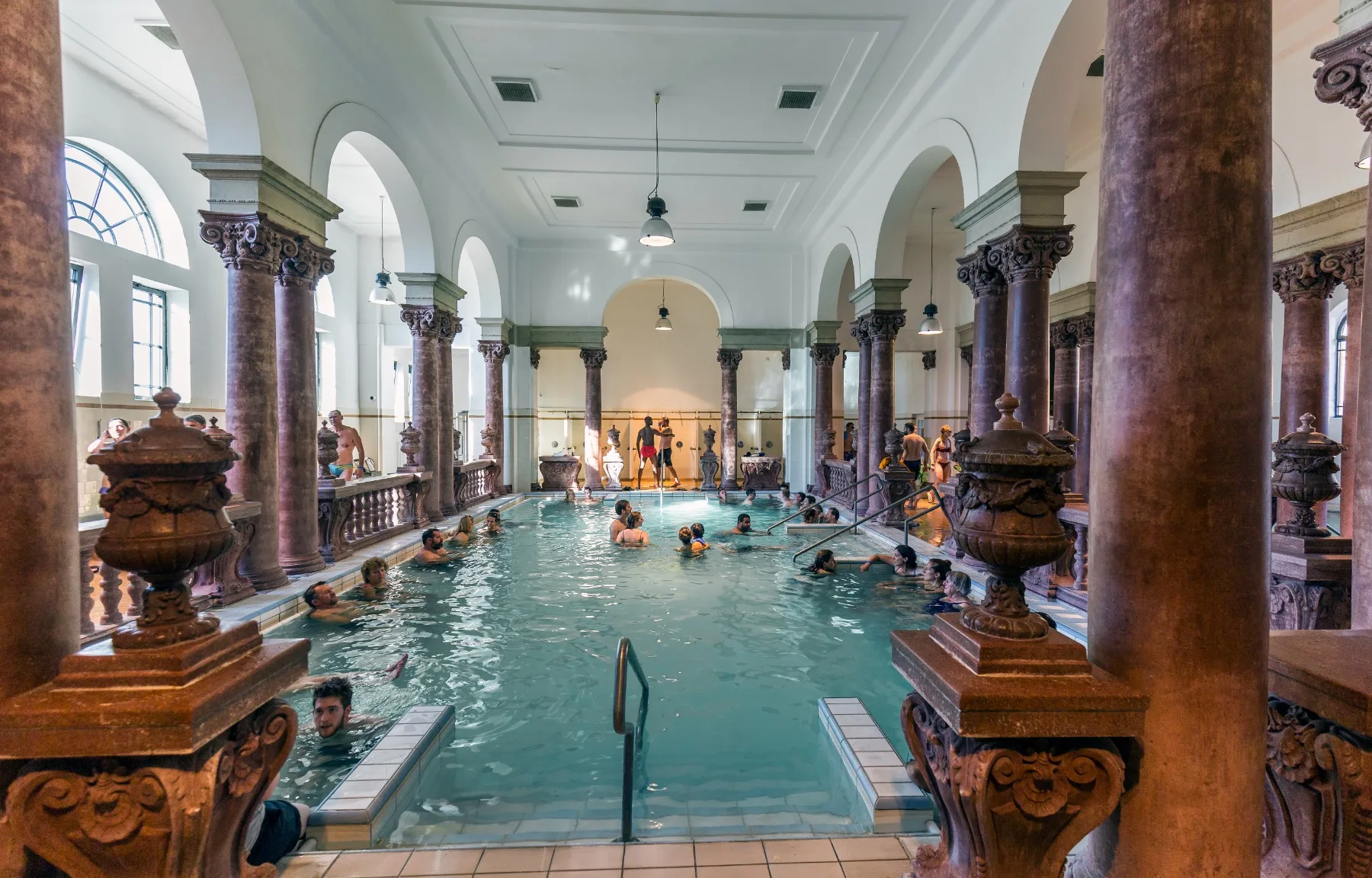
That leaves Rudas, which is where the tradition still lives, and where the schedule matters more than anything else. Rudas is the only bath in the city that still runs single-sex days. The historic Ottoman chamber is men-only on weekday mornings, roughly Monday, Wednesday, Thursday and Friday from opening until late morning, plus most of Wednesday, with Tuesday given over to women. Those men-only hours, aprons or nothing rather than swimwear, are the ones with the long-standing cruising culture. This is the part most travel pieces get backwards.
Because the famous Friday and Saturday night sessions at Rudas, the ones with the rooftop pool, the Danube view and the glass of fizz, are mixed, swimsuit-only and heavily touristy. Romantic, yes. Cruising, no. Turn up on a Saturday night expecting the former and you have read the wrong paragraph of somebody’s blog. Worth knowing too that the single-sex schedule gets suspended for stretches of high summer, when the whole bath goes co-ed, so check the current timetable on the Rudas website before you build an evening around it.
Széchenyi, the giant neo-baroque complex in the City Park, is mixed, tourist-heavy and ambiguous. Things happen, but read the room. Nobody is performing for a coach party that wandered in off a walking tour.
The etiquette, where it applies, is quiet and reads clearly enough once you know it. Extended eye contact, lingering near the steam rooms, where you place yourself in the pool. Nobody grabs anyone or makes a scene. Not interested? Look away and get on with your soak. If someone will not take the hint, a firm shake of the head does the job, and the staff do not tolerate anyone being a nuisance.
On cost, budget more than the old guides tell you. A weekday ticket at Rudas is around 12,000 forint, and weekend or night entry closer to 15,000, so call it £25 to £32 depending on the day and the exchange rate. You get a locker, and you can bring a towel or rent one. For the money you are also standing inside a bath built around 1550, with an octagonal pool under a dome pierced with star-shaped skylights and water that runs from a cold plunge up to about 42 degrees. Even if you came only for the architecture, it pays for itself.
Straight visitors have nothing to be jumpy about. The mixed sessions at Széchenyi are relaxed and the coded stuff simply is not happening in the shared pools. The men-only hours are exactly that, and clearly signposted. Go in understanding the context and you will have a better time whatever brought you.
One practical note for summer. Budapest in July and August sits in the low-to-mid 30s and the city gets packed, and a thermal bath is a better escape from that than it sounds. Book the popular Rudas sessions ahead, especially anything at night, because capacity is capped and weekends sell out.