January in Britain tends to arrive with financial regret and a sky the colour of wet cement. Spain looks like the obvious escape from quickly abandoned resolutions, but that description is almost useless. Madrid in a wool coat, Málaga on a quiet promenade and Lanzarote beneath an Atlantic sun are not variations of the same holiday. Before choosing an airport, decide what you want from the month: culture without the summer scrum, coastal calm without guaranteed swimming, or actual warmth with a side order of volcanic drama?
City Spain: cold mornings & late nights
Choose a city if you want Spain itself rather than simply better weather. Madrid, Barcelona, Seville, Valencia and Granada remain fully awake in January, with markets trading and restaurants operating for people who live there, not just visitors. Days may be bright, but mornings and evenings can be properly cold, especially inland. Pack a coat and lose the fantasy that every Spanish postcode comes with palm-tree temperatures.
In return though, you get museums without quite so much elbow warfare, streets that can be walked without melting and winter food that makes sense: cocido in Madrid, churros dipped into thick chocolate, or a long lunch followed by absolutely nothing productive.
Early January also carries the tail end of Spain’s festive season. Three Kings’ Day falls on January 6, while the main winter sales traditionally begin around January 7, according to Spain’s official tourism portal. Barcelona is particularly convincing out of season; our guide to winter in Barcelona explains why Gaudí, vermouth and the Gothic Quarter improve once the peak-season human traffic jam has dispersed.
City Spain suits travellers who want full days, late dinners and culture with their sunshine, but don’t mind wearing sleeves.
Mainland coast: Sea without the summer circus
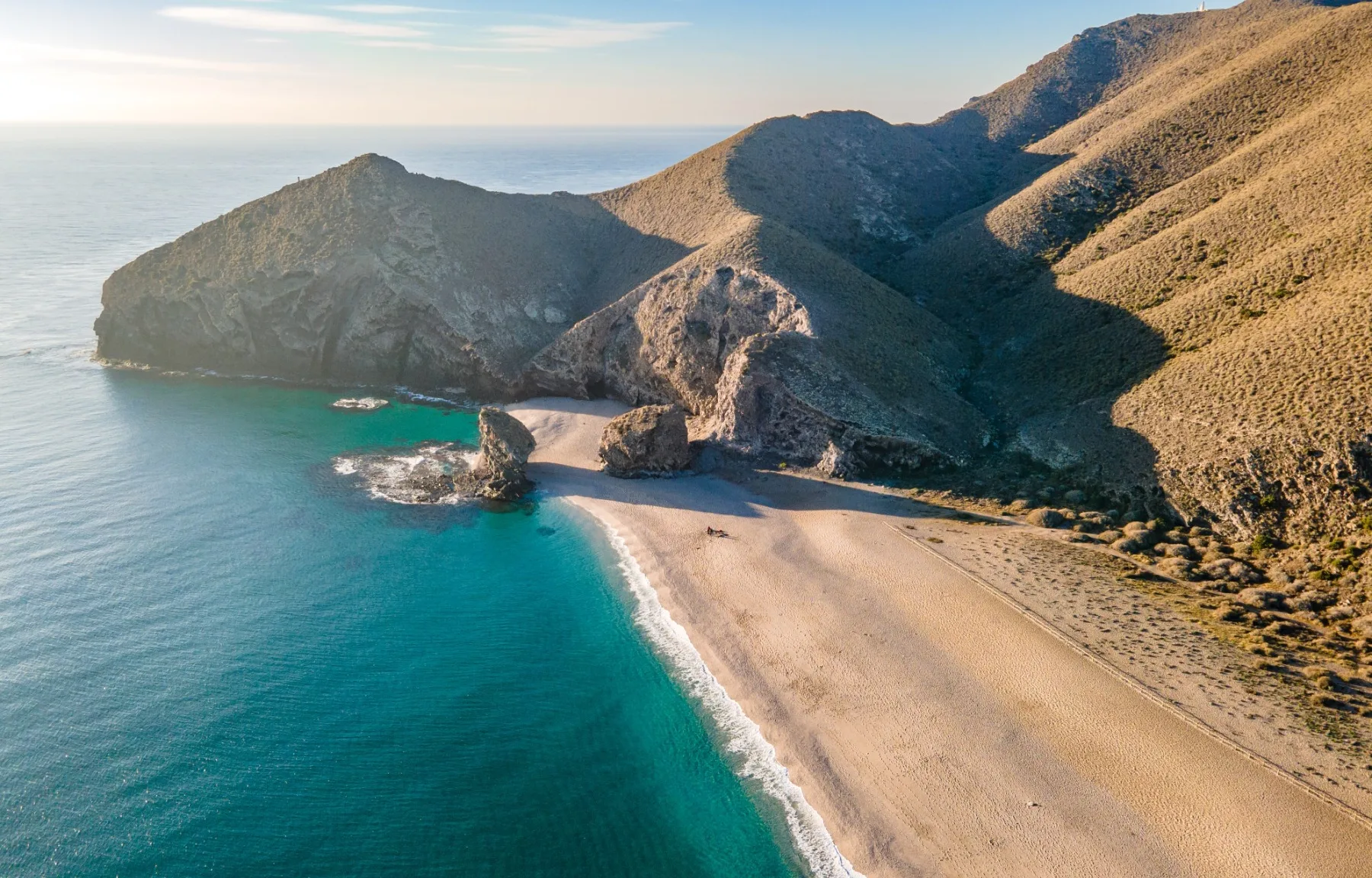
The second Spain is quieter and a bit stranger. Head for the Costa del Sol, Costa Blanca or Andalmería in January and you will find long promenades, open horizons and beaches no longer arranged like airport departure lounges. Málaga makes a strong base because it combines galleries, markets and proper city life with the sea, while smaller places such as Nerja, Estepona or Almería offer something a bit more intimate.
We have to stress though: This is not a guaranteed beach holiday. You may get a warm terrace at lunchtime, but you may also get wind, rain and an evening cold enough to expose anyone who packed exclusively from the “resort wear” section. The sensible traveller brings layers and treats swimming as a bonus.
Some seasonal businesses will be closed, yet that is partly the appeal: January reveals which cafés, bars and neighbourhoods belong to the town rather than its summer audience. Days become pleasantly uncomplicated. This version suits couples, remote workers and anyone who wants light and space more than a packed itinerary. It also rewards choosing an actual town over an isolated resort.
Island Spain: skip the winter
If your main objective is to feel the sun on your face without flying halfway around the planet, choose the Canary Islands. Winter temperatures average around 20°C, although microclimates matter: the north of Tenerife can be cloudy while the south stays bright, and a breezy Fuerteventura beach can feel cooler than the number on your phone suggests.
This is the warmest of the three Spains, but it need not mean spending seven days rotating beside a pool. Lanzarote offers Timanfaya’s black-and-red volcanic landscape, the architecture of César Manrique and vineyards dug into dark ash. Tenerife pairs the coast with Teide’s high-altitude terrain, while Gran Canaria can move from dunes to mountain villages in a single day. We have already made the case for the islands in our roundup of winter escapes from Britain, but January still requires realistic planning. Atlantic weather can change and evenings may still need a jacket. Check the AEMET forecast shortly before travelling rather than trusting an annual average and arriving dressed like a human cocktail umbrella.
Island Spain suits travellers who simply want warmth, outdoor days and easy resort infrastructure, but who are willing to leave the sunbed occasionally.
Rhythm before region
The smart way to plan Spain in January is to begin with the day you want, not the temperature you hope for. Do you imagine galleries, neighbourhood bars and ten miles of accidental walking? Choose a city. Do you want sea views, long lunches and a town moving at half speed? Take the mainland coast. Do you need dependable warmth badly enough to accept a longer flight and a more resort-oriented setup? Go to the Canaries. There are lots of cheap Spain holidays that can already be booked now ahead of time, but look beyond the headline destination and check the precise location, transfer, local opening patterns and whether your base works in winter. A low price is less exciting if reaching dinner requires a taxi every night. Equally, paying for beachfront accommodation makes little sense if your real plan is museums, markets and evenings in local neighbourhoods.
Spain provides the options; your job is to avoid booking one kind of January while imagining another.