Every Singapore guidebook eventually marches you to the same spot, and it is usually a queue. In 2020 the country’s hawker culture went onto UNESCO’s Intangible Cultural Heritage list, a national first, and the tourism machine did what it always does with a shiny new badge. So the travel pieces now point you at Maxwell Food Centre or Tiong Bahru Market, where you shuffle in behind fourteen other visitors for a plate of char kway teow that is, hand on heart, fine. Not transcendent. Fine. What none of them tell you is that the good stuff has quietly moved out the back.
Image credit: Alen thien / Shutterstock.com
To get why that is a little sad, you need to know what a hawker centre actually is. Rewind to the 1960s and 70s, when Singapore had thousands of people cooking on carts and roadsides, and the government swept them all into purpose-built open-air centres: rows of tiny stalls, shared plastic tables, ceiling fans, a drinks uncle shouting orders, and some of the best cheap food anywhere on earth. One stall, one dish, cooked ten thousand times until it is nearly perfect. Chicken rice. Laksa. Bak chor mee. Three or four quid a plate. Singaporeans call them community dining rooms and they mean it, because everyone eats there, the banker and the bus driver at the same wobbly table. That is the thing UNESCO put on its list, and it earned the spot.
It is also, quietly, in trouble. The median age of a Singapore hawker is fifty-nine. There are only about six thousand of them left, and their kids, packed off to university to become lawyers and engineers, mostly do not fancy a life that starts at four in the morning and ends when your back gives out. Landing a stall can mean winning a rent-bidding war that prices the food out of its own margins. New stalls are barely allowed to cook over charcoal any more, on smoke and fire rules, which quietly kills off a whole family of dishes that only taste right with a bit of live flame. So you arrive at the paradox nobody prints on the tourism poster: you can turn your food culture into a UNESCO monument and still watch the real thing wear thin, because the rules and the maths make actually doing it a mug’s game.
Which is where the good stuff went.
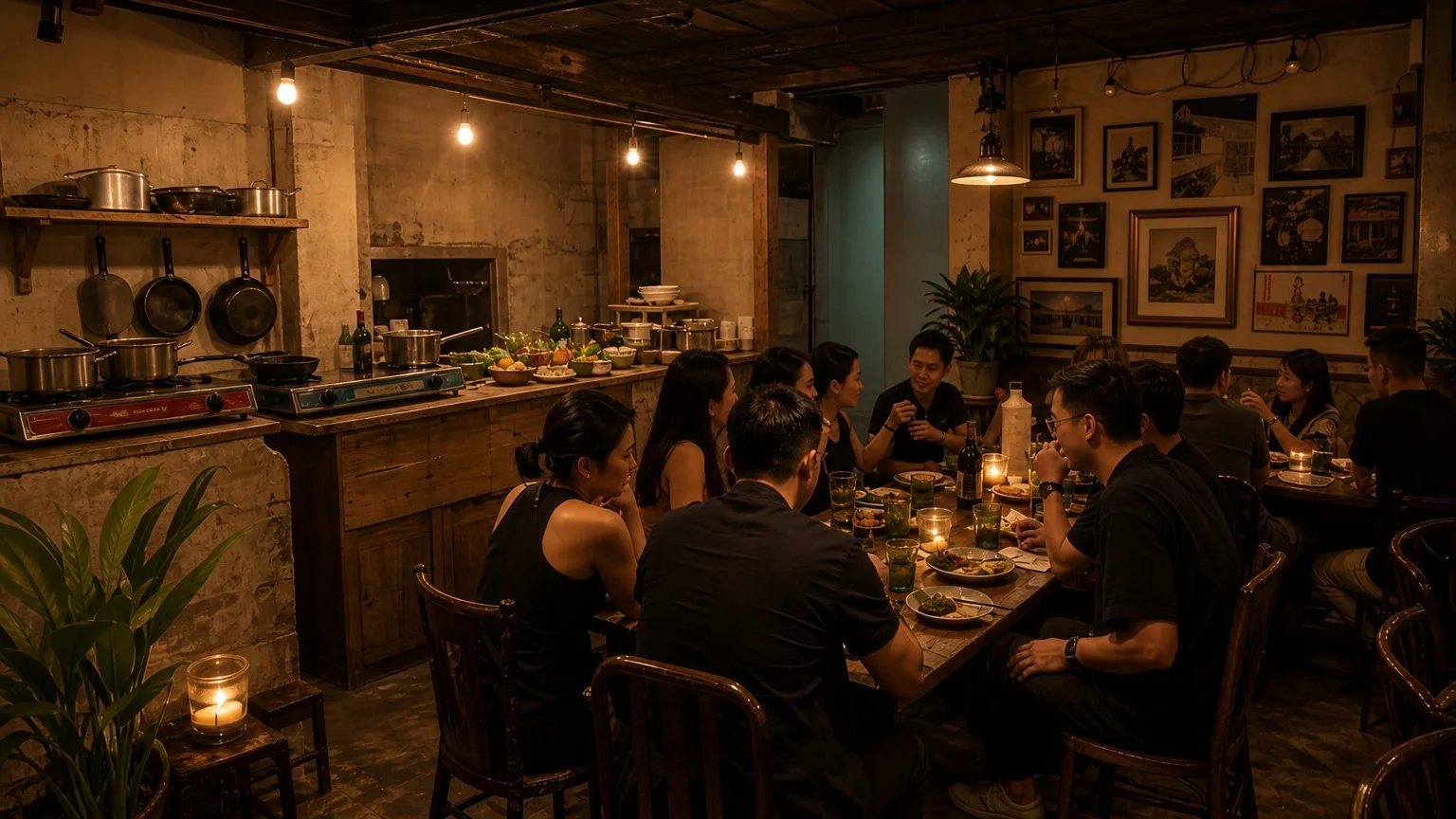
Over the last few years a loose crowd of cooks has been working out of home kitchens, rented industrial units and basement prep rooms across neighbourhoods like Toa Payoh, Ang Mo Kio and Geylang. No shopfront. No walk-ins. No sign on the door. They sell through private Telegram channels, post what is on a day or two ahead, and sell out fast. For the better-known ones, the slots are gone in under ten minutes.
Before you picture some smug little tasting-menu operation with tweezers and foam, no. This is the opposite of that. It is mostly old-school food cooked like a personal obsession: Hokkien mee over the kind of charcoal a licensed stall could not get away with, bak kut teh braised low and slow to a recipe two generations older than the cook, hand-pulled mee pok made thirty portions a day and not a portion more. The limit is not a marketing trick. It is the entire philosophy. These people are not building a chain. They are cooking the exact thing they want to cook, for as many people as they can feed properly, and then they stop.
If your gut says this sounds faintly illegal, you are half right. Singapore’s food rules say anything sold to the public should come out of licensed premises. There is a legit route for small home-based food, but it is meant to stay tiny, and plenty of these kitchens live in the gap: prepping somewhere licensed and finishing elsewhere, or just keeping the numbers low enough to stay off the radar. The Singapore Food Agency does shut unlicensed sellers down now and then, so do not be shocked if a channel you were banking on has gone dark by the time you land. It is not McDonald’s. That is the whole appeal and the whole risk, in one.
So how do you actually eat this on a week’s trip? Get into the right Telegram groups before you fly, not after. Search terms like “Singapore supper club” or “Singapore underground food” turn up public directory channels, and from there it runs on referrals, one person vouching for the next. The scene is not snobby about outsiders, but it moves quickly and it will not wait for you. Turning up on the night without a booking gets you precisely nothing. Skip the tourist circuit and ask at the independent coffee shops in Tiong Bahru or an old kopitiam in Geylang instead. Order a kopi, be normal, get talking. Someone usually knows someone.
A meal runs you somewhere around £8 to £18 all in. That is more than a hawker centre plate and a fraction of what the shiny “elevated hawker” restaurants charge to cook the same dishes for the cameras. What the extra buys you is the version with nobody’s brand stamped on it.
The museum, then, is upstairs with the queue and the tourist-board photographer. Dinner is in a chat group that probably sold out while you were reading this.