Every November, London goes through the same ritual. The rides go up in Hyde Park, the entry slots sell out, and half the city pays for the privilege of lining up for a bratwurst.
It is fun, in a loud and neon sort of way. But if what you actually want is a proper Christmas market, the kind with carols, candlelight and mulled wine that tastes of something, you are in the wrong park.
You want Strasbourg. Here is the case for swapping the Giant Wheel for the real thing.
The Hyde Park problem
Winter Wonderland runs from November 19, 2026 to January 3, 2027, and Visit London lists standard, peak and free off-peak tickets. That tiered system tells you everything. Christmas has become a crowd-management exercise.
It is also exhausting to plan. Pick the wrong slot and you are paying peak prices to shuffle through a crush of people filming each other on the rides.
Once inside, it is a funfair with a festive coat of paint. Rollercoasters, a circus, a Bavarian-themed village and a very long line for everything.
None of that is a crime. It just isn’t a Christmas market in the sense most of Europe understands the term.
Strasbourg, by contrast, has been running one since 1570. The Christkindelsmärik was for a long time the only Christmas market in France, and it has sat on Place Broglie since 1871. When the city calls itself the Capital of Christmas, it has the paperwork to back it up.
Christmas market river cruises make Strasbourg the easy bit
Here is the twist most people miss. Strasbourg sits right on the Rhine, which makes it a natural stop for Christmas market river cruises working their way through the season.
These winter sailings link Strasbourg with Mainz, Heidelberg and Würzburg, so you get several markets in one trip without a single airport transfer in between. You fall asleep in one Christmas town and wake up in the next.
Some routes swap the Rhine for the Danube and pair Nuremberg, Vienna and Budapest instead. Either way, one market becomes a full December tour.
It is the anti-Winter Wonderland. No timed entry, no dragging a suitcase over cobbles, no working out which regional train goes where in the dark.
It is also oddly fitting. Strasbourg is home to the Central Commission for the Navigation of the Rhine, which has been keeping traffic on the river moving since 1815. It is the oldest international organization of its kind still operating anywhere, and it works out of a palace near the markets.
Even if you are not cruising, the river is worth a look. Tram D crosses the Rhine to Kehl in Germany, so you can do two countries’ Christmas markets in one afternoon.
Where to start (and where to escape)
Start at Place Broglie for the historic market, then drift toward the cathedral. The square beneath it is the busiest in town, so go early or after dinner once the day-trippers have left.
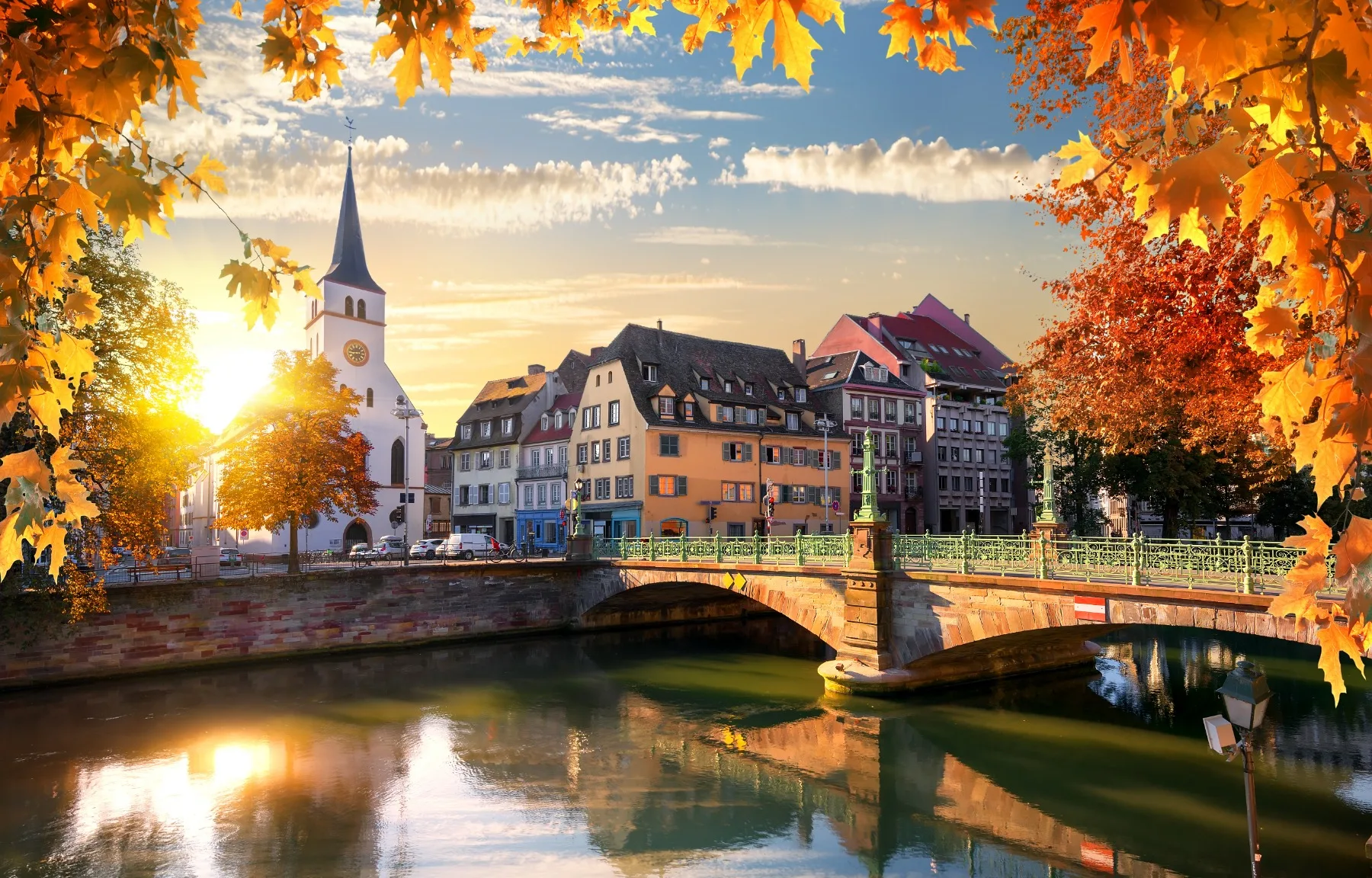
Place Kléber has the Great Christmas Tree, which is exactly as big as it sounds. Petite France, with its half-timbered houses leaning over the canals, is where the dusk light does most of the work for your photos.
When the crowds get too much, and on a Saturday they will, duck into the smaller markets on side streets. The one run by local producers at Place des Meuniers is calmer and noticeably less touristy.
When to go
Weekdays win. The markets are at their calmest from Monday to Thursday, especially in the first week after opening.
Weekends in mid-December pull in coachloads from across France and Germany. If that is your only option, get out early and save the evening for a winstub.
Eat like a local, not like a bachelor party
This is where Strasbourg quietly humiliates Hyde Park.
Skip the generic sausage and order a tarte flambée, the thin Alsatian flatbread topped with cream, onions and bacon. It is cheap, filling and best eaten standing up with something warm in your other hand.
Bredele, small spiced Christmas cookies, come in endless shapes. Buy a mixed bag and pretend it is for sharing. Pain d’épices, the local gingerbread, makes a better souvenir than anything made of plastic.
For something sit-down, book a winstub. These cozy wine taverns serve choucroute, sausages and local white wine in wood-paneled rooms that feel like someone’s grandmother’s dining room, in the best possible way.
Vin chaud here is often made with Alsatian white wine as well as red. Try the white at least once.
The free stuff (yes, including a parliament)
Strasbourg can be surprisingly kind to your wallet. The cathedral is free to wander, and the canals and covered bridges of Petite France cost nothing and look their best in the blue hour.
Then there is the European Parliament. Visits to the Strasbourg building are always free, and MEPs meet there twelve times a year to debate and vote. With some luck, you could catch democracy in action between mulled wines.
It is a genuinely odd and brilliant add-on to a Christmas trip. Few festive breaks end with you sitting in the public gallery of the world’s largest transnational parliament.
How to dress for it
Strasbourg in December is cold, damp and gorgeous. Pack for all three.
Waterproof boots with real grip matter more than anything else in your bag, because the old town is cobbles all the way down. Layers beat one enormous coat, since you will be moving between freezing squares and overheated winstubs all day.
Gloves that work with a touchscreen are a small, smug luxury.
Getting there
From London, the fastest overland route is the Eurostar to Paris, then a high-speed train east to Strasbourg. Book early, as December fares climb fast.
Stay inside the Grande Île, the island at the heart of the old town, and you can walk everywhere. If you go the river cruise route, the boats moor a short transfer from the center.
And if you still fancy Winter Wonderland afterwards, it will be there. It always is. But once you have had a vin chaud under the cathedral, a bratwurst in Hyde Park may feel like a very long way down.