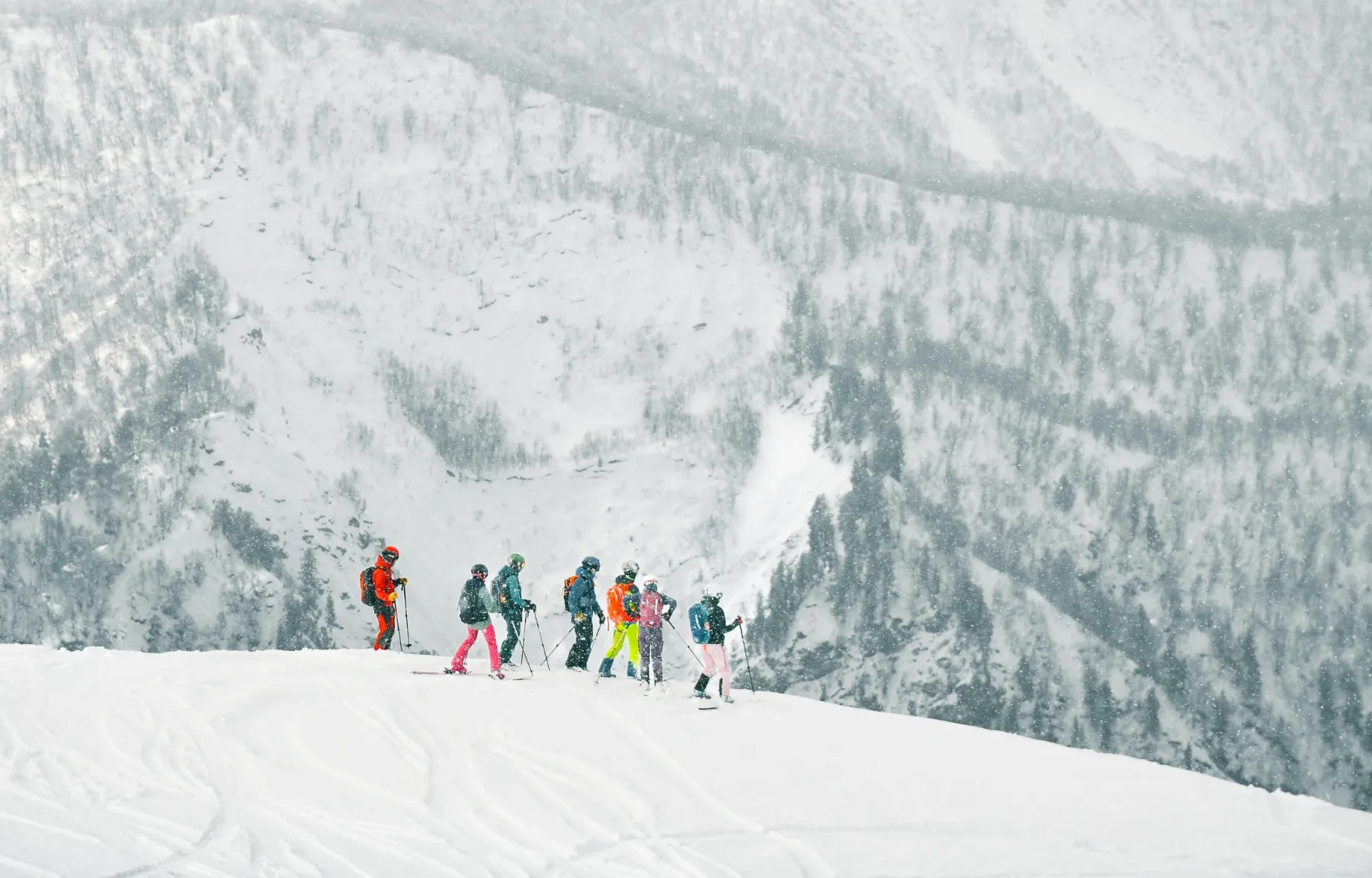
Every bad group ski trip starts with a flattering group chat. Everyone is “intermediate”, nobody minds the budget, and apparently the plan is to ski hard, eat well and enjoy a quiet-but-lively evening. By Tuesday, one person is paralysed on a blue, another has disappeared down something vertical, and two people are arguing over a restaurant bill. The resort gets blamed, obviously. Sounds familiar? Well, the real problem is that eight adults booked eight different holidays and expected one piste map to sort it out.
No, not everyone is an intermediate
Before choosing a mountain, ask each person privately: Which runs can you ski comfortably in poor visibility? Do you want lessons? How many hours a day do you actually want to ski? What is your total budget for passes, equipment, food and drinks? The word private matters the most here, because confidence becomes strangely inflationary in a group chat.
The 2025 International Report on Snow & Mountain Tourism recorded more than 366 million skier visits worldwide during the 2023/24 season, but the industry has yet to invent a chairlift that turns social pressure into competence. Categorise the group honestly: first-timers, cautious returners, comfortable cruisers, advanced skiers – you get the idea. Then decide what the trip values most. Maximum mileage, lessons, long lunches and nightclub hours are all legitimate priorities. Pretending they are the same priority is how resentment gets its boots on.
Don’t choose the postcode
A gigantic ski area is pointless if beginners are stranded at one base while stronger skiers need three lifts and a diplomatic summit to meet them. Instead, look for a proper learning zone, progressive easy terrain, harder runs accessible from the same hub, clear meeting points and accommodation near the lift or ski-school start.
Different places solve that brief differently. Grandvalira’s range of pistes and connected sectors makes mixed-ability Andorra ski holiday options worth considering when the group needs variety. Les Arcs combines high-altitude terrain with skiing for different levels; TNT’s very own Snow Business dispatch captures its appeal for learners and experienced skiers alike. Whistler Blackcomb works on a much bigger scale, with official Snow School categories running from first-timer to advanced.
None of these is automatically “best”. The useful question is whether your chosen base lets people do what they need to do easily.
Ski in pods and meet on purpose
Mixed-ability groups should not ski together all day. Believe us, that sentence will save more friendships than a hot tub. Let confident skiers take the terrain they travelled for and allow intermediates to cruise without being chased. And, most importantly, give anybody with tired legs permission to stop.
Instead, maybe agree on one lunch venue and one end-of-day meeting point, both named precisely; “by the big lift” is not a plan. Share live locations if everyone is comfortable. One or two relaxed runs together after lunch can feel social. Six hours of waiting, apologising and being coaxed towards a black run doesn’t. If somebody wants to sit out an afternoon, let them.
Settle money, nightlife and faff ahead of time
Ability is only one fault line: agree a daily food range, how shared groceries and taxis will be divided, which evenings are group plans and which are optional. TNT’s guide to skiing on a shoestring is a useful reminder that value depends on the whole trip, not simply the pass price. Pay extra for location if it removes daily buses, long walks in ski boots or one key-holder controlling everyone’s return. Pre-book lessons, hire and transfers, and store confirmations somewhere the group can access. Nominate an organiser (not an unpaid parent!); they coordinate the fixed details, while every adult remains responsible for being dressed, awake and at the agreed place.
If the first morning collapses because seven people assumed somebody else had collected the lift passes, the mountain is innocent.