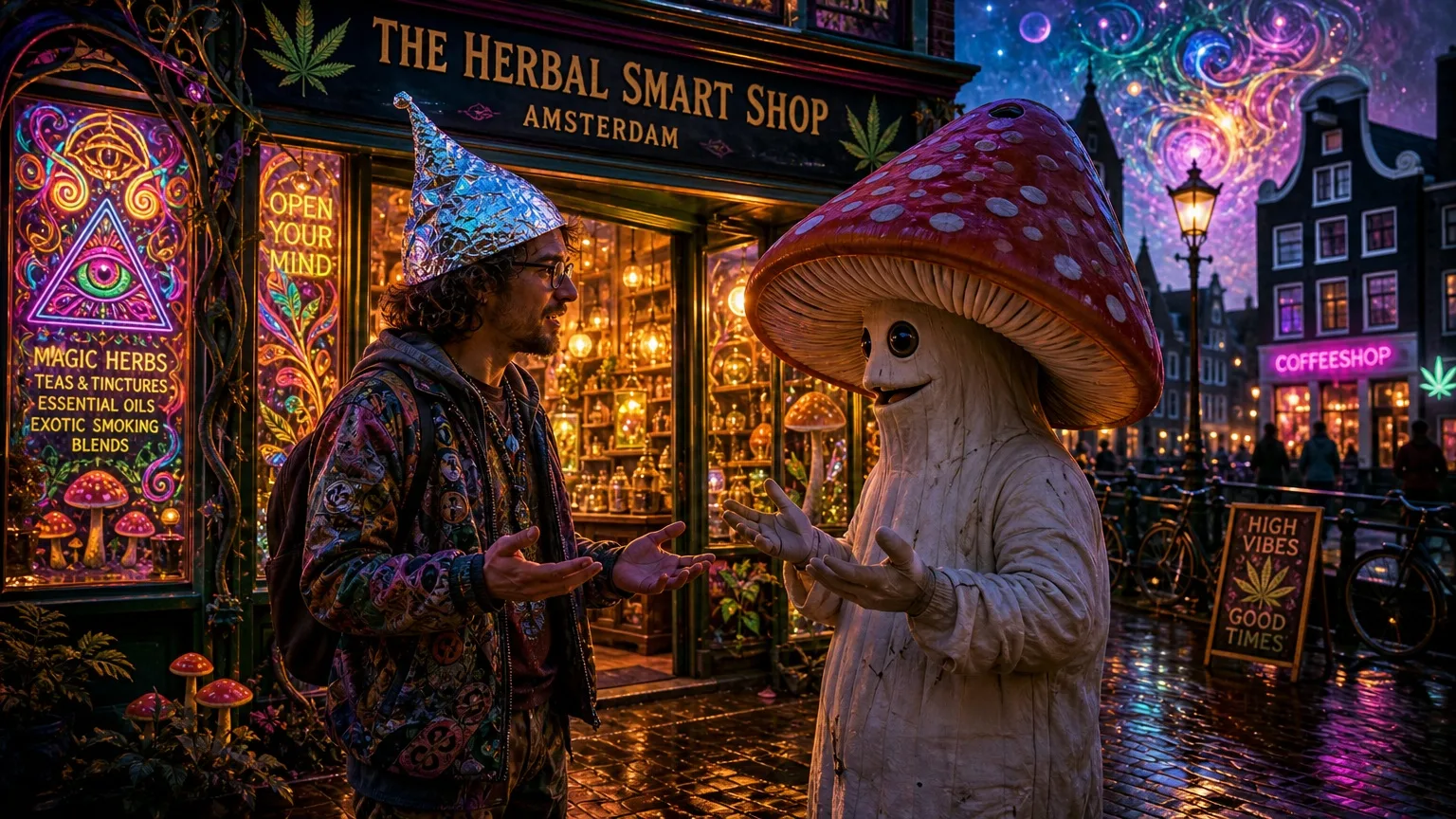
Walk past a smart shop on the Warmoesstraat and the window raises obvious questions: What the actual f**k is this? Is any of this real? Or is it all expensive tea?
The honest answer is that some of it is very real, some of it is mostly marketing, and a couple of things are considerably more than the average weekend visitor is prepared for. Here is what you are actually looking at.
Magic mushrooms containing psilocybin have been prohibited in the Netherlands since December 2008. What smart shops sell instead are magic truffles, the underground sclerotia produced by certain species of fungi. They contain the same principal psychoactive compounds, psilocybin and psilocin, but are not legally classified as mushrooms. Fresh sclerotia can therefore still be sold, despite the compounds themselves being controlled under Dutch law.
This is a legal distinction, not a chemical magic trick. Truffles can produce a proper psychedelic experience, complete with altered perception, intensified emotions, visual distortion and an unreliable relationship with time. Effects commonly begin after 30 to 60 minutes and can last for several hours. Strength varies between products and people, so the numbers printed on a packet should not be mistaken for a universal operating manual.
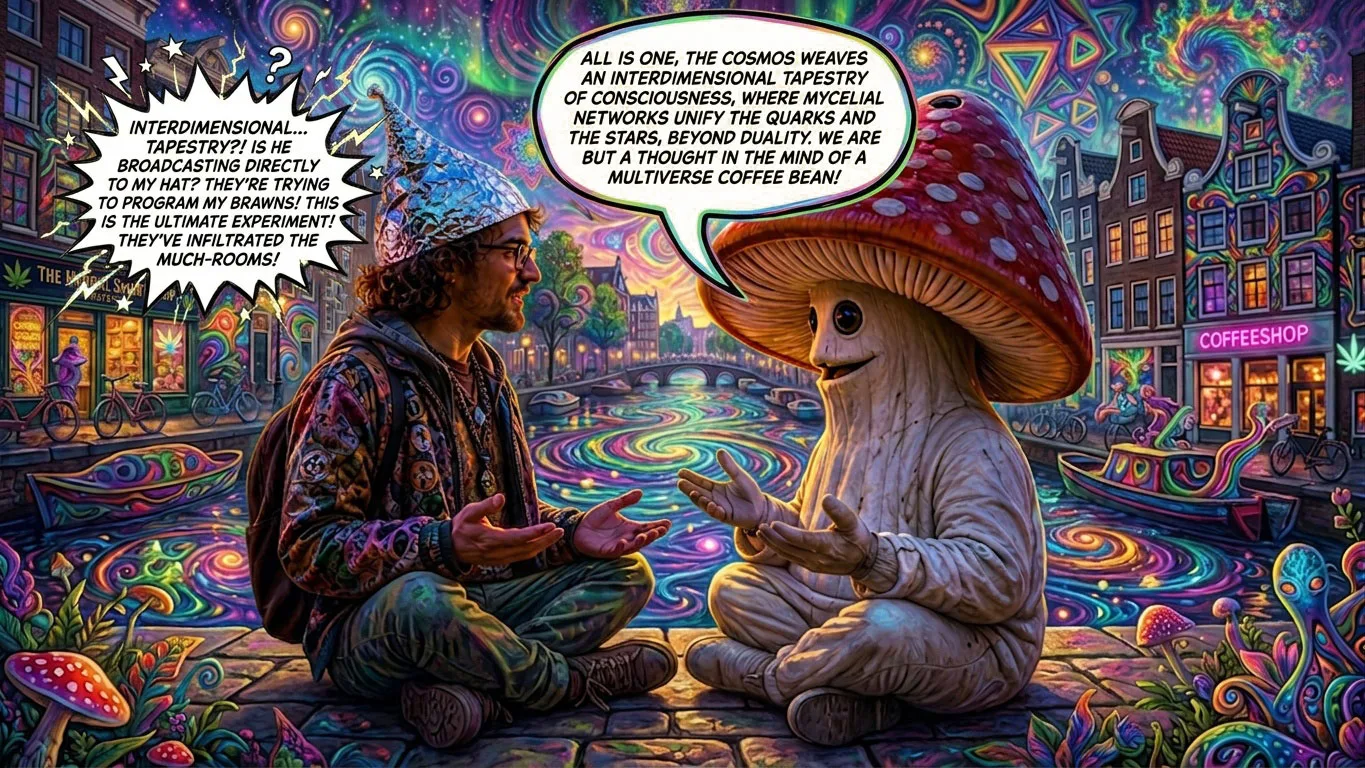
That variation is why a neat online dosage chart is not especially useful. The same weight can affect two people very differently, and supposedly stronger varieties are not measured against a single dependable standard. The classic tourist error is to eat some, decide after 45 minutes that Amsterdam has sold them an expensive box of damp walnuts, and double drop. This is how someone ends up sitting beside a canal at 2am, talking to a giant mushroom.
The shop matters more than the psychedelic branding on the packet. Better-known central options include the Magic Mushroom Gallery at Singel 524, Kokopelli at Warmoesstraat 12 and Tatanka near Leidseplein at Korte Leidsedwarsstraat 151A. These are established specialist shops rather than souvenir outlets that happen to stock truffles between the grinders and tulip fridge magnets.
That is not a guarantee that every recommendation will be good. What you are looking for is a member of staff who asks sensible questions, explains how long a product may take to work, discusses interactions and does not treat “strongest one you have” as a perfectly reasonable opening request. A shop assistant is not a doctor, but they should at least know more about the product than the person buying it.
There is also an important limit to what any smart shop provides. There is no medical assessment, supervised session or follow-up appointment. You buy the product, walk back into Amsterdam and assume responsibility for whatever happens next.
The most serious risks are psychological. Truffles can cause panic, confusion and overwhelming experiences, and may trigger or worsen psychosis in people who are vulnerable to it. That vulnerability can include having previously experienced psychosis or having psychotic illness in the family. People who are already anxious, distressed or dealing with significant mental health problems should not assume a holiday changes the calculation.
Combining truffles with alcohol or other drugs makes the effects less predictable. Dutch harm-reduction guidance recommends a calm, familiar environment, people you trust and a sober companion who can help if the experience turns difficult. A crowded street, nightclub, bicycle or canal edge is not a controlled setting, however attractively lit it may appear at the time.
Truffles are the main attraction, but they are not the only product capable of delivering far more than its packaging suggests.
Salvia divinorum remains legal in the Netherlands and falls under the Commodities Act rather than the Opium Act. Its effects are generally brief compared with truffles, but can be extraordinarily disorientating. Users may lose awareness of their surroundings, experience severe distortions of reality or temporarily lose control of their bodies. The obvious physical danger is falling, stumbling or colliding with something while no longer entirely convinced which version of reality they are frequenting.
Salvia is sometimes mistaken for a quick, manageable novelty because the main effects may last minutes rather than hours. That is the wrong conclusion. A short experience can still be completely overwhelming. It is not a sociable party drug, nor something to try while standing beside a hostel bunk bed, balcony or decorative flight of Dutch stairs.
Kratom occupies a more complicated part of the shelf. It comes from a Southeast Asian tree and tends to produce more stimulating effects in lower quantities and more sedating, opioid-like effects in higher ones. Regular use can lead to tolerance, dependence and withdrawal. Its Dutch legal position is also less straightforward than simply calling it legal: kratom is not listed under the Opium Act, but official drug information states that it may not be offered for consumption under the Commodities Act.
In other words, its presence in a shop is not evidence that it is harmless, medically useful or suitable for casual experimentation. “Natural” remains one of the least informative safety labels in the English language.
Kanna, or Sceletium tortuosum, is usually sold as a relaxing or socially stimulating herbal product. Some users report mild stimulation followed by relaxation, but describing it as herbal MDMA oversells the experience and understates the risks. Kanna can interact with antidepressants and other substances affecting serotonin, including MDMA and MAO inhibitors. Anyone taking medication should treat the cheerful botanical packaging with the same suspicion they would apply to any other psychoactive substance.
Then there are the products sold under names such as herbal ecstasy, energy caps or party pills. These are not legal versions of MDMA. Many rely on familiar stimulants such as caffeine and guarana, sometimes bundled with vitamins and herbs and presented in packaging that looks as if it has been designed by a teenager with access to metallic clip art. Ingredients and strengths vary, but the experience is often closer to an enthusiastic energy drink than a chemical revelation. Too much caffeine or guarana can still produce anxiety, sleeplessness, palpitations and a deeply unpleasant evening.
The remaining shelves tend to contain CBD products, supplements, aphrodisiacs, mushroom extracts, grow kits and various herbs making ambitious promises about focus, sleep, sex or spiritual alignment. Some may do something. Some may do very little. A label featuring a jaguar, lightning bolt or geometrically impossible human eye is not a substitute for evidence.
You may also see living peyote or San Pedro cacti. The plants themselves can be sold as ornamental cacti, but mescaline is specifically controlled under the Dutch Opium Act. The fact that a living plant can sit legally on a windowsill does not mean extracting or preparing its psychoactive contents is legal. It may, however, explain why so many customers suddenly develop a passionate interest in desert horticulture.
Truffles work. Salvia works, possibly much harder than you want it to. Kratom carries a genuine dependence risk. Kanna and stimulant pills are not harmless simply because they are sold beside herbal tea.
Visit a proper specialist shop, ask questions and be honest about your experience, health and medication. Most importantly, do not make your first night in an unfamiliar city the evening you discover just how badly you respond to psychedelics. Amsterdam will still be there tomorrow. Your relationship with oversized mushrooms may take longer to recover.