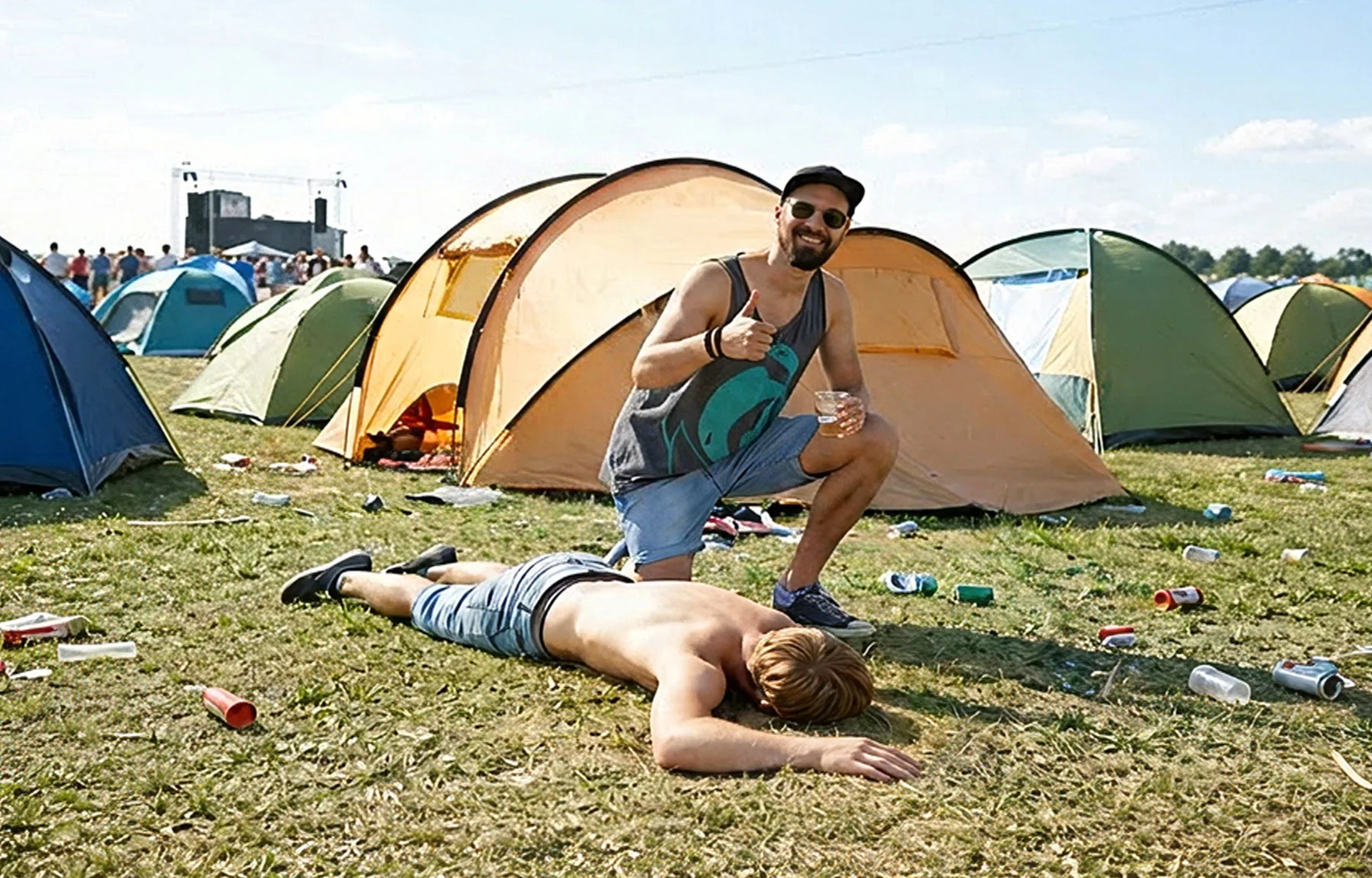
Your next UK festival probably doesn’t have a drug testing service running somewhere on site, but ieven if it does it almost certainly works nothing like you think it does. The drug supply in this country is more dangerous than it has been in a generation. The ONS recorded 5,565 drug-poisoning deaths in England and Wales in 2024, the highest since records began. Deaths involving nitazenes, synthetic opioids up to 500 times stronger than heroin, nearly quadrupled in a single year. And that poison is turning up in party drugs, not just on the fringes of the heroin market.
Almost all festival drug testing in the UK is done by The Loop, a charity founded by criminologist Professor Fiona Measham and the first organisation ever granted a Home Office licence for on-site drug testing. It runs mobile laboratories at festivals, in nightclubs (Drumsheds in London, The Warehouse Project in Manchester), and since early 2026, a monthly community drug checking service in London’s Hackney and Camden. All free. All confidential. It’s an incredible service which doesn’t normalise or promote drug use, but offers a critical analasis in a totally unregulated marketplace, which often is not concerned about the welfare of the consumers at the bottom of the supply chain. Let’s find out what they do (and don’t do) at festivals and events.
Two very different services
Start with the fact that there are two models, and which one your festival runs decides whether you personally get any useful information.
Back of house is the more common setup. A team of chemists in an on-site mobile lab analyses substances pulled from amnesty bins, confiscations, security seizures, and submissions from paramedics dealing with drug-related medical incidents. You don’t hand anything over and you don’t get a personal result. What happens is that findings go out through the day, in real time, to emergency services, welfare staff, and other stakeholders on and off site. If something alarming shows up, an alert may go out on social media or via the festival app. Whether you see that alert before you take what you bought is another matter entirely.
Front of house (also called “drug checking”) is the version people picture when they imagine a testing tent. You take a substance to the service, surrender it into an amnesty box, and come back about an hour later for a one-to-one consultation with a health professional who talks you through what the chemists found. Two things to be clear about: you are handing your drugs over for good, and nothing is ever called “safe.” The service communicates relative risk. Every user is told the safest choice is not to take drugs at all.
The distinction matters because front of house barely exists at UK festivals right now, and the reasons for that are political rather than practical.
A decade of legal obstacles
Front of house testing ran at UK festivals from 2016 to 2018 with the knowledge and informal consent of local police forces and councils, under memoranda of understanding rather than formal licences. In that 2018 summer, it was available at seven festivals (including Boomtown, Bestival, Boardmasters, and Kendal Calling) to a combined audience of more than 250,000 people. Over 8,000 festival-goers used the service.
Then it stalled. In 2019, Boomtown’s front of house testing was cancelled days before the festival opened, citing “ongoing legal complexities.” The Loop had already been unable to provide front of house testing at any UK festival that year. Boomtown fell back on TICTAC, a separate provider, for back of house testing only. A volunteer from The Loop said at the time that everyone involved had been trying to negotiate, but time ran out.
Things got worse in 2023 when the Home Office told The Loop, days before Parklife festival, that it needed a Controlled Drugs Licence to operate any on-site testing at all. The Home Office said this had always been the legal requirement under the Misuse of Drugs Regulations 2001. The Loop and festival organisers said it had never previously been enforced, and that testing had operated for a decade under police consent. The licence application took three months and cost upwards of £3,000, making it impossible to secure in time for that summer’s festival season. Parklife went without The Loop’s services for the first time since 2014.
Sacha Lord, co-creator of Parklife and Greater Manchester’s Night Time Economy Adviser, threatened judicial review. Cross-party MPs wrote to the then Home Secretary. By spring 2024, The Loop secured the first Home Office licence ever formally issued for festival drug testing, and back of house services resumed. But the licence conditions state that information from back of house testing is not to be given to individual service users about the contents of their own samples. The government’s line remains that “there is no safe way to take illegal drugs.”
So the front of house service, where you actually get your own stuff tested and receive a personal consultation, does not currently operate at UK festivals. The only place it runs is The Loop’s licensed community drug checking services in Bristol (monthly since January 2024) and London (monthly since early 2026, first Saturdays in Camden, third Saturdays in Hackney).
What they keep finding
The results from testing, whether back of house at festivals or front of house in community settings, justify every bit of concern. Over one in ten samples submitted are mis-sold. Substances sold as ecstasy, cocaine, and ketamine have turned out to contain paracetamol, antimalarial tablets, plaster of Paris, household cleaner, and pentylone analogues (a stimulant that can last up to 36 hours and cause anxiety, paranoia, and insomnia). MDMA pill strength continues to climb, with an average of 192mg and pills ranging from 73mg to 335mg. A typical adult dose is considered to be around 100mg. That means some pills in circulation contain more than three times a standard dose in a single tablet.
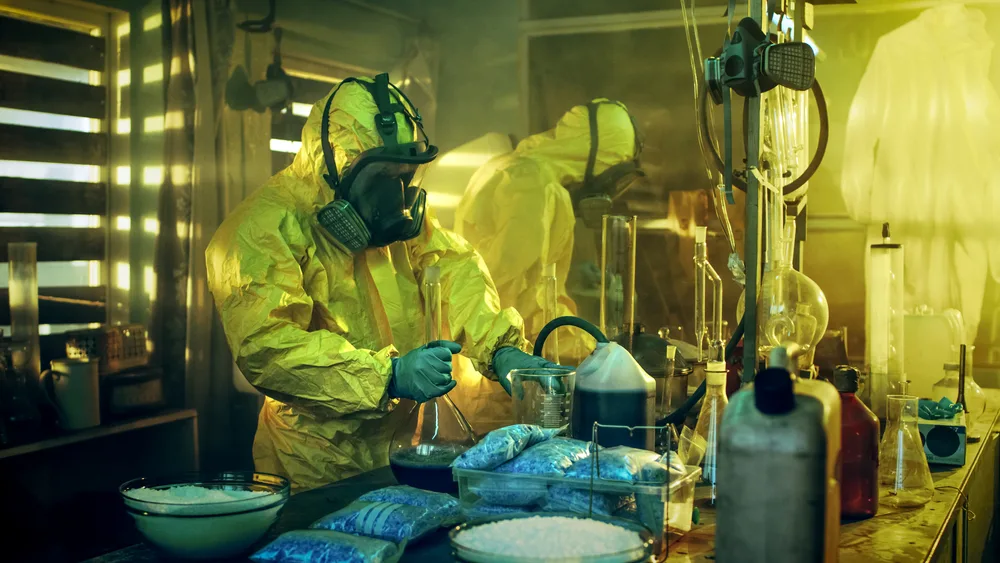
The bigger worry is contamination with synthetic opioids. Nitazenes have shown up as adulterants in cocaine, heroin, and counterfeit prescription tablets. In March 2025, 32 confirmed non-fatal overdoses in Camden were believed to be linked to nitazenes. The National Crime Agency has said there has never been a more dangerous time to take drugs. A new structural class, orphine analogues, is now emerging too, and these are not detected by either fentanyl or nitazene test strips.
The evidence that testing changes behaviour
Research from The Loop’s front of house services found that about half of people who had their drugs checked said they would take smaller quantities after speaking to a health professional about strength and dosage. One in five disposed of their substances entirely after learning what was in them. One in ten handed over additional drugs for police disposal after their initial test. A 2016 pilot at Secret Garden Party found one in five substances was not as sold, and one in six service users moderated their consumption afterwards.
At a system level, the head of paramedics and the head of welfare at Boomtown both reported significantly lower drug-related problems coming to them in years when The Loop operated on site. Research estimates a 10% to 25% reduction in drug-related harm at festivals where The Loop is present. Since 2016, there have been no drug-related deaths at any festival where The Loop’s Multi Agency Safety Testing model operated.
The political deadlock
The UK has one of the highest rates of drug-related fatalities at festivals in Europe. A Liverpool University analysis identified 32 potential drug-related festival deaths between 2017 and 2023, 18 of them confirmed. Despite these numbers, UK drug policy stays focused on punishment and abstinence rather than harm reduction. Keir Starmer has said he has “no intention” of modifying drug policy. The government’s position (“there is no safe way to take illegal drugs”) is technically true, and entirely compatible with wanting to know whether what you bought contains a synthetic opioid that will stop your breathing.
The Netherlands has been running government-backed drug testing through its DIMS system since 1999 and has a public Red Alert app for dangerous pills. Portugal decriminalised personal possession in 2001. The UK is moving in the opposite direction from most of its European neighbours.
How to actually stay safe
Drug testing services, where they exist, are one layer of protection. They are not a guarantee. Here is what the harm reduction evidence and basic common sense say about keeping yourself and others safe at a festival.
Start low, go slow. If you’re going to take something, take less than you think you need and wait. MDMA pills in circulation range from 73mg to 335mg. A quarter of a strong pill is not being cautious; it’s being rational. The same goes for powders: you have no way of knowing the strength without testing, so assume the worst.
Don’t be a guinea pig. If a new batch is doing the rounds and nobody you know has taken it yet, then your taking a massive risk going in blind (or going blind!). Be cautious and expect the worst.
Look after the people around you. Check on your mates. If someone is overheating, confused, unresponsive, or behaving out of character, get them to the medical tent. Don’t wait to see if they “come round.” Time matters with overdoses, especially with opioid contamination where breathing can stop within minutes.
Warn others. If you or someone you know has a bad reaction, tell people. Post it in the group chat, tell the welfare tent, tell anyone who will listen. Silence about a bad batch puts other people at risk.
Hydrate, but not too much. Drink water steadily, especially if you’re dancing, but don’t overdo it. Hyponatremia (dangerously low sodium from drinking too much water, often associated with MDMA) has killed people at festivals. Sip, don’t chug. Around half a pint per hour of dancing is the usual guidance.
Don’t mix. Polydrug use accounts for more than half of all drug-poisoning deaths. Alcohol plus ketamine is a combination that has killed people who took neither substance in what would normally be considered excess. Mixing stimulants and depressants masks the effects of both and makes it harder to judge how intoxicated you are.
Know where help is. Before the music starts, find the medical tent and the welfare services. Know where they are. If your festival has The Loop on site, follow them on social media for real-time alerts. Download the festival app. Check the screens around the site for substance warnings.
Be responsible, and don’t be a dick. If you see someone in trouble, help them or get help. Don’t film people having a bad time. Don’t pressure anyone into taking something they’re unsure about. Don’t spike drinks. Looking out for each other is the most basic form of harm reduction there is.
Where to find The Loop
If your festival has The Loop on site, you’ll find alerts on their social media channels (search @WeAreTheLoopUK) and through the festival app. Check before you go whether the service is back of house only or includes any front of house provision. https://www.wearetheloop.org/
For community drug checking in London, the service runs monthly throughout 2026. Camden sessions are on the first Saturday of each month at Camden’s Integrated Alcohol & Drug Service, 43-45 King’s Terrace, NW1 0JR. Hackney sessions are on the third Saturday at City & Hackney Recovery Service, 110 Mare Street, E8 3SG. Bristol’s community service has been running monthly since January 2024.
In all cases: the service is free, confidential, and non-judgemental. You surrender your substance, it gets tested, and you get a consultation. You don’t get your drugs back.
For drug-related concerns or emergencies, call 999. For non-urgent support, contact FRANK (0300 123 6600, talktofrank.com) or We Are With You (wearewithyou.org.uk).