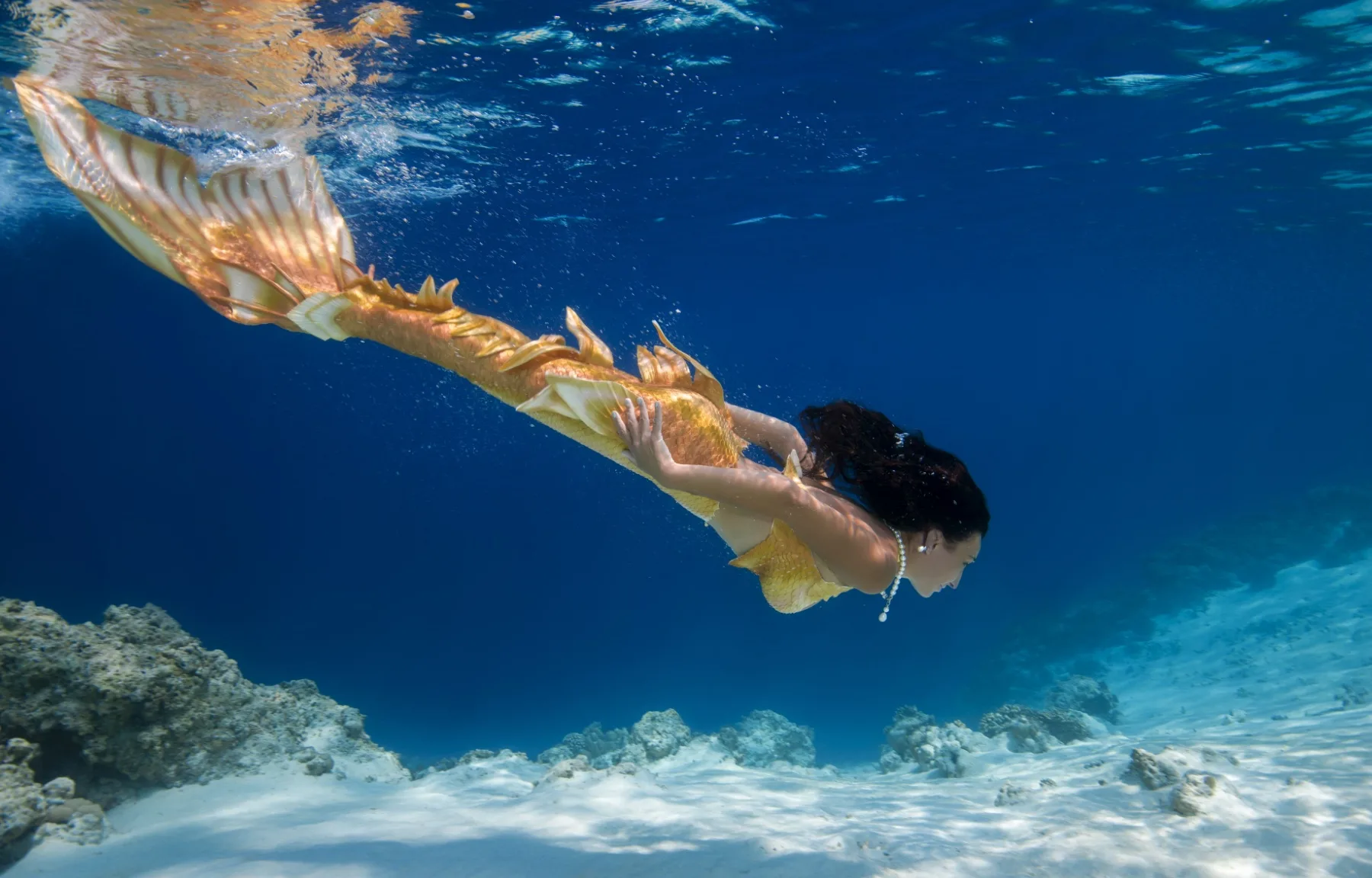
Somewhere in a hotel pool in Florida, a woman in a £2,000 silicone tail is performing a slow underwater pirouette for a birthday party. She has been doing this for six years. She has a business card. It says “Professional Mermaid.”
The mermaid performance scene has been quietly bubbling along since at least the 1940s, when Weeki Wachee Springs in Florida opened its famous underwater theatre. Women performed choreography behind plate glass, breathing from air hoses hidden in the scenery, for paying tourists. That show still runs today, though the crowds are thinner and the nostalgia heavier. Weeki Wachee charges around £10 for adults, which also covers the waterpark and a river boat, and it remains one of the few places where theatrical mermaid performance has genuine institutional history behind it.
The modern version is something else. Social media dragged the subculture into visibility around 2013 to 2016, and a generation of swimmers, dancers, and free-divers saw an opening. Silicone tails from companies like FinFolk Productions and Mertailor start around £2,000 and climb past £3,000 depending on the level of artistry involved, with cheaper fabric tails available for a few hundred. Some performers commission full-body silicone suits at costs that edge toward £8,000. These are not cheap hobbies dressed up as careers. They are expensive hobbies dressed up as careers, which is a different problem.
The actual work is physically demanding in ways people do not expect. Competitive free-divers train for years to hold their breath for three to five minutes comfortably. A working mermaid doing pool appearances, aquarium residencies, or photoshoots needs reliable breath control, strong core strength, and the ability to smile serenely while their lungs are arguing with them. Drowning is not performative. Several mermaid performers have spoken publicly about hypoxic blackout risks, and the more serious practitioners train with qualified dive instructors.
The community has conventions, and the biggest of them is still going. MerMagic Con, billed as the world’s largest mermaid gathering, draws hundreds of attendees, vendors selling tails and accessories, freediving certifications, and panel discussions on the business of being a mermaid. It has bounced between venues in Virginia and Maryland and is still on the calendar. What has thinned is not the community but the easy money: the gold rush period, when a performer with a decent tail and a YouTube channel could build real income off novelty alone, has largely passed. The Facebook groups and Discord servers are still busy. The earning, for most, is harder than it was.
What remains is a smaller, more committed group at the professional end. Some work as aquarium performers at venues that pay £15 to £30 an hour for the novelty of a mermaid swimming past the sharks. Others do corporate events, children’s parties, and the occasional magazine shoot. A handful have built genuine teaching businesses, running mermaid fitness classes at leisure centres for £20 to £40 a session. Mermaiding as a form of aquatic exercise has found a modest but real market among adults who find regular swimming tedious.
The gender split has shifted too. Male performers, called mermen, have always existed in the community but were largely invisible outside it. That has changed incrementally as the performance space has opened up, though the booking market still skews heavily toward the stereotyped image.
It is a peculiar little world. Part athletic discipline, part cosplay, part small business hustle, with a committed core of people who are genuinely serious about something most of the population finds baffling. Whether it constitutes a profession in any meaningful economic sense depends largely on your definition of the word and your tolerance for silicone chafing.