If you’ve spent any time in a British club or festival in the last few years, you’ve seen it. Someone crouched at an angle that suggests their spine has briefly gone on holiday, staring at a point approximately six inches below the floor. That’s not tiredness. That’s ketamine, and it is absolutely everywhere.
Ket, K, special K, whatever you’re calling it, the dissociative anaesthetic originally developed for veterinary use has become the background noise of British nightlife. A 2025 survey by Global Drug Survey placed the UK among the highest per-capita ketamine-using nations on Earth. In some circles it has essentially replaced MDMA, which is either a cultural shift or a damning verdict on pill quality, depending on who you ask.
The appeal is practical, which says something depressing and relatable about modern Britain. A gram costs roughly £20 to £25, significantly cheaper than cocaine and more reliable in effect than whatever’s in those pills. It doesn’t require a dealer with a phone full of emojis and a two-hour delivery window. It materialises. Someone always has it. The supply chain, such as it is, runs heavily through social networks rather than organised street dealing. Friends sell to friends. Students supply their flatmates. The traditional hierarchy of drug distribution has been considerably flattened.
The hit is pretty abstract. It’s not a typical upper, nor downer. At lower doses it can be stimulating, albeit in a wonky way. It’s a bit like being drunk and will certainly make you feel more comfortable and less anxious. Music and lights become more vivid which is where it’s appeal comes in with the dance music scene. But don’t expect the high to be incremental (mental more like) if you increase the dose. Expect limited mobilisation, tunnel vision and reality dissociation. Imaging being your very own NPC (non-playable character for anyone over 40). A full k-hole and your mates will think you’re dead, and you will have very little correlation between mind and body for an hour or so.
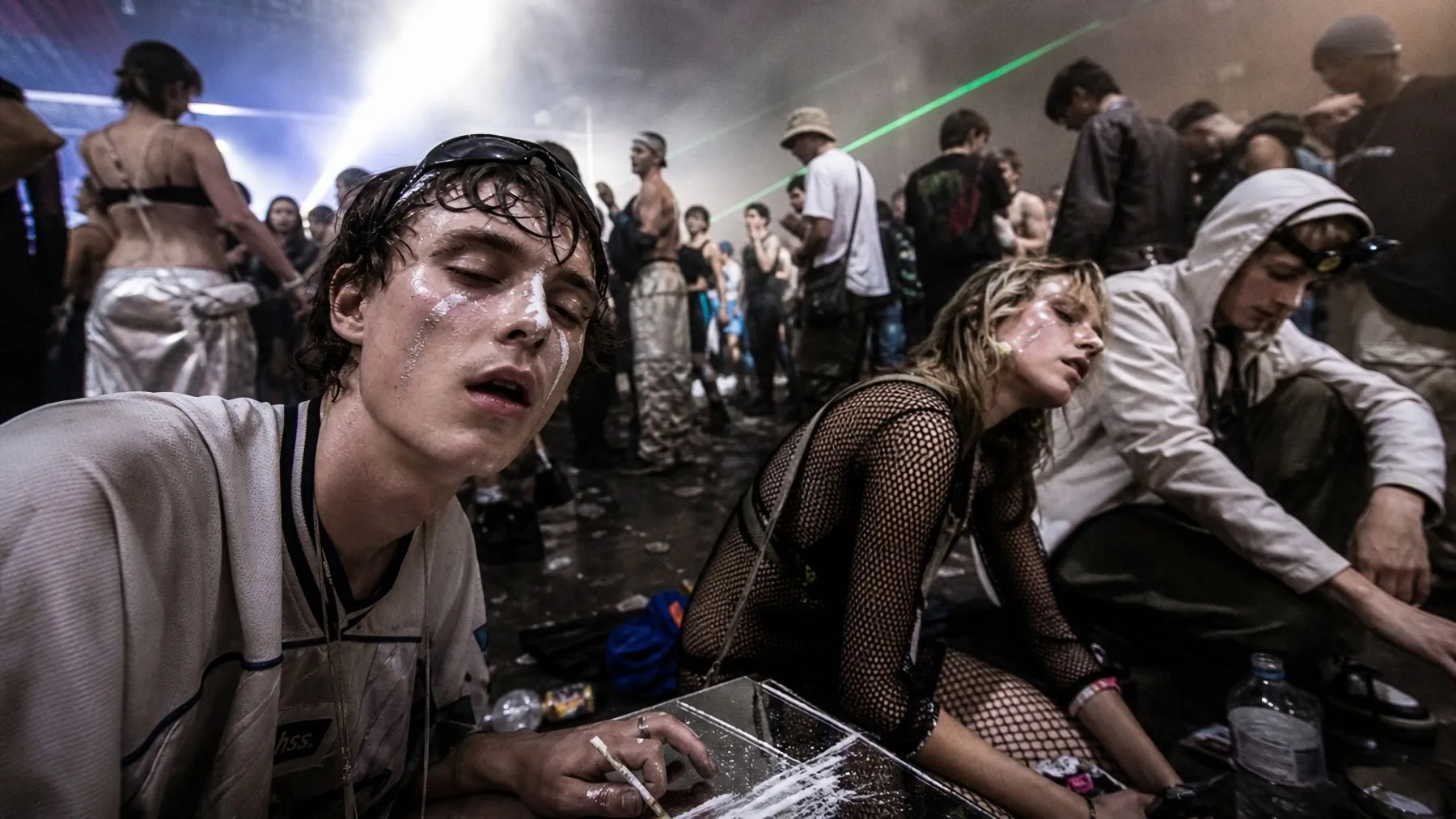
Who’s taking it covers more ground than the tabloids would have you believe. Yes, it’s dominant in techno and drum and bass spaces, in queer clubs and art-school afters. It’s also showing up in provincial towns, at house parties in Reading, at festivals in fields where the average age is thirty-eight and people have mortgages. The demographic spread is genuinely broad.
The comedown is its own experience. MDMA punishes you the next day with mood collapse and the sense that happiness is structurally impossible. Ketamine just… empties you. You sit on the floor. You find the floor quite interesting. You eat cereal at 4pm and watch something you don’t really follow. The acute physical hangover is milder, which is partly why people treat it as a soft option. It isn’t. Ketamine bladder, a condition where chronic use scars the urinary tract and can require surgery, is no longer rare. Urologists at NHS trusts in Manchester and Bristol have reported significant increases in presentations among people under thirty-five. Some cases have required cystectomy, meaning complete bladder removal. This is not a scare story. It is what heavy use does, and anyone in British nightlife should know it.
The legal position is Class B, meaning possession carries up to five years and supply up to fourteen. Enforcement is inconsistent. Police at club venues frequently ignore small quantities. The Crown Prosecution Service prioritises supply over possession. In practice, a bag in your pocket rarely results in anything beyond confiscation, though that calculus changes significantly if you’re not white middle-classed, which is a separate problem with drug policing in this country.
The broader question of why ketamine specifically landed so hard in British culture probably comes back to cost, availability, and what it does. It removes you from the room without requiring you to leave it. For a generation doing nightlife under fluorescent economic anxiety, something that makes the walls go soft for £20 is going to find its market. That doesn’t make it harmless. It makes it very, very British.
For a more detailed insight into the effects and risks check out – https://dancesafe.org/ketamine/