It may sound counterintuitive, but natural light and fire safety can be designed simultaneously. These dual-compliant façades ensure that the perfect amount of light can enter a building, but a fire can never escape. The fire-engine-red solution is to compartmentalize light with fire-rated construction. This method separates the building into fire compartments so everyone inside has adequate time to exit the building in case of a fire.
What Standard Glazing Does in a Fire
Many people think that glass is resistant to fire. In fact, it is not. Regular tempered or annealed glass cannot withstand thermal stress since it fractures due to the rapid difference in temperature between the fire-exposed side and the side not exposed to fire and drops out of its mount in minutes. Once the glass fails, an opening becomes a vent. Oxygen is drawn in, and heat and flames are pushed out. What could have been a relatively small fire on one floor now has an unimpeded path to other parts of the building, either straight up or horizontally.
In high-rise buildings with lightwells or atrium glazing, that pattern of failure becomes particularly devastating. The vertical shaft that created such a beautiful wash of daylight in normal conditions now acts as a chimney for fires. According to the National Fire Protection Association (NFPA), unprotected openings in high-density commercial structures are responsible for one of the primary mechanisms of rapid fire spread. High-rise and high-density structure fires result in direct property loss of several hundred million dollars annually.
Compartmentation and the Rating Requirement
Compartmentation is the principle behind most passive fire codes. The building is divided into zones that can contain a fire long enough for occupants to evacuate and suppression systems to respond. Every wall, floor, and ceiling assembly in that zone boundary needs to hold its fire rating, typically measured in hours, for the system to work.
Any horizontal glazing installed in a roof assembly has to match the fire resistance of the surrounding construction. If it doesn’t, the compartment line is broken. That’s not a grey area under most building codes, including the International Building Code, and it’s certainly not a detail that gets resolved after the fact.
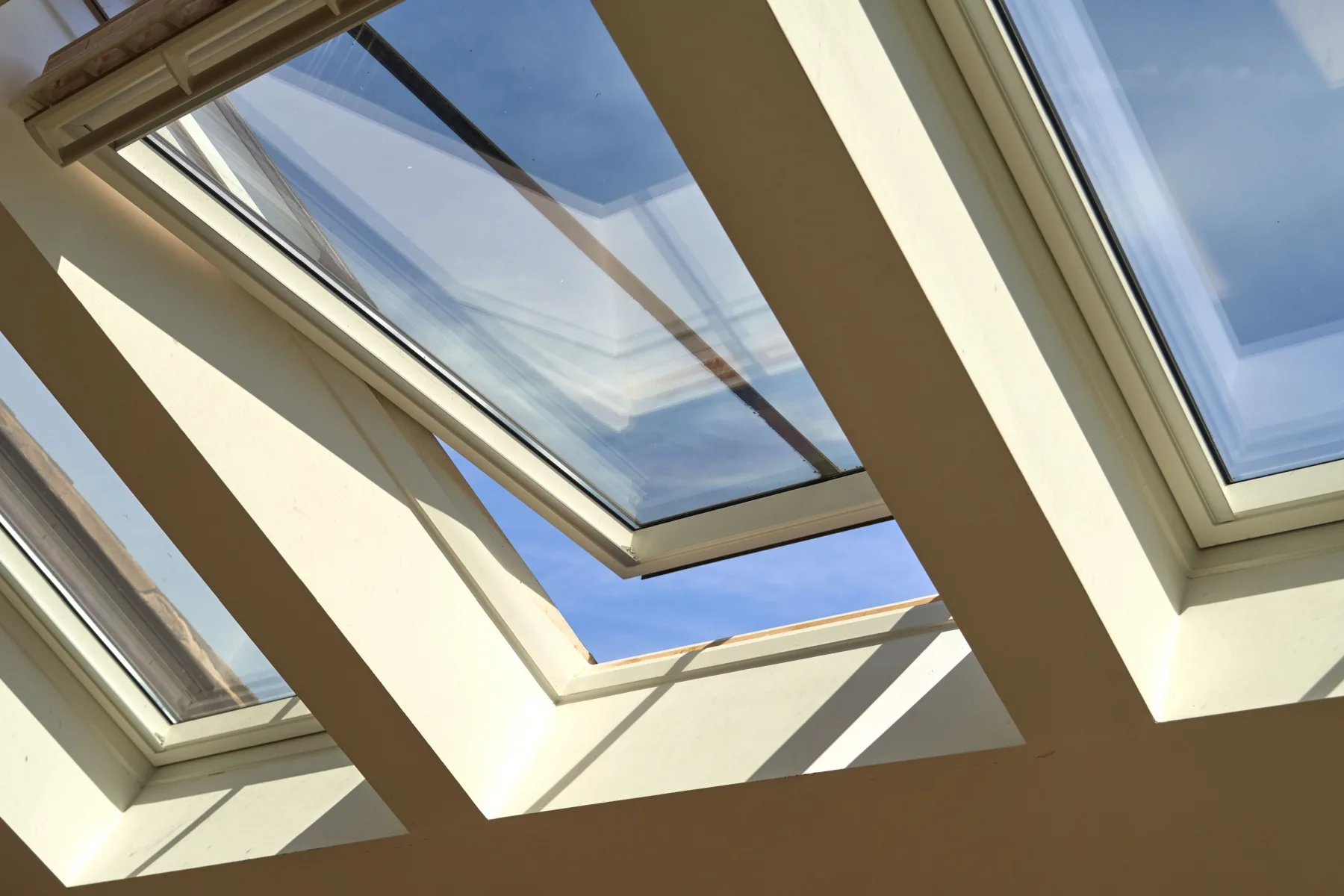
This is where replacing standard roof glazing with fire rated skylights becomes a structural necessity, not just a specification upgrade. Certified fire-rated overhead glazing allows natural light to move through deep floor plates while keeping the compartment boundary intact. The roof assembly stays compliant with property line proximity requirements, boundary distance rules don’t require blocking the opening, and the daylighting strategy survives the planning stage.
Why Urban Density Makes Daylighting Harder
When buildings are constructed in close proximity to each other, perimeter glazing cannot serve as an effective daylighting mechanism. Adjacent facades block direct sunlight most of the day, and local building regulations often preclude window openings near the lot line for exactly the same reason that daylight is not available, to forestall the spread of fire.
Designers of buildings in city cores with relatively high lot coverage often find that meeting required (or desired) window-to-floor-area ratios via the perimeter alone is impossible. The solution is daylighting from above, atriums, lightwells, and open courts that bring daylight in at the roof level and funnel it down through multiple stories of occupied space.
These design elements significantly improve Daylight Autonomy metrics, a measure of how much of the time during normal occupied hours a space can function without artificial lighting (i.e. autonomously). Daylighting from above also contributes to more LEED points for IEQ (Indoor Environmental Quality) as well as to the WELL (a performance-based system for measuring, certifying, and monitoring features of the built environment that impact human health and wellbeing) requirements for daylight access and views. The catch is that every penetration in the roof for daylighting offers a path for fire to spread.
How the Glass Actually Works
Fire-rated glazing is not simply thicker or tempered differently. That performance is made possible by intumescent interlayers, materials that are laminated between the glass panels that react to heat. When exposed to rapid rises in temperature the interlayers react by swelling and turning opaque, forming an insulating barrier between the fire side and the protected side.
This is very important because the rating must address two separate failure modes. Integrity means the assembly doesn’t crack, fracture, or allow flames and hot gases through. Insulation, the non-fire side of the glass stays cool enough that materials near it don’t reach ignition temperature on their own. A product that merely meets the integrity standard still allows radiant heat to transfer, which can ignite combustible materials in the space below without direct flame contact. Full EI-rated assemblies address both.
What this means in practice is a skylight assembly that performs as a passive fire barrier for the required duration of the code, then permits daylight under normal conditions with no modification or active involvement.
Making the Numbers Work on Both Sides
The architects and project managers who get this right early treat fire-rated overhead glazing as a shared solution to two separate planning problems. The sustainability team gets the daylight autonomy figures they need. The compliance officer gets a roof assembly that satisfies fire separation requirements at the boundary. Neither side has to compromise because the product is rated for both conditions simultaneously.
The buildings that struggle are usually the ones that optimized for daylighting first and tried to retrofit a fire strategy afterward. At that point, the options narrow fast.