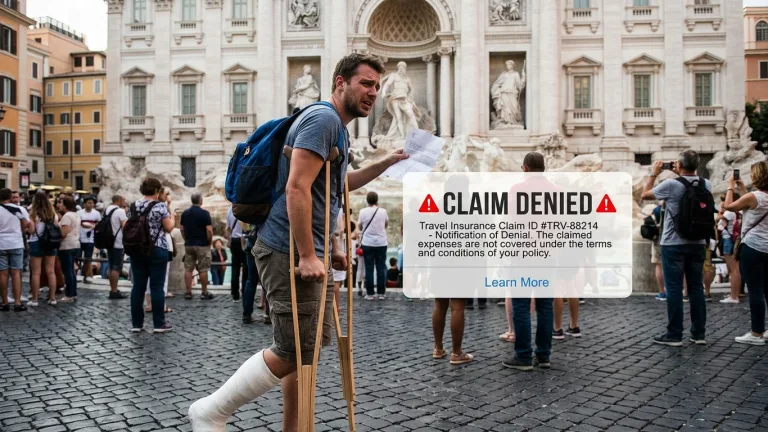
Travel insurance is one of those things people buy to feel better, then never read. That works fine until you’re sitting in a Bangkok hospital at 2am with a knee like a grapefruit, waiting to find out if the insurer is going to tell you to get stuffed. Spoiler: they might. Exclusions are the number one reason travel insurance claims are denied. Not fraud, not bad luck. The answer was buried in the policy document you clicked through without reading.
Pre-existing conditions: the big one
A pre-existing condition is generally defined as any illness or injury you had before you bought the policy, even if you were not officially diagnosed. That matters more than most people realise. Most insurers will look at your medical records for the last 60 to 180 days. If you changed your blood pressure medication or visited a doctor for a minor chest pain during that time, anything related to that condition may be excluded.
The rule is simple: declare every diagnosed condition, every prescription medication, and every major medical event in the past several years. The lookback period varies, usually two to five years for most insurers, and a lifetime for some serious conditions. Common conditions that need declaring include asthma, diabetes, heart conditions or events, high blood pressure, cancer, stroke, and mental health conditions on medication.
If your condition makes mainstream insurers expensive or obstructive, specialist insurers exist for declared conditions where mainstream insurers are punitive. AllClear, Saga, Insurance Choice, and Staysure all underwrite for higher-risk medical histories at sensible premiums. The premium will be higher. It beats a six-figure medical bill.
Drunk? Good luck with that claim
The top reason for a travel insurance claim to be rejected is that the policyholder was intoxicated at the time the accident or injury occurred. This is not a technicality. Most policies clearly state that incidents occurring under the influence of alcohol or drugs fall under policy exclusions, leading to claim denial. I once had a mate who slipped off a wall in Lisbon after a generous evening, broke his wrist, and discovered his insurer’s definition of “under the influence” was stricter than he’d anticipated. He paid the hospital bill himself.
Most policies carry a general exclusion, but the allowed limit is never the same across all policies. Some policies reference a blood alcohol level exceeding 0.19 per cent, roughly four pints or four 175ml glasses of wine, while others refer to being two and a half times or more over the UK drink-drive limit. Check your specific policy wording before your Ibiza week. This is genuinely useful information.
Adventure sports: your hobby, your problem
Standard coverage excludes high-risk activities like mountain biking, skydiving, and rock climbing. The second most common cause for claim rejection is that the accident occurred while participating in an extreme sport. The definition of “extreme” is broader than you’d expect. Motorcycle riding, while not considered extreme by most people, is not covered by some policies without an adventure sports add-on.
Skiing and snowboarding are excluded from standard policies too. An add-on typically costs £15 to £40 and covers the piste, off-piste in some cases, equipment hire, and lift pass refunds. If you are going up a mountain, buy the add-on. Medical evacuation off a ski slope without cover is ruinous.
Known events: timing is everything
If a situation was already known to you or made public before you booked your trip or bought your policy, it is not considered unforeseen and will not be covered. Cancellations due to weather or natural disasters are excluded if the event had already started before you purchased your insurance. Claims related to an epidemic or pandemic that was already occurring when you booked are excluded, even if it had not yet reached your destination.
Many benefits, including pre-existing condition waivers, disappear if you wait more than two weeks after booking your flight. Buy the policy the same day you book the trip. There is no downside to doing this.
Baggage: lower your expectations
Items that are lost, stolen, or damaged while left unattended in a public place are a standard exclusion. Left your bag on a restaurant chair while you went to the toilet? That’s on you. Most baggage policies also have strict per-item limits for high-value goods like jewellery and electronics, and many insurers exclude coverage for jewellery or electronics placed in the custody of an airline as checked baggage. Put the expensive camera in your hand luggage.
If your claim does get rejected, you can appeal with more details or contact an independent complaints authority, such as the Financial Ombudsman Service in the UK. But the far simpler move is to read the exclusions section before you travel, not after something goes wrong. It takes twenty minutes and it is the least glamorous thing you will do in your trip planning. Do it anyway.