Interview:
Marc Collin
Nouvelle Vague
Interview:
Marc Collin
Nouvelle Vague
The cover song is, by and large, a poorly crafted replication of a well-known song. It’s the territory of X-Factor finalists and crappy wedding bands. Very rarely does the copy transcend the original.
And then, there’s Nouvelle Vague.
Twenty-one years ago, the idea of reimagining bands like Joy Division and Depeche Mode into loungey Bossa Nova vibe seemed like an avant-garde experiment, with a potentially short shelf life. Today, Nouvelle Vague is a global institution, having dissected and reassembled some of the most iconic tracks of the post-punk and new wave era. Nouvelle Vague proved that a great song is a piece of malleable architecture, capable of withstanding total reconstruction.
Ahead of their upcoming UK tour, we spoke with co-founder and producer Marc Collin about the project’s enduring appeal, the philosophy of deconstruction, and why the “lounge” label couldn’t be further from the truth.
Meeting Marc, you don’t get the sense of a man who stumbled into success. You get a musicologist, a producer with a deep, almost academic understanding of sound, but zero patience for the bullshit of “sacred cows.” Ask him for the secret to the project’s longevity, and he practically dismisses the question. “I don’t have really a secret,” he says, with the calm pragmatism of a man who’s been explaining the same thing for two decades.
Hard to imagine now, in our 80s-saturated landscape, but the decade was poison. It was naff. It was old. “It’s cool to listen to Joy Division now” Marc says, “but it wasn’t cool to listen to Joy Division in the 90s”
But timing only gets you in the door. The project lasted because it defied the cardinal rule of the cover band. It wasn’t a bad copy. It was a complete re-imagining. This, of course, invited the wrath of the purists. “Some people I remember told us how you dare to do a cover of joy division,”
“This is music, it’s just a band and they have done beautiful songs” he insists. I mean when you are starting to learn an instrument you are playing Mozart, Bach or The Beetles, that’s part of the process. So I don’t know why some composers would be sacred and you can’t touch their music. I think that nothing is sacred in music. It’s just notes, on the piece of paper.”
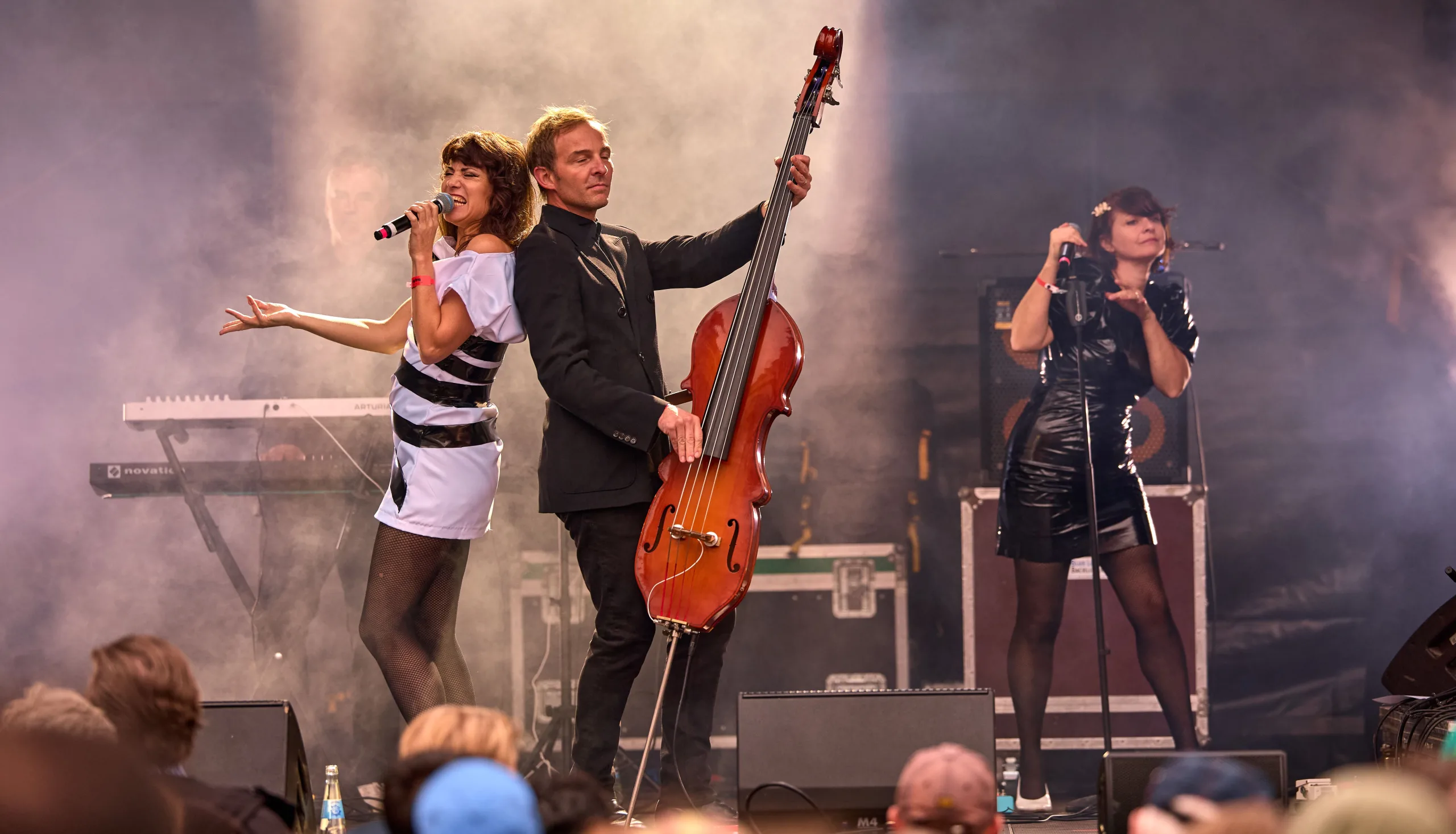
Image Credit: Daniel Mayne
That “notes on a piece of paper” philosophy is precisely why Nouvelle Vague gets a pass. This isn’t reverence, it’s a total deconstruction. Nouvelle Vague doesn’t just change the instrumentation; it performs artistic surgery. Hunting for the hidden melody, the chord progression buried under layers of analogue synths, and exposing it in a new way.
Marc tells me about a recent session for a different project, a cover of David Bowie’s “The Man Who Sold the World,” where the musicians were dutifully recreating the original. Marc had to step in.
“At one point, I just said, ‘Hey guys, this is not interesting.’ I think we have to be more creative, and we have to forget about the chords and everything. Let’s do something personal.”
That, right there, is the method. It’s not about imitation. It’s about translation.
This is why, far from being offended, the original artists have consistently championed the project. They’re not hearing a pale imitation of their work; they’re hearing its ghost, dressed in new clothes. “Most of the bands we have covered really love our covers,” Marc says. “Because we never thought the songs could be like this so it’s a beautiful pleasure instead of just hearing copy or people are trying to imitate their sound.”
As the project evolved, so did the exploration into new genres. The “Bossa Nova” tag was just the starting point.
But that sound, that specific alchemy of guitar and keyboard, wasn’t just the work of one man. For most of its life, Nouvelle Vague was a duo. The project was founded by Collin and the late Olivier Libaux. When Libaux passed away three years ago, it wasn’t just a personal loss; it was a creative one that could have easily ended the project.
Marc describes their dynamic as complementary. “There was always two ways to create the new arrangement,” he says. “The first way was to start from the guitar. So that was Oliv. The second way was to start from the keyboards. and that’s my part.”
When Olivier died, Marc was, by his own admission, already doing half the work. The project’s continuation wasn’t a given, but it also wasn’t an impossibility. “I’ve done almost half of the albums on my own before. So I wasn’t like, ‘Okay, I can’t do anything without him’ I often thought that Nouvelle Vague was over.”
What dragged it back? The anniversary. The fans. The legacy. “There was the 20th anniversary, and everybody told us, ‘ you should do a tour, you should do a new album, you should do something.’ and even for him I think it’s good to go on and to continue and to play the songs that he arranged he arranged with me live.”
The spirit of that original dynamic remains, even as Marc solely pilots the ship. “It’s probably a bit different from what we did in the first album,” he muses, “but the spirit is still here.”
Part of that spirit is the live show. And if you’re picturing a “dimly lit Parisian music hall or a smoky cabaret bar,” as I admittedly was, you’re dead wrong. The studio albums are sophisticated, loungey, perfect for a dinner party. The live show is a different beast entirely.
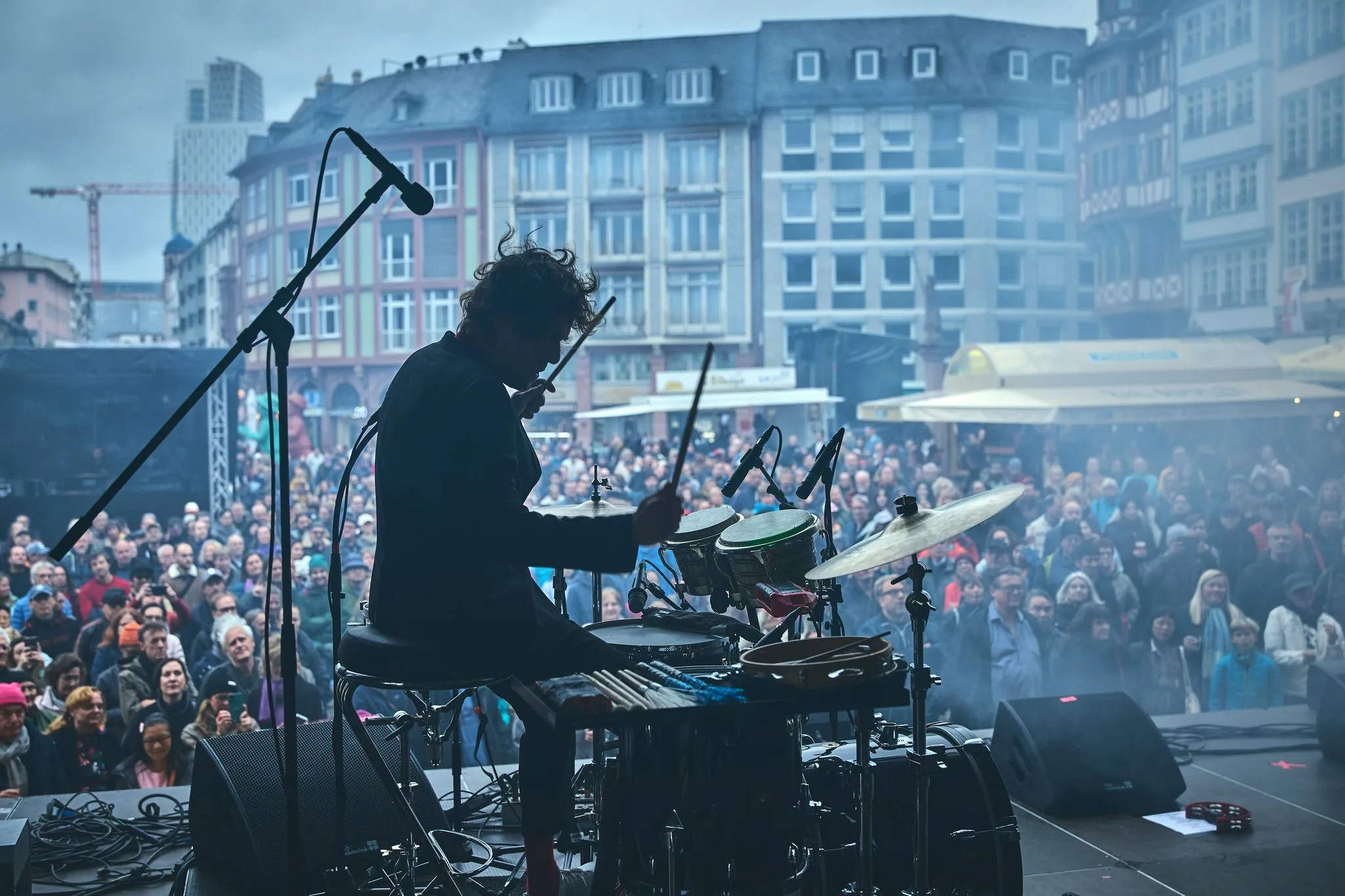
“What is the surprise with people, I think, is that people think, as you said, that it will be a kind of longe. But it’s not at all like that,” Marc says, lighting up. “It’s very dynamic, we have a drums, a double bass, percussion, and two amazing singers.”
This is where the project truly comes to life. It’s less a concert, more a performance. “One has danced with the crazy horse in cabaret in Paris. So they are dancing and it’s very full of energy. We have electric guitars. so it’s more rock than jazz really.”
The other iconic element, of course, is the revolving door of female vocalists. Nouvelle Vague has helped launch and showcase a stunning array of talent.
“I’m not really like doing a casting or anything,” he says. He’s been in the business for over 30 years. He knows people. “Sometimes people just, told me, ‘you should check this girl. she could be a great Nouvelle Vague singer.’ So, sometimes they are completely wrong. But sometimes there’s something special.”
So we try to have the really wild one and the more shy one for our live show, as it allows us to cover a lot of our back calalouge.”
I ask Marc to describe some music which defines him and the band. Let’s start off with define the entire new-wave post-punk era with one track or album. His answer is immediate. “I would say, A Forest by The Cure.” A good shout! It’s the perfect distillation of 80s melodrama.
Define Nouvelle Vague with one track. He pauses, then lands on the definitive. “In A Manner Of Speaking.” The Tuxedomoon cover. It’s the track that proves that something quite abstract and stark can become a beautiful, sensual ballad.
And finally, define himself. What single track defines Marc Collin? He hedges, “that’s not easy, let’s say Visage Refectory”
And just like that, the whole project clicks into place. “The Visitors” by ABBA. Not the breezy pop of their early days, but their final, darkest, most sophisticated work. A track dripping with Cold War paranoia, domestic fracture, and an icy, synth-driven majesty. It’s pop music as high art. It’s a song with a beautiful surface and a deeply unnerving core.
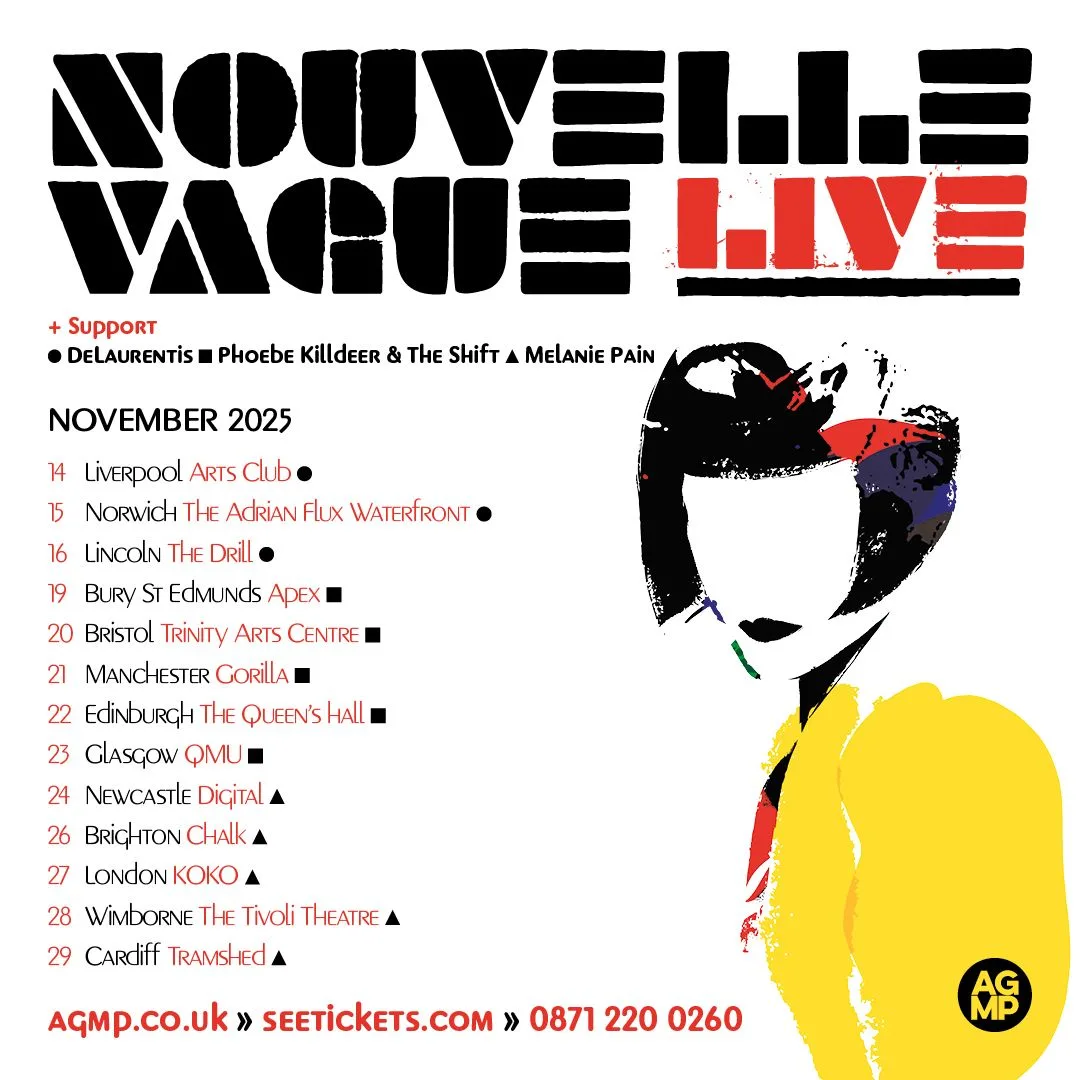
You can catch up with Marc and Nouvelle Vague across the UK
Find out more – https://nouvellevaguemusic.com/