
PROTOJE
The Art of Acceptance
Image Credit: Yannick Reid
Protoje has been getting plenty of airtime in my house since his Ancient Future album landed in 2015, and I was lucky enough to catch him live at Boomtown the following year (in the rain, but no one cared). So getting the chance to sit down with him, even via video call from a car somewhere in Jamaica, is one I’m not passing up.
He’s just come off the back of his first Lost in Time Festival, he’s got a new album about to drop, and a European tour to prepare for. Time is tight, but he’s relaxed. “We’re good, man,” he says. “Do your thing.”
Protoje (aka Oje Ken Ollivierre) has been one of reggae’s standout voices since emerging in 2009, part of a wave of Jamaican artists who refused to choose between roots consciousness and contemporary production. With 1.7 million monthly Spotify listeners, over 500 million YouTube views, and a single (“Who Knows” with Chronixx) that has racked up more than 87 million views on its own, he’s long since outgrown the “ones to watch” lists.
He’s played Coachella, Glastonbury, and Lollapalooza, performed on The Tonight Show with Jimmy Fallon and NPR’s Tiny Desk Concert, and landed a track (“Switch It Up” with Koffee) on Barack Obama’s 2021 Summer Playlist. Two Grammy nominations for Best Reggae Album (A Matter of Time in 2018 and Third Time’s The Charm in 2022) and coverage from Rolling Stone to Vogue have cemented his reach well beyond reggae’s traditional audience.
His label, In.Digg.Nation Collective, has become a launchpad for the next generation. Between his new album The Art of Acceptance, the launch of the Lost in Time Festival, and the foundation work that followed Hurricane Melissa, he’s now operating as festival curator, label boss, and relief organiser alongside everything else. All of which sits on top of collaborations with some incredible artists including Chronixx, Damian Marley, Romain Virgo, Kabaka Pyramid, Stephen Marley, Wiz Khalifa and Jorja Smith.
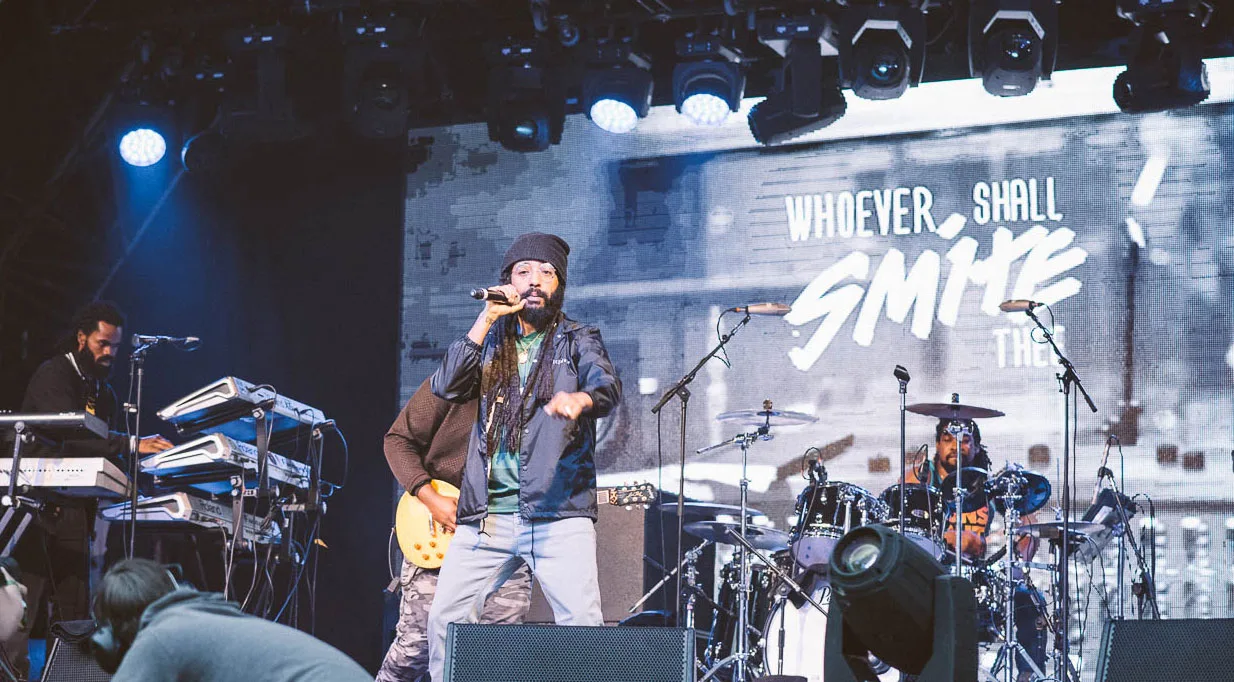

His Lost in Time Festival just wrapped its first edition, and by all accounts, it delivered. The headline moment? Chronixx performing his first show in seven years, choosing Protoje’s event to make the return.
“Presenting Chronixx for his first show in seven years was such an honour and a privilege,” Protoje says. “Humbling that he chose for Lost in Time to be the show that he did that.” Was it always planned as a one-off, or is this becoming a thing? “I really wanted a break from it,” he admits, “but the success, the vibe, the energy. I think it would be a disservice to not try my very best to make it annual. We just want it to be sustainable. So we’re working towards it and trying to start very, very early this year.” The festival isn’t just about music. The Lost in Time Foundation has been actively working in areas affected by Hurricane Melissa, and the event itself contributed to those efforts. It’s the kind of thing that’s become central to how Protoje operates: art and purpose, running side by side.
His path to music was probably always on the cards, but not in the way you’d assume. His mother, Lorna Bennett, scored a reggae hit with “Breakfast in Bed” in 1972; his father, Mike Ollivierre, was a calypso singer from St. Vincent. But Protoje pushes back on the idea that family connections made it easy. “In Jamaica, music is so close to everybody that it kind of rubs off on you in some way,” he explains. “I wouldn’t say it’s because of my parents, but at least they made it seem like it was possible to pursue music. So I would say they had some influence over me for sure.”
After attending College in St. Elizabeth, he considered following his mother into law before committing fully to music. What came through early was a talent for storytelling, for “writing stories, expanding on ideas”, and putting that into music became natural. He began honing his craft in Jamaica’s sound clash culture, rewriting popular songs to battle other performers, before releasing his first mixtape in 2005.
The influences that shaped his sound came from artists who were already pushing boundaries. “Between Damian and Stephen Marley, they really gave me a blueprint of how you can explore through sounds and blend your influences,” he says. “Literally on my first song on my first album, I talk about the influence that Jamrock had on me, what Mind Control had on me.” He also credits Sly and Robbie, the legendary rhythm section whose work spans decades of Jamaican music. “They were very modern even though they were from the ’80s. Very, very, very modern music. To me, they are the main influence.” You can hear it across his discography, from the hip-hop inflections of The 8 Year Affair to the more exploratory Ancient Future and the Grammy-nominated A Matter of Time. Each record has pushed further from traditional reggae’s parameters while somehow remaining rooted in its consciousness.
His new album, The Art of Acceptance, opens with the loungey, funky groove of “Something I Said”. It’s a statement of intent. This isn’t going to sound like anything you’re expecting. The question of pressure (to repeat past successes, to meet expectations, to fit a mould) gets dismissed immediately. “I don’t feel pressure about music. I say pressure for life,” he laughs. “But music is just fun. I enjoy creating. I don’t let expectations of people make me turn this thing into a pressure thing.” He reaches for an analogy: “It’s like a child in a colouring book. He’s not thinking about ‘oh, I have to keep it between the lines.’ You just colour. And that is the vibe I get with music.” The goal, as he describes it, is “high-quality sound that is rootical but still very contemporary and forward-thinking.”
It’s a balance that defined the reggae revival movement, a term that has its own origin story. “When I started out, there wasn’t as many peers,” Protoje recalls. “Then a couple years passed and Jah9, Raging Fyah, Chronixx, Kabaka, a bunch of artists started to come around. I actively worked with most of them.” The name came from his friend Dirty Bookman, who saw history unfolding and wanted it documented. “He was like, in the ’40s, if someone didn’t call it the Harlem Renaissance, I wouldn’t be able to go and research about it. So he said this needs a name. We can’t say it’s the Renaissance because that happened in the ’70s. This feels more like a revival of that energy.” The movement gave contemporary reggae a collective identity and critical framework, but Protoje has always been a significant outward-facing ambassador. He’s the one most comfortable moving between worlds, collaborating with hip-hop artists, appearing on mainstream platforms, explaining what the music means without dumbing it down.
Beyond his own records, he’s been building something larger through In.Digg.Nation Collective. The roster includes Lila Iké, whose debut EP The ExPerience (executive produced by Protoje) established her as a major voice in contemporary reggae, as well as artists like Sevana and singer-songwriter Jaz Elise. “It’s a different journey to be with people’s dreams partly in your hands,” he says, choosing his words carefully. “I can’t tell you that I want to do too much more of that. It takes a lot out of you.” But the rewards are real. “It’s been very rewarding to watch Lila’s ascension. She’s a dream to work with. She inspires me a lot too, brings me close to that time of having that hunger. So it keeps me very hungry and very active.” He’s clear, though, that the artist drives their own success. “As much as I play a role in Lila’s career, without Lila doing the work and showing up for herself and dedicating her life towards her goals, that’s what really makes it work.”
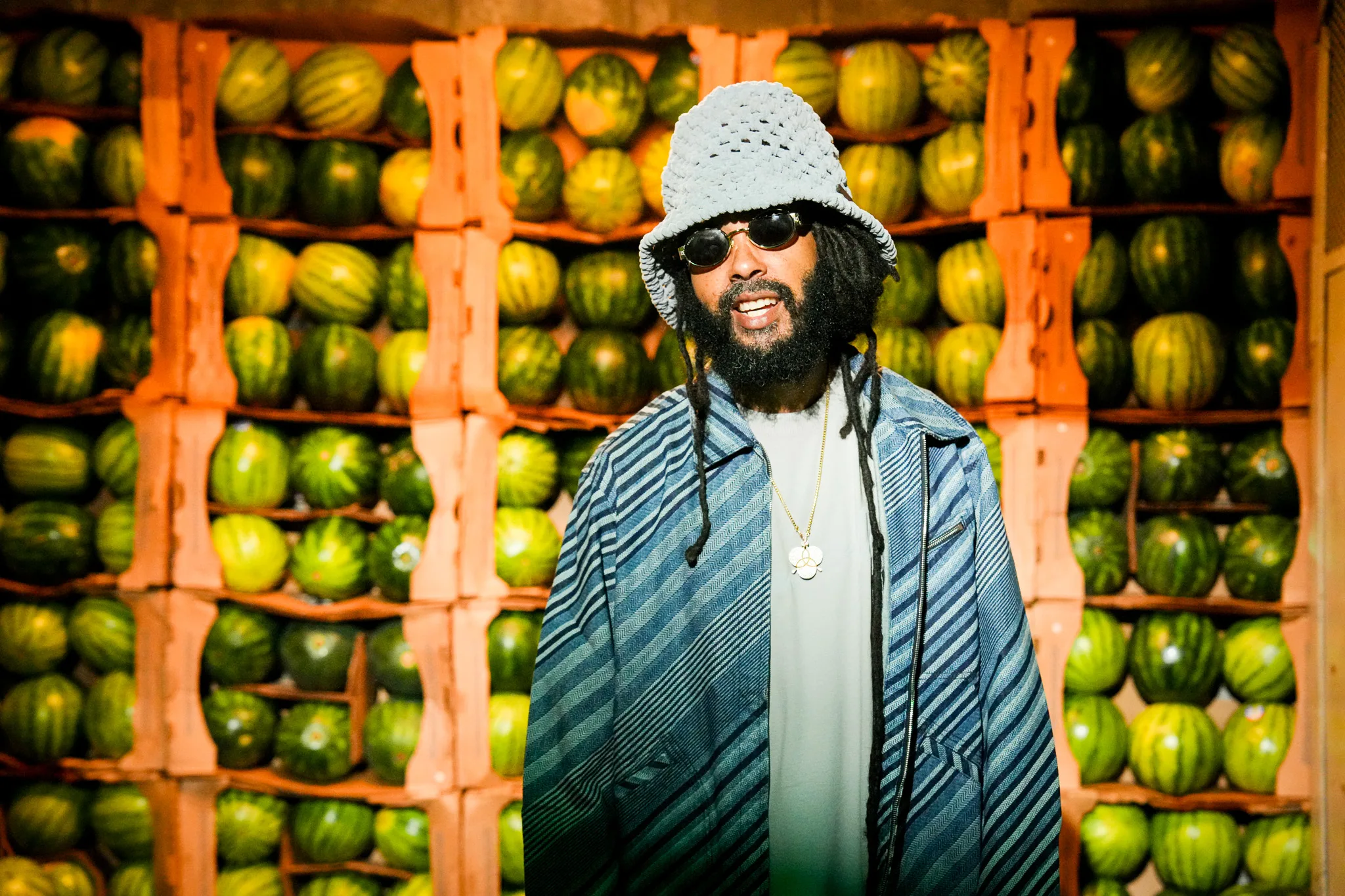
Image Credit: Reid Waters
The collaborative spirit in contemporary reggae is worth noting. Artists frequently appear on each other’s projects, share stages, promote each other’s work. It sits in contrast to the clash culture that once dominated Jamaican music, the sound system battles and lyrical warfare. Protoje sees competition as fundamentally illogical. “There’s literally nobody else that can do what I can do. There’s nobody else that can do what Chronixx can do. There’s nobody else that can do what Lila can do. Everybody is their own original artist that cannot be duplicated. So for me to be in competition with somebody else, the idea of it don’t make any sense to me.” There’s also a strategic element. “The bigger reggae music is, the bigger impact Protoje has a chance to make. So it’s in my interest that more artists are popular, more artists are bigger, more artists’ songs are playing on the radio.
I’m very confident within myself and what I do. So I don’t get worried about somebody else. I just want them to excel as well so that reggae music can share a bigger space.”
The tour supporting The Art of Acceptance is imminent. Full band, new songs, exclusive merch and vinyls dropping before the album itself. European and American festivals are confirmed for summer, though no UK festivals this time around. “Just focusing on my own shows,” he says.
There’s also a visual album in the works to accompany the record, and a film project called The Jamaican Situation that’s been put on hold while the album takes priority. “I went into album mode. We had to shift focus on this record because it was really important that I move on this project right now. We’re looking to get back into it at a later time.” When asked about emerging Jamaican artists to watch, he names Jah Lil, Iotosh, and Royal Blu. And dream hip-hop collaborations? J. Cole comes up first (“though I might not keep up with his rapping skills”) but the real answer is Jay-Z. “My favourite rapper. I would love to collaborate with him.”
For now, the focus is on getting the album out and getting out on tour. It’s been a pleasure to talk. It’s a genuinely exciting time for modern roots music coming out of Jamaica, and this new trajectory, the way Protoje’s approaching audience engagement, is clearly working. It’s great to see Reggae reaching new listeners, and thriving in a competitive market of social media, YouTube and streaming. I’m really looking forward to seeing Protoje at the O2 Forum on 12th April.
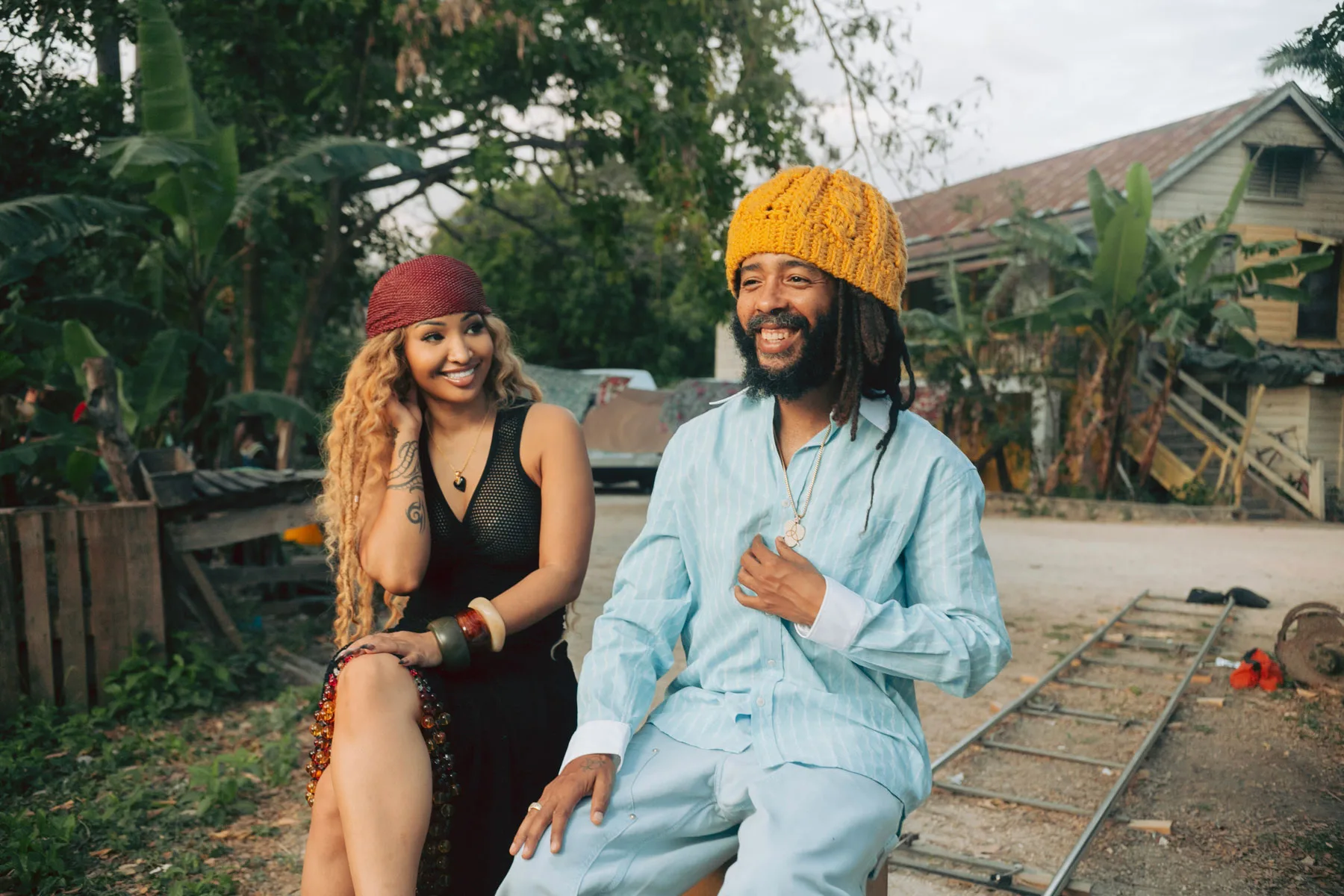
If you fancy a glimpse of the new album, you can check out some of the tracks on your favourite streaming platform or YouTube. This includes the latest release ‘Goddess’ A love letter to his queen was a collaboration with Dancehall powerhouse, Shenseea. Released on 20/03/26.
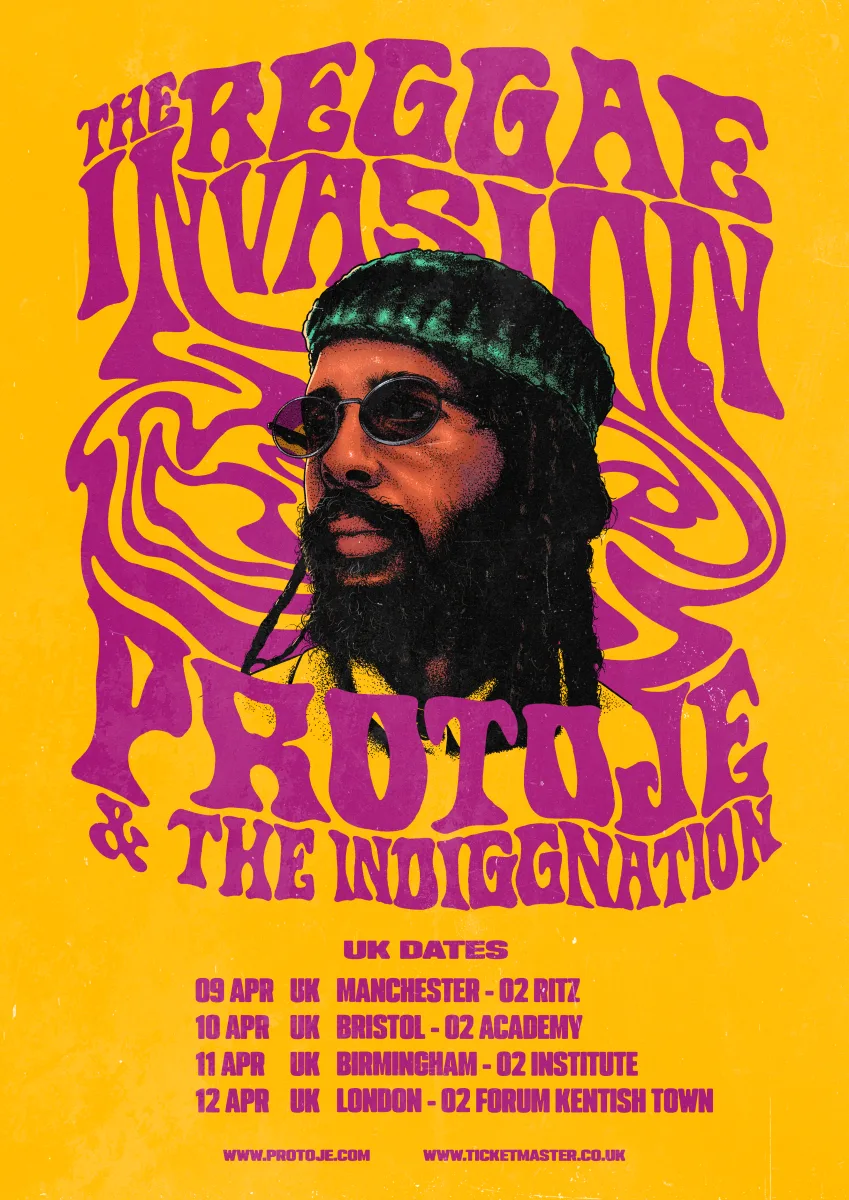
The Art of Acceptance is released on 17 April. Protoje and ‘The Indiggnation’ bring the album to the UK this April for four headline shows:
9 April: O2 Ritz, Manchester
10 April: O2 Academy, Bristol
11 April: O2 Institute, Birmingham
12 April: O2 Forum Kentish Town, London
Tickets and full European tour dates at protoje.com