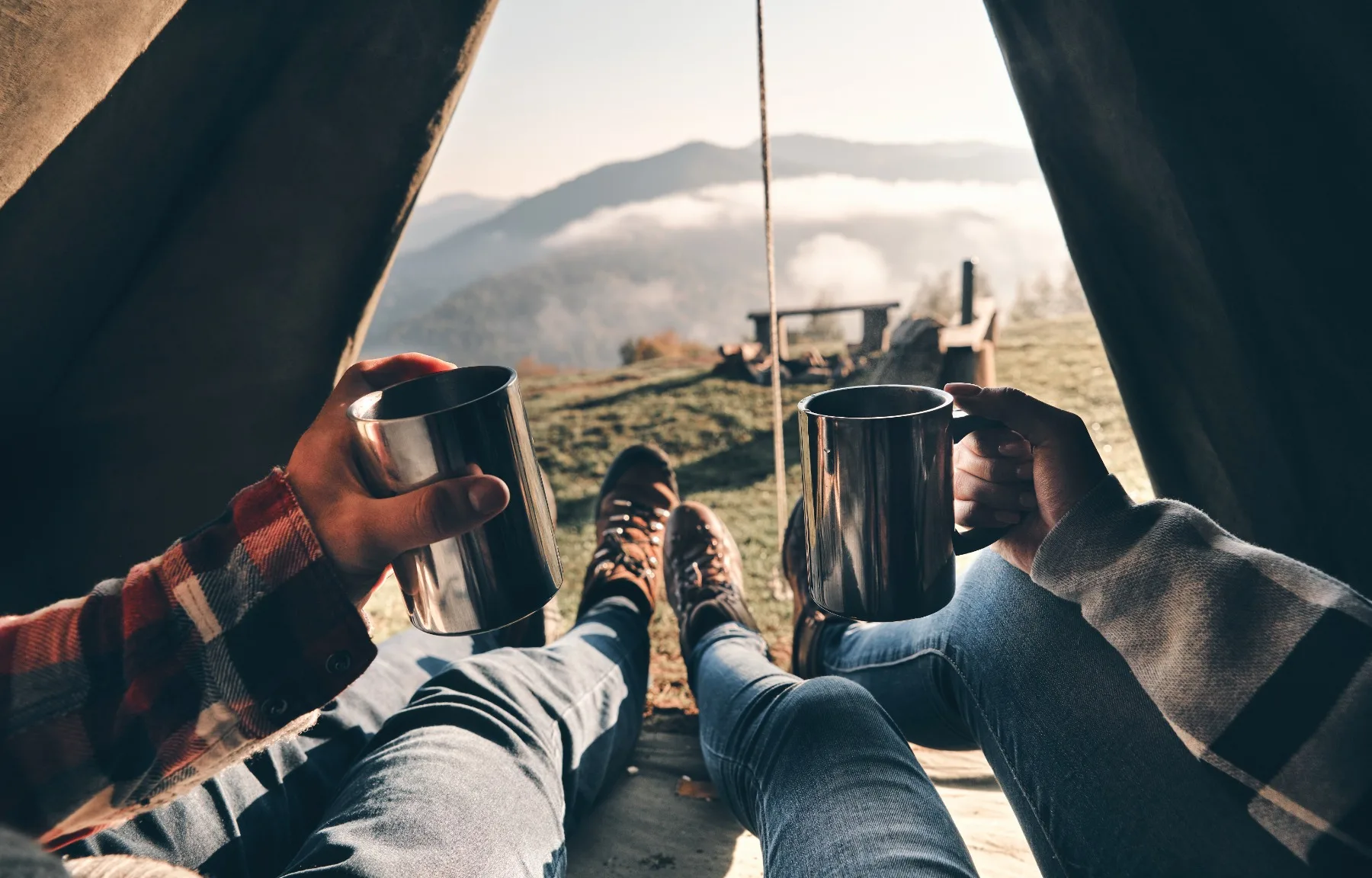
As I’ve got older, I’ve become increasingly intollerant of many things, and many people come to think of it. But one thing I refuse to comprimise on, is shit coffee. The world has no place for it (here’s looking at you Starbucks), and we should do whatever we can to irradicate it for the betterment of humanity. But, what about when you are travelling? It’s hard to be a picky coffee prick when you’re in a far flung destination, and you can’t pop out and grab a decent brew from your favorite independent coffee shop. Never fear, you can embrace your inner James Hoffman and make a decent brew on the go. Here’s how.
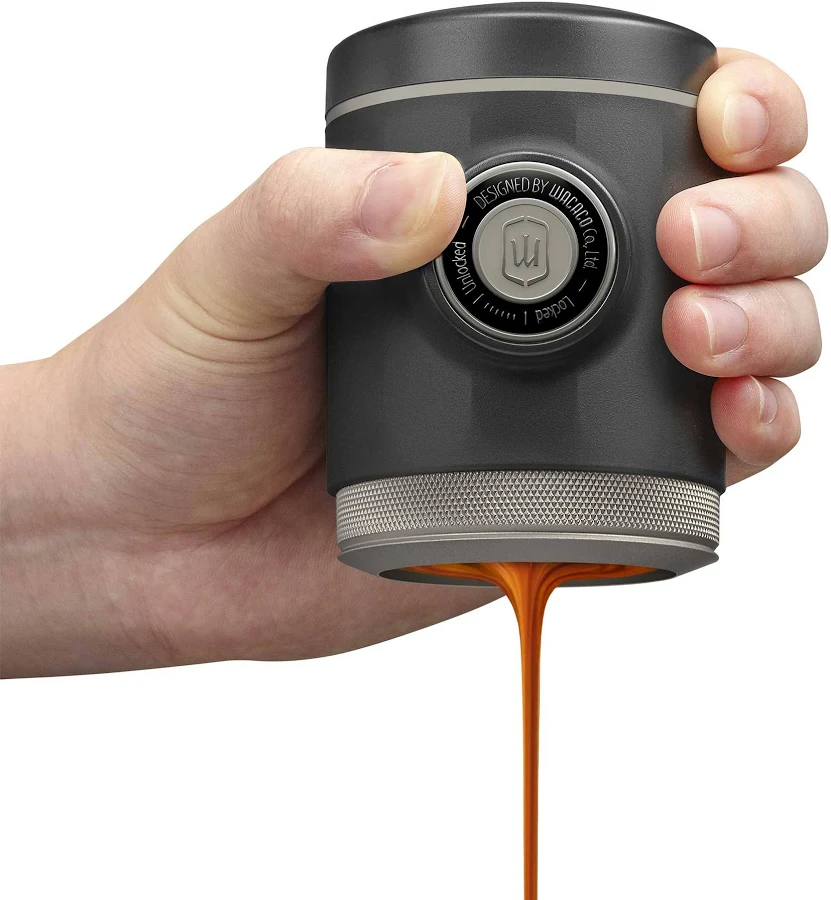
Wacaco Picopresso is the choice for the coffee obsessive who travels with a grinder and will not compromise on shot quality. It’s 350 g and small enough to fit in a side pocket. The stainless steel basket is non-pressurised and naked, a bottomless portafilter, which means channelling errors are immediately visible and a poor grind will diminish the quality of the shot. Used correctly, with an ultra-fine grind and up to 20 g of coffee, it (allegedly) reaches up to 18 bar and pulls a genuine crema-bearing espresso. You can get a capsule basket which James Hoffman seems to think makes a better brew and who am I to question the king of poncy coffee elitism. Wacaco box it with a tamper, WDT tool, dosing cup, brush, funnel, dosing ring and an EVA travel case, so the kit is self-contained. It does not heat its own water; you supply boiling water from a kettle, stove or thermos. That dependency is either irrelevant or a dealbreaker depending on where you are going and it’s important if you like your coffee hot. My trusty Wacaco Nanopresso while it makes a pretty drinkable espresso, does tend to end up cooler than I would like it to be especially if trying to cheat the faff and use a flask of hot water when the facilities to boil water on demand are missing. At £120 it’s not a cheap and cheerful option, but it’s one that has a large following and gets a good brew result if you do it properly.
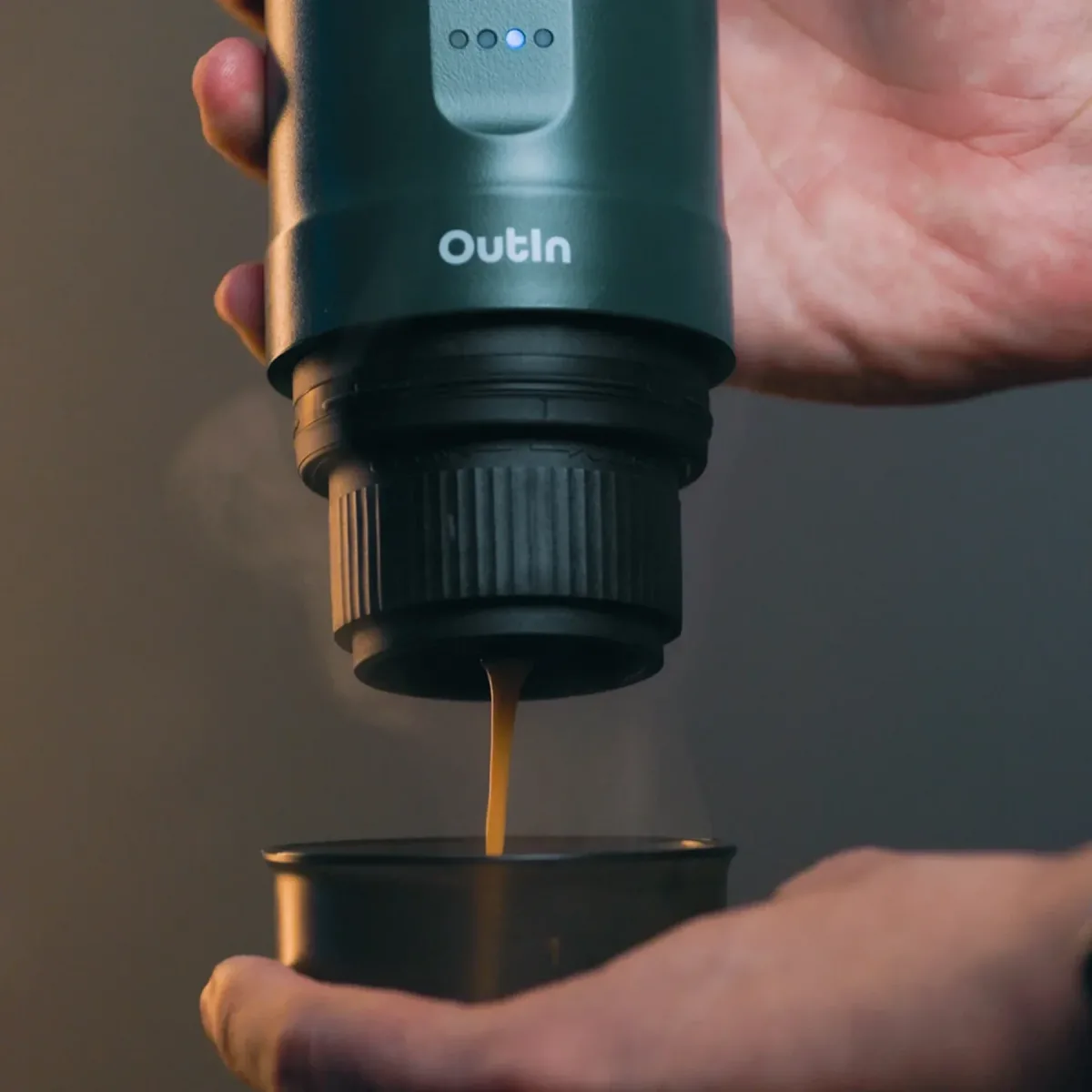
OutIn Nano is the device for the traveller who wants espresso without sourcing hot water or carrying a grinder. It weighs 670 g, charges via USB-C and self-heats 50 ml of room-temperature water to brewing temperature in around 200 seconds. Its 7,500 mAh battery supports up to five brews from cold water, or over 200 brews if you supply pre-heated water. It runs at 20 bar, accepts ground coffee or Nespresso Original-style capsules, and OutIn positions it as the everyday option, office, home, casual travel. The pod compatibility is the tell: this is a pressurised-basket machine built for convenience, and it delivers on that without pretending to be something else. Comes in at over £110
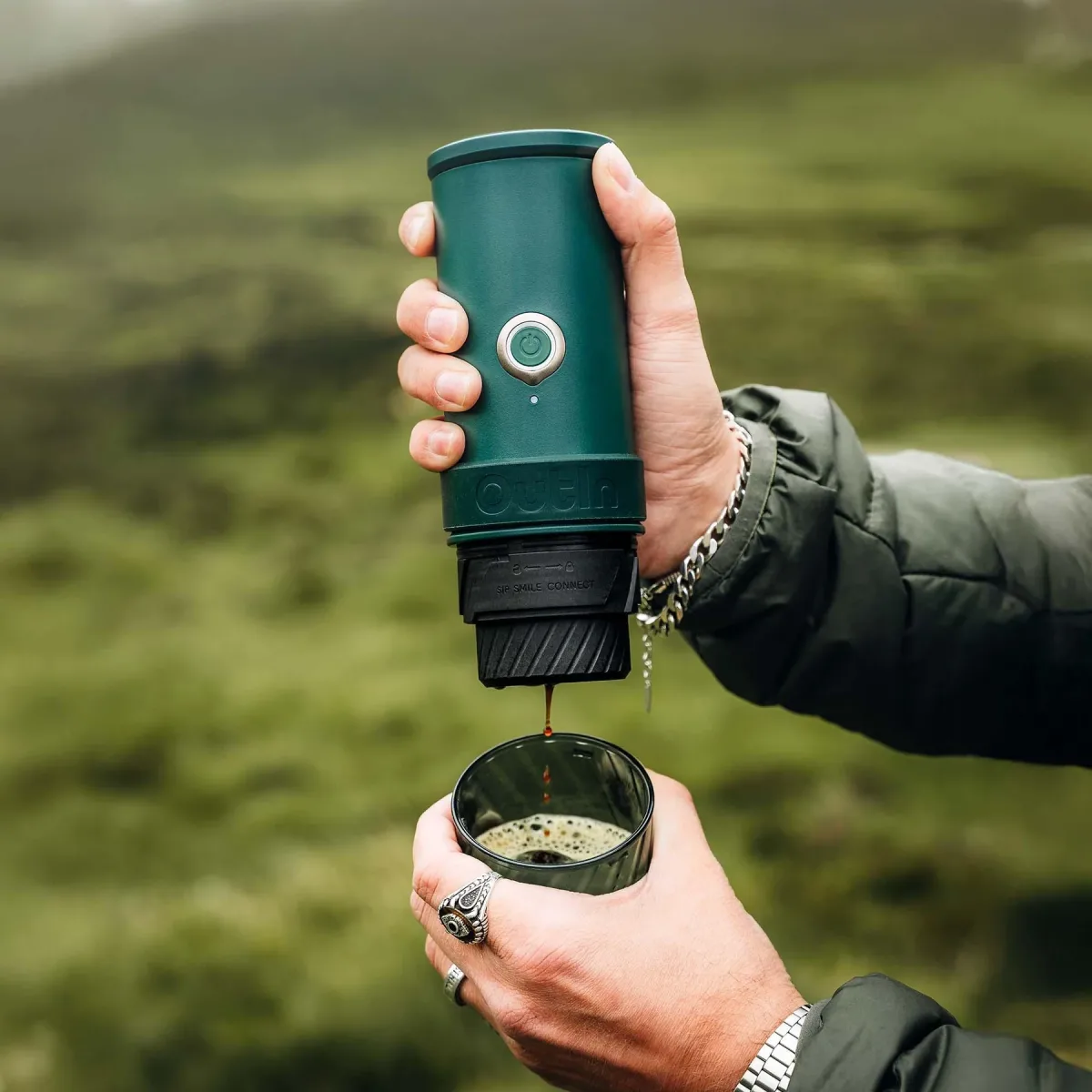
OutIn Mino is the Nano’s outdoor sibling. At φ67 mm x 195 mm and 685 g, it is slightly heavier, pushes 22 bar, carries an IP67 waterproof and dustproof rating, and heats the same 50 ml of water faster, around 149 seconds. OutIn describes it as built for deserts, mountain peaks and jungles. It also takes Nespresso Original-style capsules, with a capsule insert included in the box. If you are somewhere wet, cold or dusty and want a reliable pressurised shot without fussing over grind consistency, this is the tool for the job! You won’t get much change from £150 for this one.
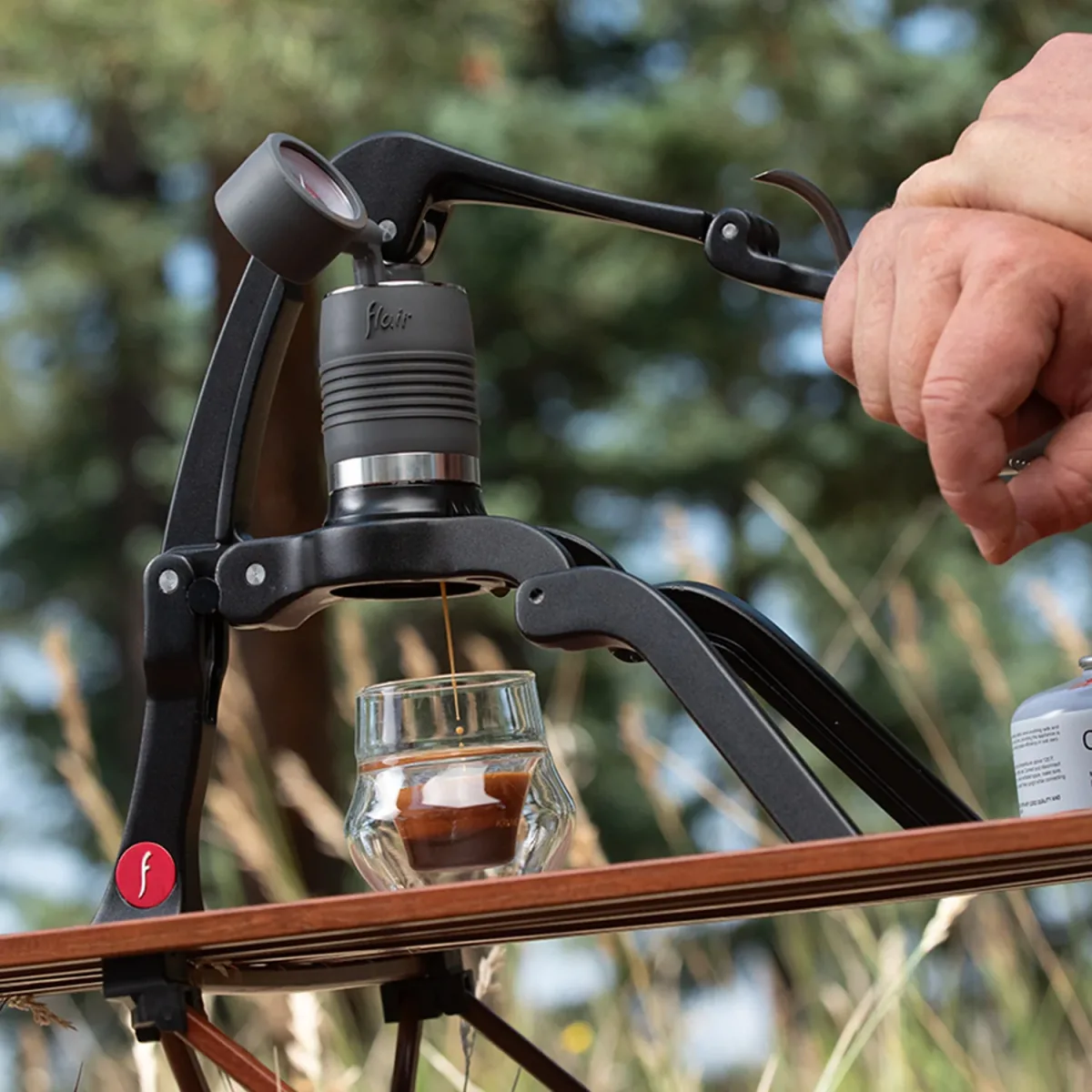
Flair 2GO is a sexy fold up manual lever machine for travellers who want non-pressurised basket quality without the weight penalty of carrying a battery. It folds flat, operates with no electricity, produces 9-bar espresso through a true bottomless portafilter, and includes a live pressure gauge, which means you can actually see when you are in the right pressure window. It’s a similar price as the Mino at £145, but factor in all the other bits you’ll need (like a kettle) and the price will soom head into a less desirable/justifiable budget.
Cafflano Kompresso Coming in at under 200g makes it the lightest non-pressurised option in the category, which can be a big factor on a long trip. I’ve not used this one, and to be honest the process would put me off a bit if I was hiking or something.
The AeroPress Go sits just outside this category. It is the most foolproof travel brewer available, but it doesn’t produce pressurised espresso. I’ve heard good things about an add-on device called Fellow Prismo, but I can’t speak from experience. Know what you are buying. My AeroPress comes away with me more than any of the others, because it’s simple to use, makes a decent long coffee, and didn’t cost so much, that I care if it gets left in a hotel room one day.
I think the main takeaway is that compared to a coffee bag, or dare I say instant coffee granules any of these machines will be a serious upgrade if you take the time to refine the process and dial in the grind properly. Personally, if weight isn’t a factor, I would go for the Mino all day long, but if weight is a factor and let’#s be realistic, on a camping trip or short haul trip with stingy baggage allocation, I’d still go with my trusty AeroPress.
Things to consider
The number on the box that everyone looks at is bar pressure. It is the wrong number. Twenty bar, eighteen bar, twenty-two bar, these figures tell you what the pump is capable of under ideal conditions, not what ends up in your cup. The figure that separates real espresso from a concentrated press-style coffee is nine bar of working pressure, which is the threshold the Specialty Coffee Association uses to define the thing. Get above that with a properly dosed shot and you get crema. Below it, you get something closer to a strong AeroPress, which is fine, but it is not espresso. Several devices in this category clear that bar comfortably.
The distinction that matters is this: a non-pressurised basket demands an espresso-fine, consistent grind, which in practice means packing a quality burr grinder. A pressurised basket or pod-compatible unit will tolerate pre-ground coffee and still produce a recognisable shot. Neither is a shortcut, they are different tools for different needs. You can spend as little or as much as you want on portable coffee making kit with prices at the top end, with meaningful differences in shot quality across that range.
How you prepare and store your ground coffee will potentially make a bigger difference than randomly picking any of our featured machines.