
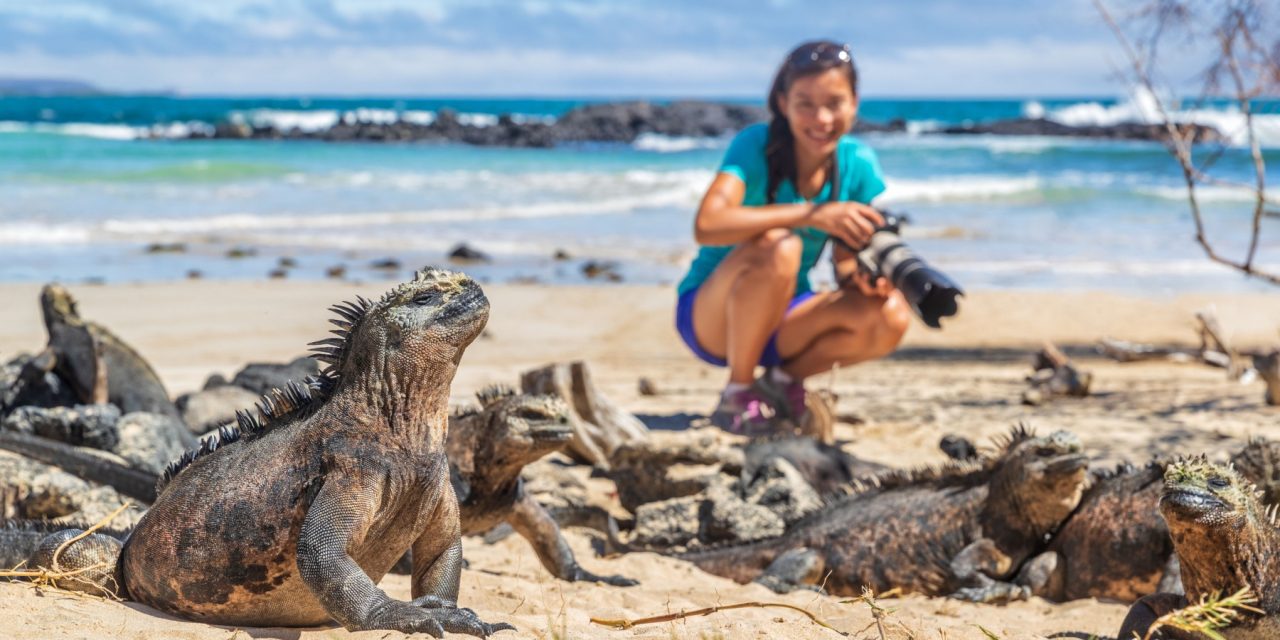
While some travels are meant to be entertaining; others will quietly change the way we think about our surroundings. The Galápagos has been called a “dream destination” but for many travellers, the experience of travelling to the Galápagos is not necessarily about checking off all the must-see sites. Instead, for many travellers, it’s about changing the way we look at things; starting to pay attention to the little behaviours, a sea lion’s patience, a bird’s nest selection, the way a coastline “functions.”
Travellers don’t just go to see wildlife
One of the main reasons why exploring the Galápagos Islands is so powerful is that it’s not built for easy wandering. For example, most visitor sites have strict rules to help protect the wildlife (staying on designated paths, maintaining distance from wildlife, etc.) and these rules create a shared code of conduct for visitors to the Galápagos Islands. These rules also help shape the rhythm of the day from looking for the next great thing to moving at a pace dictated by the rules of the Galápagos National Park.
At first, this structured approach may seem foreign to many independent travellers who typically dictate the flow of their itinerary based on their whims and interests. As we adjust to the structure of the Galápagos, we begin to see the structure of the trip as part of the transformation process. When we start to treat nature as a living entity, rather than a backdrop or a scenic view, we tend to travel at a different pace and with a greater sense of respect for the natural world around us.
How the Galápagos changes the definition of “adventure”
Adventure is not always about having an extreme adrenaline rush. Adventure can come from experiencing something in person, and in the Galápagos, the opportunity to observe wildlife and ecosystems is exhilarating. The marine iguanas bask in the sunlight as if the sidewalk belongs to them. Birds stand their ground. Sea lions sleep on benches. The shock is not in seeing animals that are cute. It is that the animals act as if they have the right to exist and don’t need to perform for humans in order to survive.
According to UNESCO, the Galápagos is a location where the connection between the land and sea is indistinguishable, and the wildlife relies directly on the ocean for survival. See Galápagos Islands UNESCO designation.
After observing that connection firsthand, many travel patterns become obsolete. We find ourselves no longer wanting to travel to crowded places with large numbers of people. We want to avoid chasing the perfect photo, and we want to eliminate the tendency to use a destination solely as a means of creating content. In the Galápagos, the best experiences are often found when we are quiet enough to appreciate them. And once we learn this lesson, we take it back home with us.
What “change” looks like when you return home
The change is usually subtle, and not always obvious. However, it is real and tangible.
For many travellers returning from the Galápagos, the change is characterized by a newfound acceptance of slowing down. They no longer try to pack an entire city into a weekend simply because they want to say they did it. They allow themselves more buffer time, not because they have lost ambition, but because they understand now that time equals depth.
Travellers also begin to evaluate destinations differently. Rather than simply asking, “What can I do here,” we ask, “What is my presence worth?” and “How is this place protected?” It becomes common to research and review park regulations, local restrictions, and general wildlife tourism guidelines prior to booking.
To make this transition easier, you can convert the Galápagos mind-set into a simple habit for your future trips. Simply choose one destination each trip and commit to learning the local rules, abiding by them, and slowing down enough to see what changes when we stop searching for the next highlight.