IN THE FOOTSTEPS OF NELSON
A NEVIS SOJOURN
Words by Stephen Thorpe

Nelson Plaque at Port Royal, Jamaica

Oualie Beach, Nevis
Historically the vibe is slow and unhurried in the extreme, the mindset rural and family, with a population of around 11k on only 36 square miles, transport issues essentially absent (not even a traffic light, only one roundabout), no income tax either, a soporific air of peaceful langour unsullied by outside interference prevails, life may seem verging on the sybaritic. Easiest access is via a short taxi ride from St. Kitts airport down the south east peninsula highway to the pierhead at Reggae Beach, then a fast eight minute launch across The Narrows, 2.5 miles of open sea to Oualie Beach on Nevis’ north west coast, a former anchorage for Nelson in his frigate HMS Boreas and now the scene of an annual inter-island wildwater swim drawing five hundred international participants every March. Car ferries also run from Basseterre to the capital Charlestown taking about forty minutes. The classic volcanic rim of Mount Nevis looms mini-Fujiesque on approach, dominating your eyeline, always arresting, then just as quickly might fade beneath the white stuff. Hours, days even, might pass before it reappears.
“Oualie” is the old Kalinago word for “beautiful waters”, and it’s not a misnomer, the west facing bay sustained by regular planting of coconut, tamarind trees and grasses over several decades by an enlightened hotel owner. The arbours create natural shade, deter erosion and, with sea temperatures rarely dipping below 70 F., there’s a tangible air of quietude, a warm serenity at dusk against a vivid orange horizon, as blissful a place as any in fact for an instant immersion in the island’s mood. Oualie has morphed into the main low-key location for marine and ocean bound activity over recent years too with fishing, scuba, yacht charter and paddleboard/kayaking operations all adjcent at the Aquatic & Sailing Club and Islander Dive Center, while an elevated local bar at the southern end ” The Rocks” affords a great view of southern St Kitts, the bay’s boat traffic and Booby Island astride the Narrows. Less endearing are a quartet of jet-skis tied up below, intent on disturbing the idyll. More on that later.
The swimming off Oualie in calm waters is sublime, you could float yourself to sleep right here, no problem, many do—but don’t be alarmed when snorkelling if a large brown pelican glides over seeking a fish lunch, more beak than bird with a six foot wingspan, then plunges from 20 metres up very close to your head. You’re safe, they’ve good eyesight, treat it as a visceral birding experience. Indeed, don’t exit the water, stay for more, ringside seat for nature in the raw, only swim away if a feeding frenzy ensues. It’s the national bird, and as a local kids’ poem attests : ” a wonderful bird is the pelican, its bill can hold more than its belly can”. Less than 1600 pairs remain in the West Indies archipelago as a result of overfishing and human disturbance, so gawp while you can.The Yearwood family had constructed a tiny beach bar here in January 1980 followed a decade later by half a dozen gingerbread style cottage rooms, then two-storey, high ceilinged villas in latter years, rooms and verandahs all fine meshed and mozzy proofed to perfection. Environmental awareness underpinned the entire project with recycling, solar energy, water treatment for irrigation and multiple training schemes earning the Federation’s first Green Globe Certification.
John, the manager, once lassooed a hammerhead shark for a bit of fun as a youth and was towed halfway to Booby Island for his troubles, but these days is dedicated more to establishing a long mooted Marine Nature Reserve and continuing sustainable practices. Nevis is not renowned for its after hours nightlife, many establishments look to pull the shutters around 9pm and Oualie is only slightly less conventional: the Tuesday evening jam session is always a draw, there’s Sunday afternoon jazz at the bar pre sunset and an annual Jazz & Blues Festival with international patronage. For those ageing rock n rollers who’ve lived a noisy life on the frontline, it’s no surprise they prefer quieter backwaters in their dotage and don’t be surprised if you clock Daltrey & Plant in earnest conversation propping up a bar somewhere. www.oualiebeach.com

Glorious Sunset over Nevis (view from St Kitts)

Brown Pelican (Nevis national bird)

Oualie Beach, Nevis

Road towards Mount Nevis (Photo Credit: Shutterstock.com)

Typical Nevis gridlock (Photo Credit: Stephen Thorpe)

Plaque in Brick Kiln, marking the birthplace of Steve “Grizzly” Nisbett (https://steelpulse.com/)
While taxis are readly available and cheap route minibuses fairly regular, car hire is recommended and very reasonably priced; certainly, driving in several Caribbean destinations has become tiresome over time but that doesn’t apply here, it’s simply an unalloyed joy– everywhere seems “country”, even the compact Charlestown where a minor traffic snarl up might occasionally occur when a ferry docks. That aside, you can easily circumnavigate the island at a leisured observant pace in less than two hours over 20 miles, where the main hazards are errant herds of sheep, goats or donkeys leading an untethered life around open pasture and prone to roaming indiscriminately. Then troupes of pesky monkeys, green vervets by name, and apparently brought as pets from West Africa by British or French privateers, are a separate issue altogether, a serious one on several counts and sure to cause distraction at some stage. More on them later too (the primates, not the French). www.thrifty.com
Cruising the Windward highway along the lower eastern slopes of Mount Nevis grants an immediate impression of deeply rustic backwater, sparsely populated, vast swathes of uncultivated land, relic sugar estates and perhaps not much to do save marvelling at the far reaching vista down the rugged St. James seaboard. Winward they call it, where Nevis slows to a halt. Great hiking country nevertheless, no major gradients, especially along the rocky littoral, and there’s one or two inviting wave scoured beaches to cool off. More than likely you’ll be alone. As ever, carry flagons of water and always beware rip tide and current on this side of the island. Nelson’s Lookout to the south on a craggy outcrop of Saddle Hill at 1250 feet boasted a similar view, plus a wider perspective on the southern coast.
Tarry awhile at the Nevisian Heritage Village, and ponder the singular atmosphere at New River Estate, a real reminder of an enslaved past, and still starkly apparent in the rusting remnants of cane production, with well curated maps indicating separate slave dwellings beyond the main plantation house. It’s a soundless location, save a whispering wind.Half a mile downriver on the foreshore, keep an eye out for any odd looking detritus, you might get lucky and discover a few Arawak Indian artefacts amid the shingle. Just three miles on, through Butlers and Mannings, back with the main road round the north east shoulder of the island, I caught a brief glimpse of a battered metal sign passing the village of Brick Kiln, and knew instantly who the image had portrayed. I reversed in haste. And yes, sure enough, if barely decipherable, Steven “Grizzly” Nisbett it was, the one and only, mainline drummer and percussionist for the UK’s finest ever reggae outfit, Steel Pulse, pioneer and global ambassador for conscious music and justice; even played for President Clinton at his White House inauguration. A white bearded bear of a man with the kind heart and soul of a lion, twas a serious loss to the international music firmament when he died suddenly in 2018.
I must confess an affiliation here. Forty odd years ago I’d spent a week with the band at Music Mountain studios in Jamaica when they made an inaugural roots discovery trip to record their prescient Earth Crisis album. Grizzly was especially engaging, despite the moniker, and on farewell I promised I’d visit his birthplace one day. “Not many do”, he chortled. So now I mused on his career path, from island backwater to leaving for Birmingham, England aged nine, growing up in Erdington and joining a fabled band, and wondered whether his antecedents had indeed been attached to the Nisbet Plantation three miles away as forced labour ? It was not unusual for children born of slaves to take the name of the estate owner and it’s a logical association. Typographical errors and mis-spelling on birth registers were not uncommon either and his surname sported an extra “t”. Sure I regretted not asking him, but at least I’d kept a promise finally….they really do need to restore that memorial though.
Sad to relate, the old estate house and cottage hotel at Nisbet near Newcastle, long celebrated around the Leewards for its cuisine and service, are no more, the grounds and house a scene of destruction and ruin, laid low initially by the pandemic then a series of damaging storm events. It was here in May 1785 that Nelson first met his future wife, Frances Woolward Nisbet, widowed mother and niece of the Nevis President John Herbert, wooed her during his role enforcing the Americas Navigation Acts and eventually marrying under a silk cotton tree at Montpelier on 11th March 1787. I’d wandered here on occasion before, re-imagining the man himself, patrolling the lawns and blustery beach in a first flush of love whilst attending to the needs of state and fleet.
The Royal Navy’s West Indian Station HQ was English Harbour Antigua, centre of operations and refitting yard, and Nelson’s commission for three and a half years made neighbouring Nevis a regular stopover for watering the ships. Water, and beer no less, struggle to retain their quality in the tropics (rum doesn’t), and any accessible reliable spring supply was absolutely vital for mariners’ health and survival. Life on board was harsh, food often appalling, drunkenness and insubordination all too common amongst 150 men in stifling heat; in Roger Knight’s magisterial work “The Pursuit of Victory, the Life & Achievement of Horatio Nelson”, he notes ” the Boreas has been cited as the one unhappy ship that he commanded, as evidenced by the high incidence of flogging.” Smuggling liquor on board carried an automatic twelve lashes, the stock punishment.
The Vance Amory airport sits adjacent Nisbet, Lovers beach nearby ( no big stretch to envision Horatio picknicking there with Fanny, praying all was still shipshape on the Boreas anchored round Hurricane Hill ), only slightly isolated at this northern tip of the island. In truth nowhere is very far by car, you could fill the tank, drive for weeks without top-up and destinations invariably loom quickly. Well worth going the extra mile for is Drift, an unassuming Canadian owned restaurant perched open fronted on a rocky shore by the airstrip, which could possibly lay claim to serving the best seafood countrywide — and there’s some fair competition. A grand water’s edge outlook over the St Kitts peninsula and distant Mount Liamuiga, cool bar vibe, moody artwork by Vicki Fuller showcasing the ubiquitous monkey and imaginative food conjured by Jamaican chef Kerri-Ann Francis have ensured a “bookings advisable” rider. In fact, stick to this anyway as a matter of course if eating out in the evening. Close by, on the leeward slopes beneath the peak, Mount Nevis Hotel sits in 17 acres of the Round Hill Estate, initially envisaged by an Egyptian, Adly Meguid, in 1989 and greatly admired since for its dining terrace, vast sea views from the pool area and quiet atmosphere. www.mountnevishotel.com
Nevis is rapidly gaining an international foodie profile, with L’Escale and Luna (opened in the calamitous pandemic year of 2020 ) on this north west coast similar beacons of gastronomic excellence; the former is owned by legendary hostess Gillian Smith, veteran traveller, stylist and food fanatic of Bananas fame, the rainforest restaurant secreted on the volcano a mile from the peak; a different ambience pervades L’Escale, its culinary sister ship, with a classy upstairs cocktail bar and chefs drawn from Grenada, Dominica and Guyana. The boeuf bourgignon here would not be bettered in France. Americans (and their appetites) have come to these shores for decades, indeed have owned and still manage two of the finest plantation hotels at Hermitage and Montpelier, so portion size is rarely a problem anywhere, but the figures on the bill might well be. Income may not be taxed, but everything else is, and high on that list are food and drink. Always confirm too that menus are in Eastern Caribbean or US dollars, and calculate accordingly.

The Drift, Bar Restaurant (Photo Credit: Stephen Thorpe)

Vikki Fuller, Artwork @ Drift (Photo Credit: Stephen Thorpe)

Chrishi Beach, Nevis (Photo Credit: Stephen Thorpe)

Chrishi Beach, Nevis
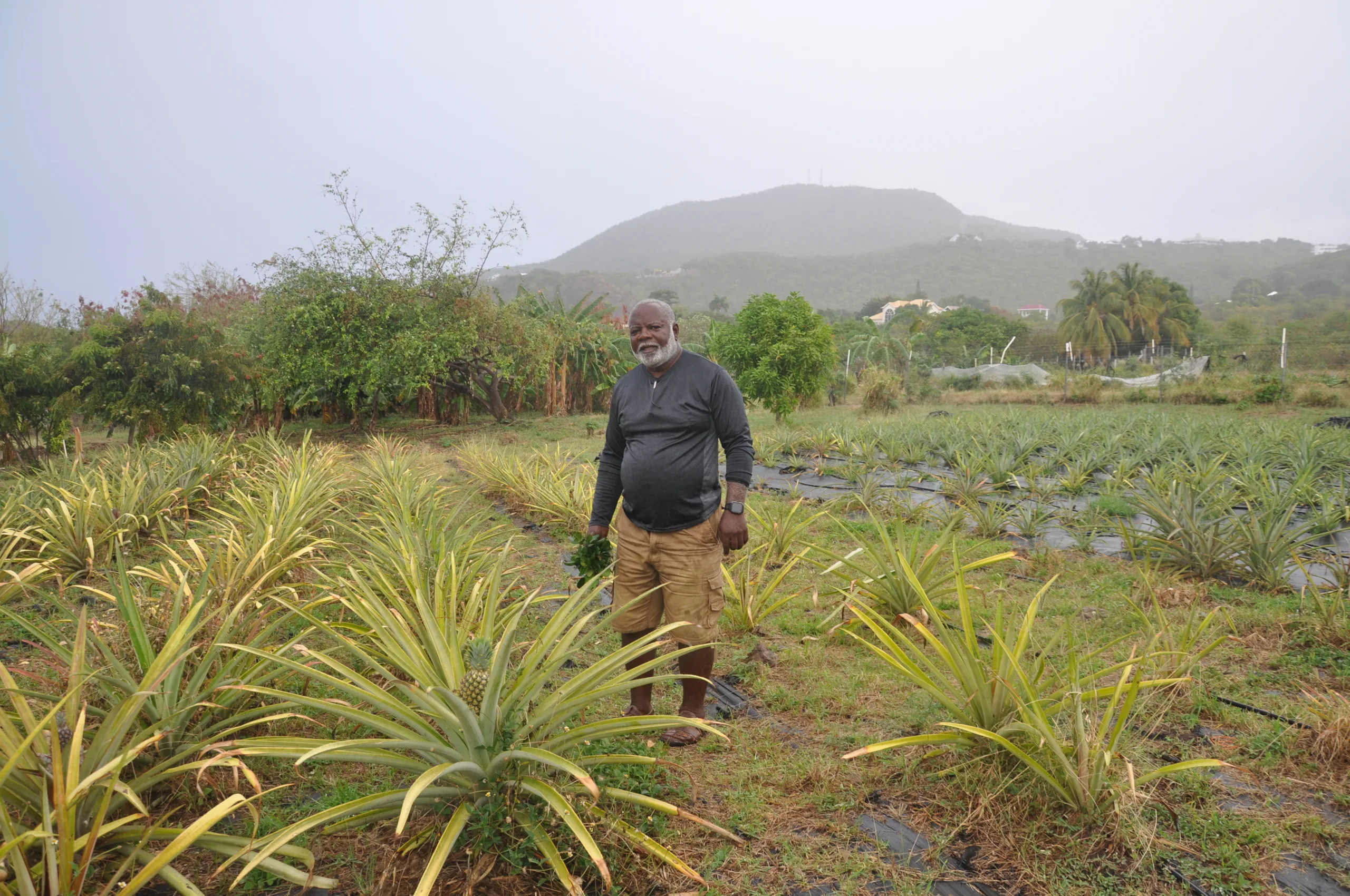
Daniel Arthurton, Nevis Hydro Gardens, Westbury (Credit: Stephen Thorpe)

Nelson Spring painting, as imagined (Photo Credit: Stephen Thorpe)
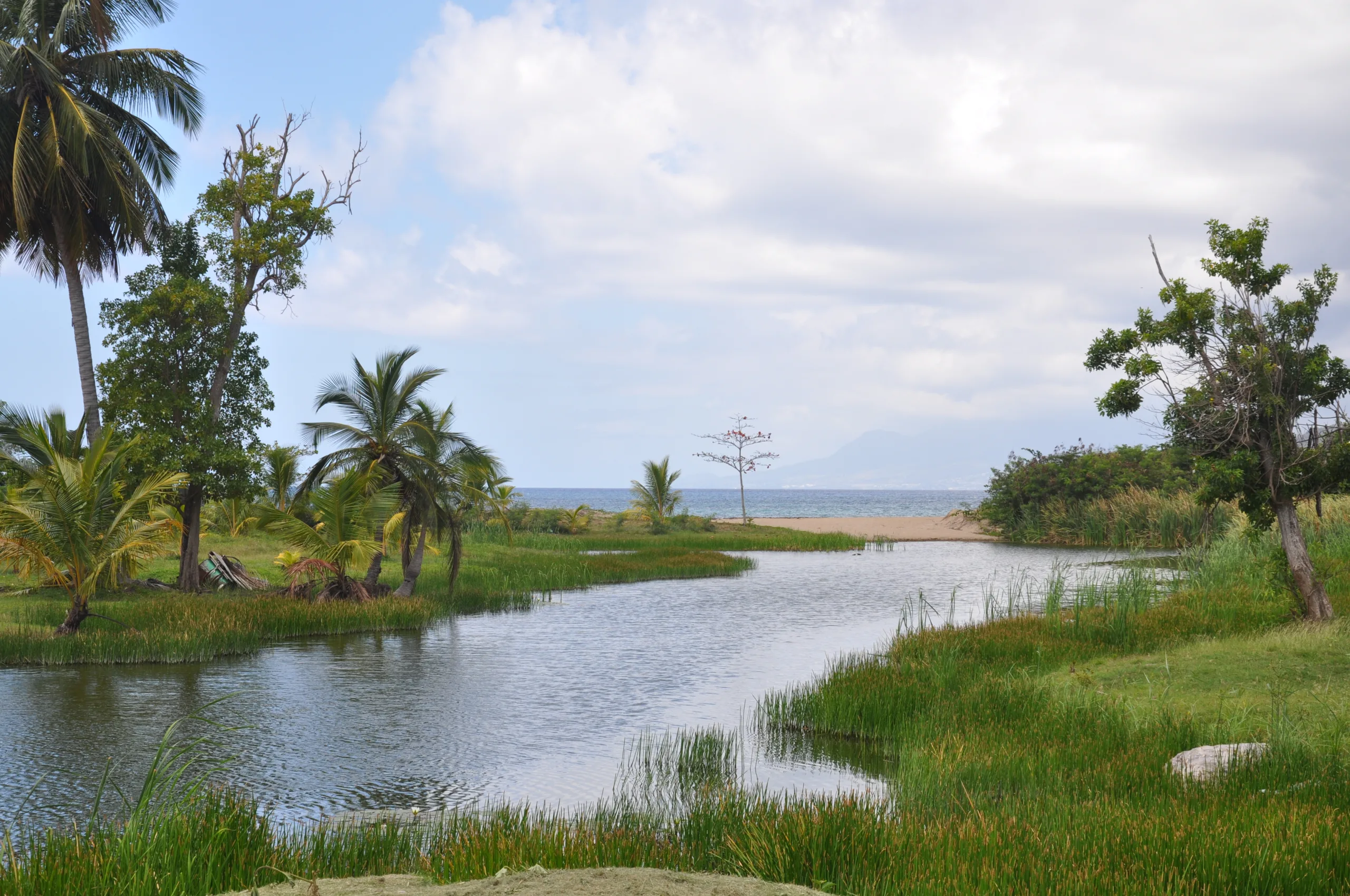
Nelson Spring wetland, as is today (Photo Credit: Stephen Thorpe)
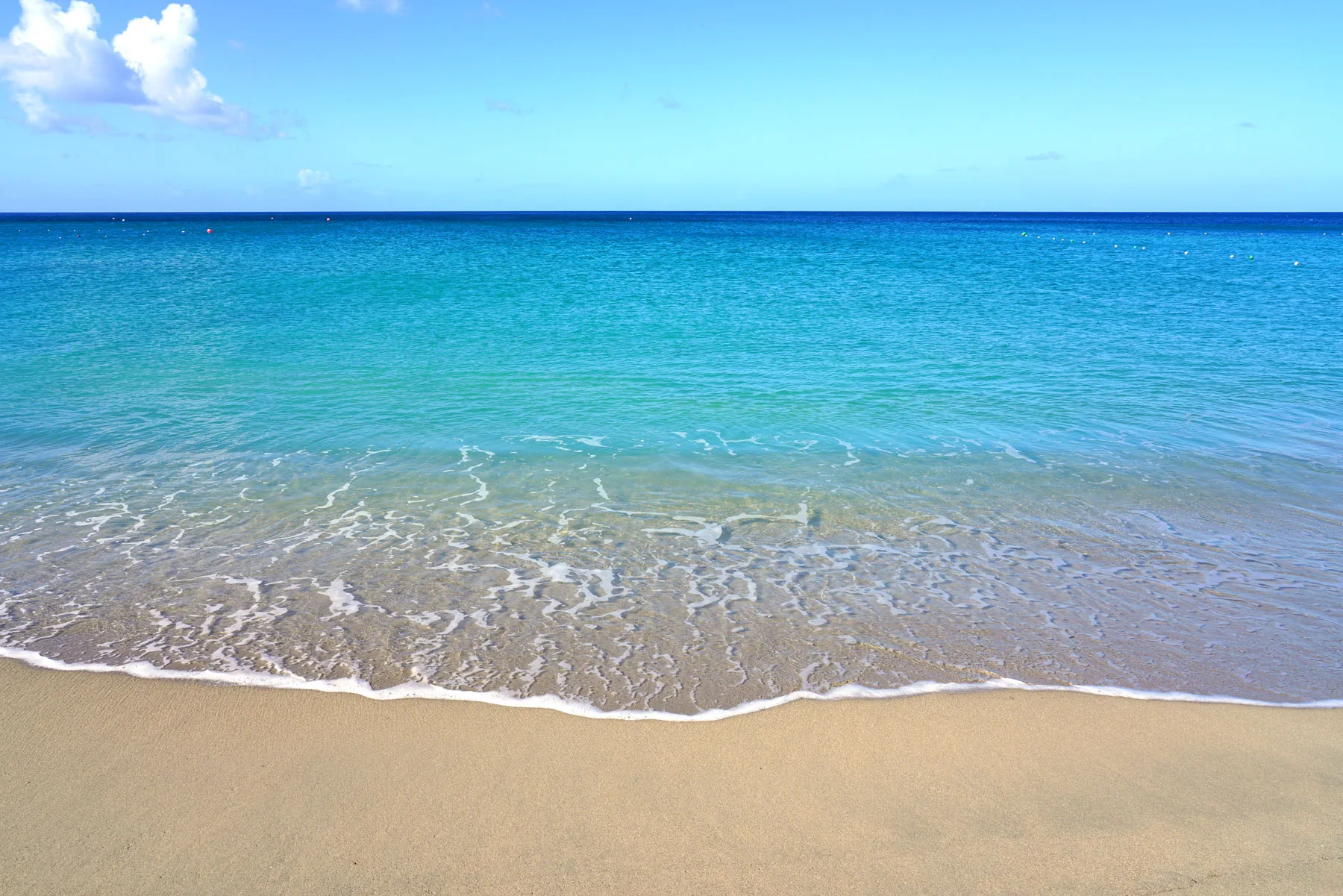
Turquoise water at Pinney’s Beach

Wooden Pier at Pinney’s Beach
Quality food comes at a cost, much of the produce is island grown and generally way beyond regular pub fare.The Caribbean can seem pricey, and Nevis is no different so, aside from some top ranking hotels, villa or apartment rentals can be a useful option and there’s a rising demand for guest house and b & b accommodation. Chrishi Beach boutique hotel on over six acres of luscious beachfront on the southern end of Cades Bay is a one-off, created by Norwegian couple the Wienpahls over a twenty year period….a subtly more Mediterranean feel around ten rooms all uniquely styled, hip soundtracks in a fabulous bar and well above average food. www.chrishibeachclub.net The foreshore is stunning, a gently sloping strand extending almost a mile, managed planting schemes to prevent erosion and backed by the brooding Mount Nevis ridgeline. A great location too for hiking the north western inland tracts, but if that sounds a tad strenuous walk left a minute from the bar to the river outfall and witness a breeding colony of cattle egret in joyous cacophany amid the mangrove. Music to the ears. Or when that pales, hop on your electric bike and explore further for a greater appreciation of the challenges of food production in a developing country.
A short trip across the road uphill to Westbury is instructive, advancing deeper into farming country, the core of the island, nip into Dew Drops Hydroponic gardens for an eye-opener on sustenance and ground breaking agricultural practices. Track down Daniel Arthurton if you can for a humourous educational tour of his five acres of citrus, field crops, veg and herbs, more than 120 species in toto, then sample some of the wares off a long list pinned to the shed. (Cross Roads organic farm at Spring Hill and Gina’s Vanilla Paradise at Vaughan’s are other similar ventures worth investigation). Trek or cycle onwards another four miles past Hog Valley and Mount Lilly estates and arrive by the turn-off for Nisbet and Herbert’s beach. It’s do-able by car but don’t expect much waymarking. A couple of miles south of Chrishi on the main drag to Charlestown, past the striking outline of the 17th century St. Thomas Anglican church and school, stands another monument to style and longevity from a modern age. Four Seasons Resort. Opened in 1991 on Pinney’s Beach as the brand’s first foray in the Caribbean, it remains the acme of barefoot luxury in the Leewards with prices to match. Bill Gates purchased it more than a decade ago. The word is, and it may be apocryphal, that one day he arrived offshore on his megayacht and decided to drop in for lunch. Disembarking the launch, one of the flunkeys had to remind him that he actually owned it. ” Do I ” said Bill, “are we due discount ? ” www.nevishydrogardens.com

A vast array of produce at the Hydro Gardens
(Photo Credit: Stephen Thorpe)
Nevis is riven by numerous incised streams and watercourses, run-off from beneath the rainforested peak (referred to as ghauts or ghuts) and at one of the outfalls nearby, Nelson Spring marks where British vessels took on water, close to the inlet now beautifully re-worked as a Wetland Nature Reserve.It’s difficult to overstate just how critical a location this was in the grander scheme of things, and harder still to quantify exactly what it contributed to the smooth running and efficiency of the fleet. Suffice it to say, fresh Nevis water was a godsend.
A short distance south down Pinney’s beach is the nearest Nevis has to a hangout scene– a cluster of bar restaurants centred on the originator and hostelry of legend, the eponymous Sunshine’s, who has lately expanded his red, green and gold rasta bedecked enterprise to embrace more foreshore. Any visiting celeb or Four Seasons glitterati who has not been snapped here is plainly missing a beat, the walls adorned with piccies of a veritable litany of A-list clientele from down the ages. The signature beverage, a Killer Bee rumpunch, is aptly named and best consumed when you’ve gained at least a semblance of “liquor legs”. On no account get stung then drive after a couple of these either. Currently it’s a burgeoning location with competing bars like Zanzi, Turtle Time, Chill and Lime plus an exciting addition in the Nevis Peak Brewery & Trattoria, the only spot in the twin island federation producing craft beer. The grilled swordfish is pretty special too.
Noise pollution, indeed any sort of aural intrusion, is rarely encountered—sure you might catch some heavy bass pumping from the odd car occasionally, a Full Moon party night at Sunshine’s could get raucous thereabouts briefly too, but the accepted vibe is early to bed and early to rise. Sunday mornings around church can have musical accompaniment and if the Leeward Islands are beating Jamaica or Barbados in a first class cricket match at Grove Park the day could well descend into rum fuelled bacchanal. Yet these would be one-off events. It’s why the incursion of jet-skis near Oualie should be resisted at all costs—loud, whining machines racing around a bay lacking demarcated safety zones are the very antithesis of the island’s image and something the authorities need to address urgently.
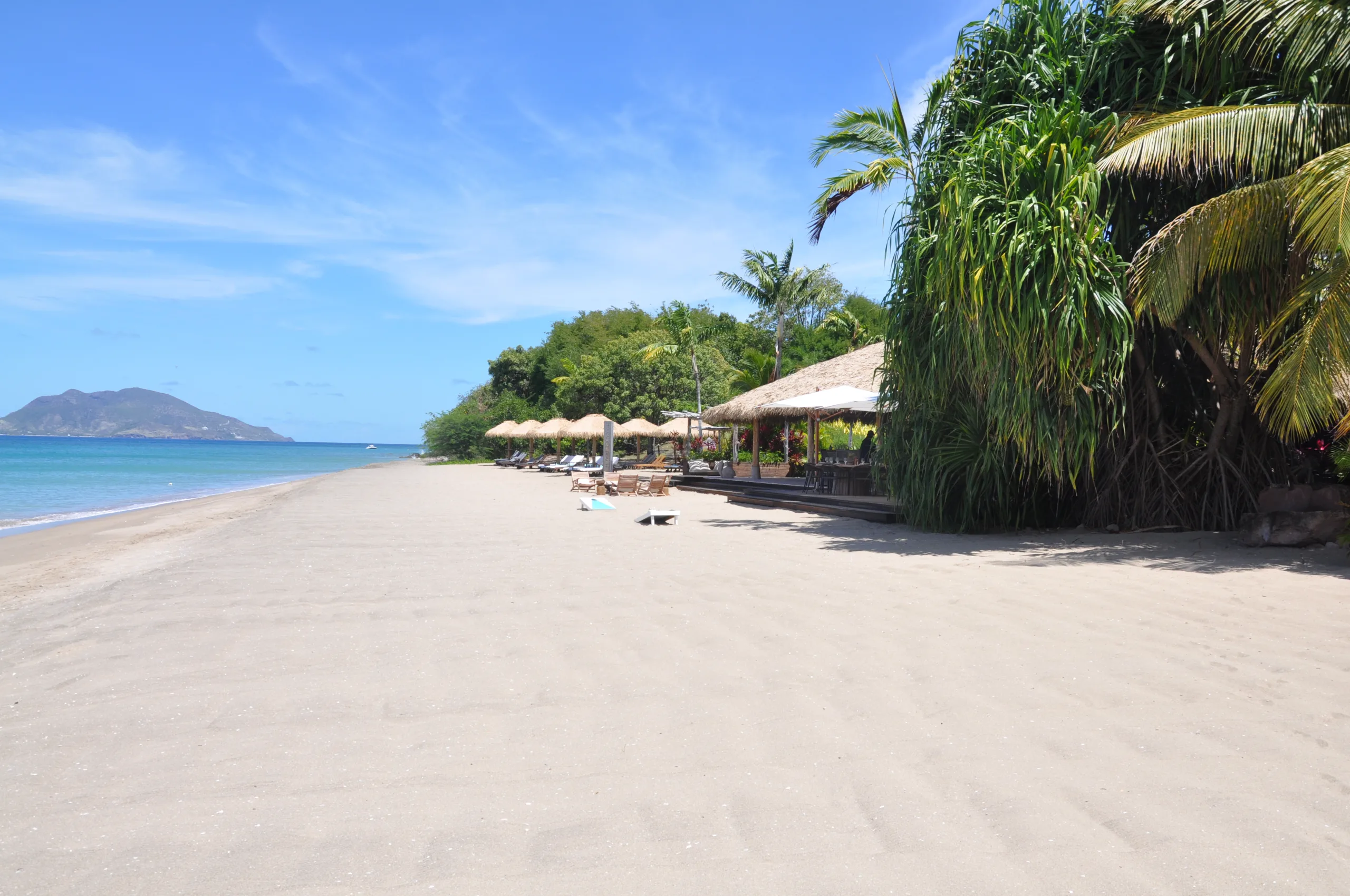
Paradise Beach Villas, Nevis (Photo Credit: Stephen Thorpe)
If it’s accepted that the three mile long strand of Pinney’s is the sine qua non of the federation’s beaches, then this 200 yard mid section fronting ten acres of essentially virgin rainforest is no doubt justified in adopting the “paradise” label. Seamlessly embedded in the littoral, and fully attuned to the needs of screening, landscape and planter, five beach houses are the latest element of an evolutionary span of almost two decades. Eight original luxury family villas also have their own private pool. Attention to detail is the project’s core ethos, with accommodation raised on pillars beneath the treeline, and a profusion of palms and xerophytic grasses planted to deter sand loss a critical facet in an era of rising sea levels and climate change.
Naturality, high spec interiors, Balinese timber finishes and a tremendous outlook towards the St Kitts peninsula, the tiny islands of Saba and Statia just visible on the horizon beyond, are keynote. Though only a quarter mile walk from the Four Seasons perimeter, the vibe is isolation and privacy. The occasional sprat fisherman may wander along, scanning the surface and hurling his net, but that may be it for people watching for a while, bar the odd shouty Yank on horseback.
Instead you can muse on how the resident pelicans, bulky and ungainly on water, suddenly morph into consummate masters of the elegant low glide when airborne. A location then for mere contemplation and mindfulness, hanging out and wallowing in the shallows, swimming if you must, or otherwise admiring the view in comparative solitude. Scour the beach at dawn and you can guarantee it will be unblemished, save for the unmistakeable imprint of the stately gait and stride pattern of the yellow crowned night heron, that gimlet-eyed hunter of crab and sundry sand dwellers.
If life really has become too much, and it’s time to pull up the drawbridge, Paradise has that covered too — quite literally in the form of a retractable hardwood staircase. The sort of place if you run out of coffee, it’ll be replaced by a top notch percolator within minutes while, if that fails, there’s always the groove and service at James’ Bar and Eden Restaurant under a vast Javanese style Grand Hall canopy, mellowed by the flickering glow from a night time firepit. Humdrum it isn’t.
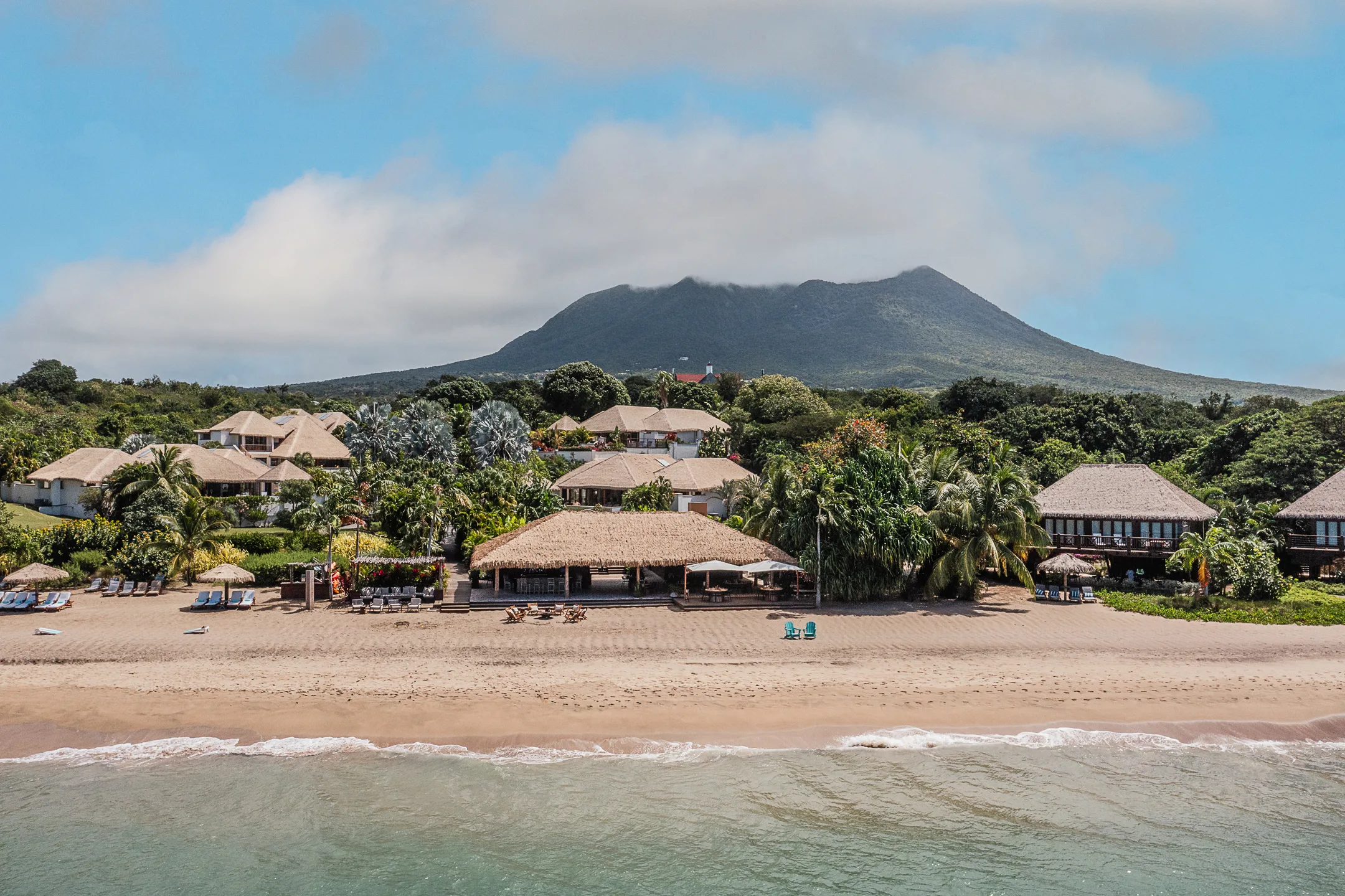
Paradise Beach Villas, Nevis (Photo Credit: Paradise Beach Villas)
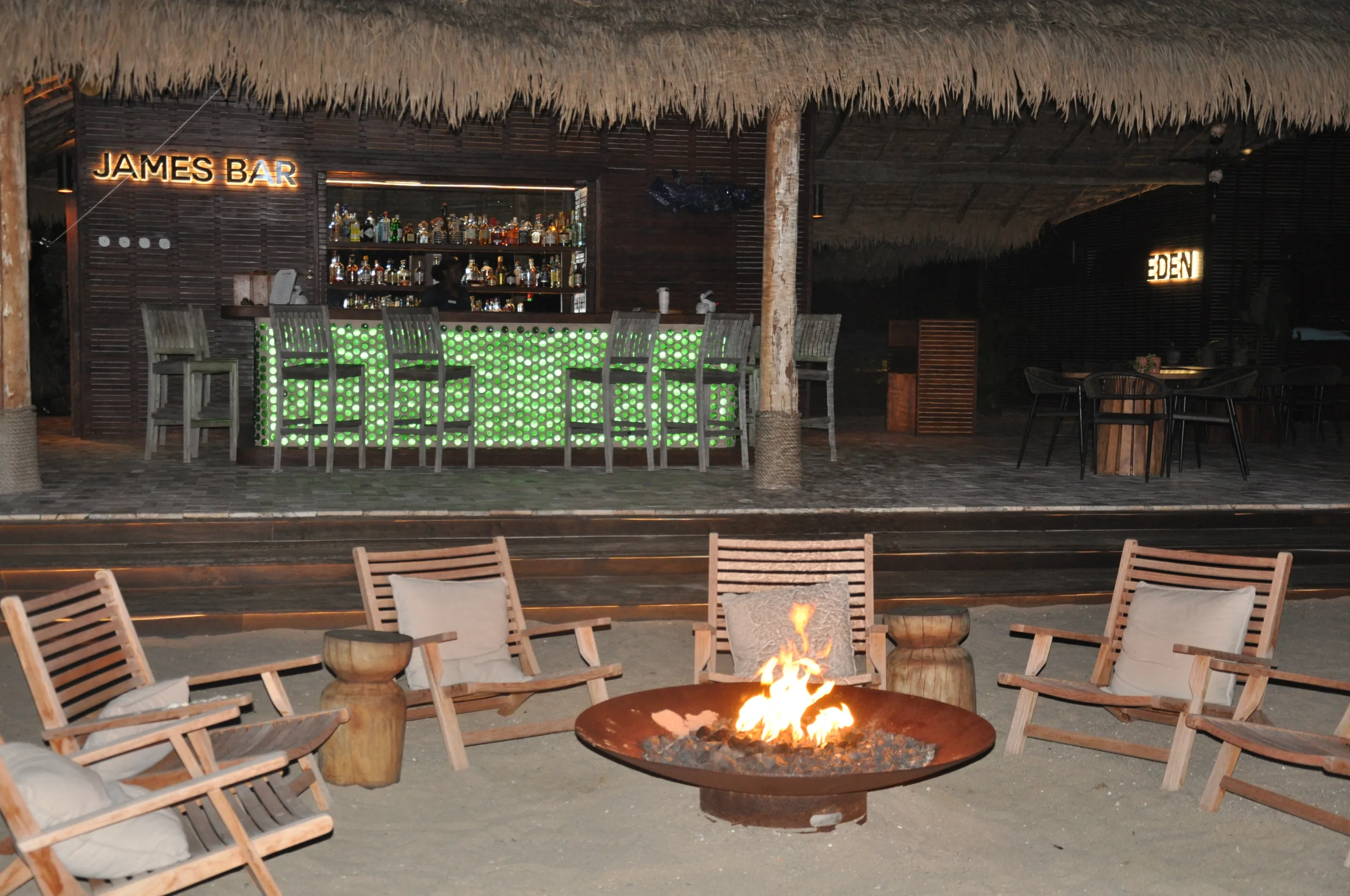
James Bar & Eden Restaurant @ Paradise Beach Villas
(Photo Credit: Stephen Thorpe)

Hamilton Museum, Charlestown (Photo Credit: Stephen Thorpe)

Gallows Beach, Charlestown (Photo Credit: Stephen Thorpe)
The tiny capital and port of Charlestown is a two minute drive away, small scale with a tight street network, easily navigable on foot or by car, with several solid stone base and timber upper buildings (the classic “skirt and blouse” style) it’s the focal point for much of Nevis’ lore and history– and the birthplace of its most famous son, Alexander Hamilton, a founding father of the USA who led an extraordinary impactful life before dying in a duel on a bluff overlooking the Hudson River in New Jersey aged just 43. Born here in 1757, he grew up in the two storey green shuttered edifice off the waterfront promenade which now houses the impressive Nevis History Museum and is immortalised on the American 10 dollar bill. There’s still much conjecture surrounding his life narrative but for many he embodies the American Dream after his family moved to St Croix and he was essentially orphaned after the death of his mother and the departure of a Scottish father, eventually studying in New York, working as George Washington’s first secretary of treasury and establishing a national banking system. A modern day hip hop musical on the story has also helped raise his profile and awareness of his achievements in the public conscience.
This same plot of land now embraces the popular Cafe des Arts, a great breakfast and lunch location with its shaded terrrace and close to the St Kitts ferry terminal, an excellent kick-off point too for tracing the Nevis Historical & Conservation Society’s Heritage Trail sites, an informative educational resource for locals and tourists alike. Nearby along the seafront promenade, aka Samuel Hunkins Drive, the Octagon bar does decent business in more local fare like bull foot soup and strong drink. Nowadays it’s hard to envisage Charlestown’s heydey as a thriving 17th century hub of commercial trade centred on the vast wealth derived from an all encompassing sugar industry; interestingly a significant Sephardic Jewish community pertained then too and their cemetery is still extant, likewise the solemn location of the slave market. A more uplifting sale of goods area is the open air fruit & veg market a short walk south, a decent place to bargain for a bag of ripe mangoes in season. Round the corner on lower Prince William Street, Toya’s Snackette is a rough and ready bar for some authentic Jamaican food and a cool Red Stripe beer, beneath one of a handful of guest houses in town, the English owned JP’s, unmissable in its vivid yellow livery. Another two hundred year old building is the Court House and Library.
In the central D R Walwyn square, in reality a tight triangle, the Tourism Authority occupies the imposing Old Treasury building while Main Street’s air-conditioned upstairs Sip Bar & Cafe offers a splendid overview of the comings and goings below from it’s bijou balcony, specialising in natural smoothies, organic juices, a range of properly prepared coffees, snacks and sandwiches.”Fresh, whimsical, comfortable and tastefully stylish” they profess… and they aren’t wrong. Definitely check out the quirky Museum of Sport a ten second walk away, if only to gaze at the startling life size model of Nevis’, indeed the Leeward Islands’, first ever player to represent West Indies in Test cricket…. local boy Elquemedo Tonito Willett, the left arm spinner of distinction who debuted against Australia aged just nineteen in 1972.
The southern edge of town is another sector quite literally dripping in historic association. Nevis was never overly enamoured of piracy and certainly not the place to get convicted— Hang ’em High was the mantra and Gallows beach the preferred location, nowadays though more a quiet stretch for bathers and another egret colony. After years of neglect the Bath hotel from 1778 at Belle Vue is finally under complete restoration, after originally serving visitors to the therapeutic hot water mineral springs which are still a major attraction today. It was the first official hotel to open in the Caribbean and included visitors like Lord Nelson, Prince William Henry (read more). The newly refurbished Nelson museum behind Government House here now contains a replica uniform as worn at the great man’s wedding in a climate controlled cabinet, amid a host of other maritime artefacts. Fort Charles on the coast below was built 150 years prior to the hotel, still retains its cannonry in an atmospheric setting disturbed only by the odd grazing donkey— it makes for an ideal picnicking spot— ask for directions and divert to Rosie’s lobster pattie shop in the nearby residential suburb of Prospect to pick up your goods.

Bath Hotel, mid renovation (Photo Credit: Stephen Thorpe)

Bath Hotel: The first Caribbean hotel (Photo Credit: Stephen Thorpe)
Montpelier Plantation Inn has been lauded as one of the truly exceptional Caribbean hotels since its rescue from dereliction in 1960 and subsequent remodelling, a byword in fact for style and elegance at 750 feet above sea level on the lower south west flanks of the volcano. The main estate house and 300 year old sugar mill is fronted by a magnificent Indian weeping fig tree, its gnarled trunk suggesting great age while the reality is quite different– it was planted only sixty years ago by Sandy, who still works in maintenance ! Beloved of Princess Diana and her two young sons as a private hideaway, the swimming pool and associated bar have been well integrated into the original fabric of cut-stone walls and polished hardwoods in sixty acres of manicured grassy slopes, exotic shrubbery and trees. A short walk down the hill westwards from the entrance is the site beneath the tree at Montpelier House where Horatio married the then manager, Frances.

Montpelier Plantation Inn (Photo Credit: Stephen Thorpe)
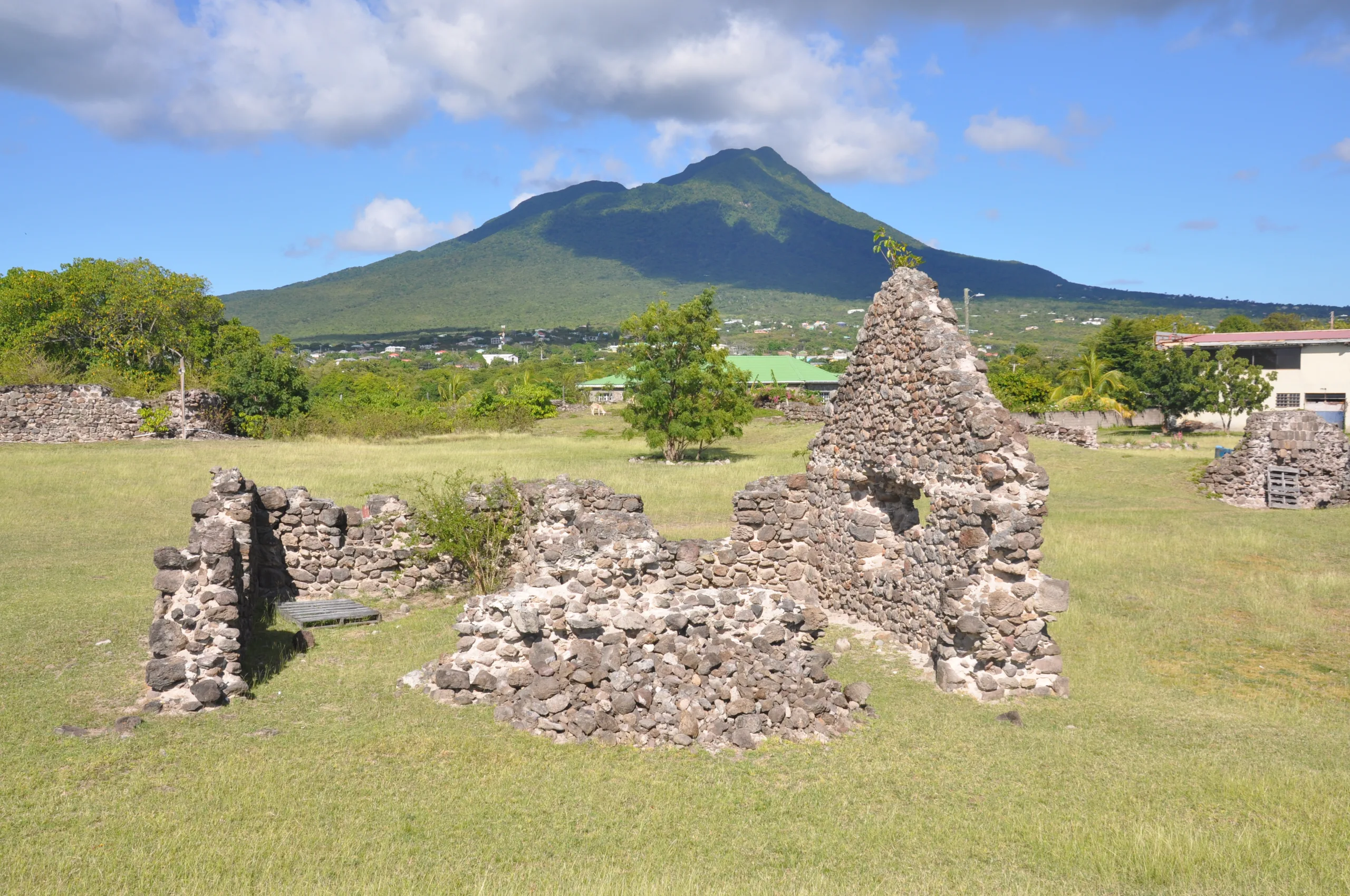
Fort Charles, Nevis (Photo Credit: Stephen Thorpe)

Fort Charles Battery, Nevis (Photo Credit: Stephen Thorpe)

Botanical Gardens, Nevis (Photo Credit: Stephen Thorpe)

Monkey Sculptures, Botanical Gardens (Photo Credit: Stephen Thorpe)

Hermitage Inn, Nevis (Photo Credit: Stephen Thorpe)

Hermitage Inn, Nevis (Photo Credit: Stephen Thorpe)

Hermitage Inn, Nevis (Photo Credit: Stephen Thorpe)

Golden Rock (Photo Credit: Stephen Thorpe)

Monkey Business (Photo Credit: Stephen Thorpe)
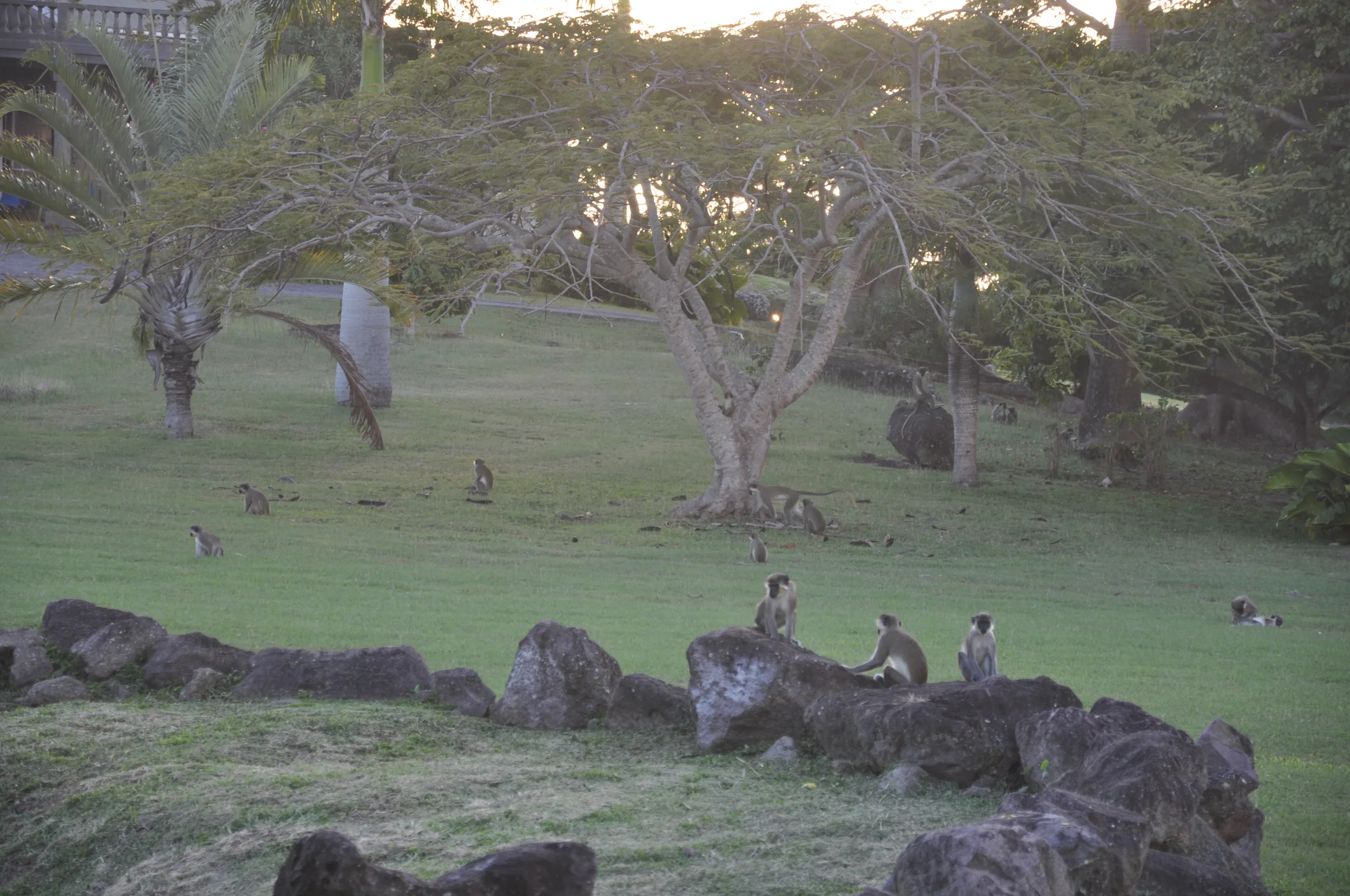
Too Much Monkey Business (Photo Credit: Stephen Thorpe)
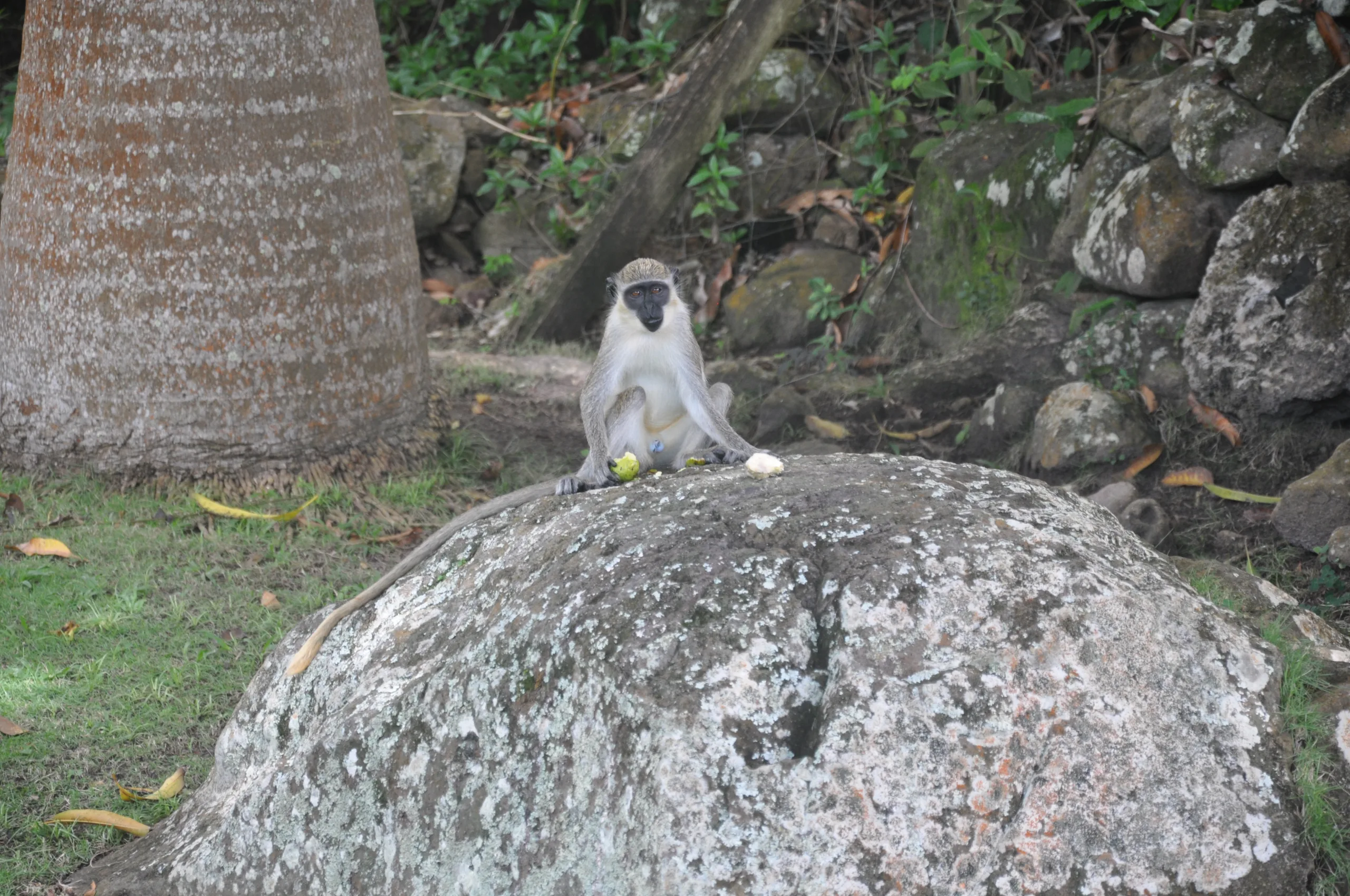
More Monkey Business (Photo Credit: Stephen Thorpe)
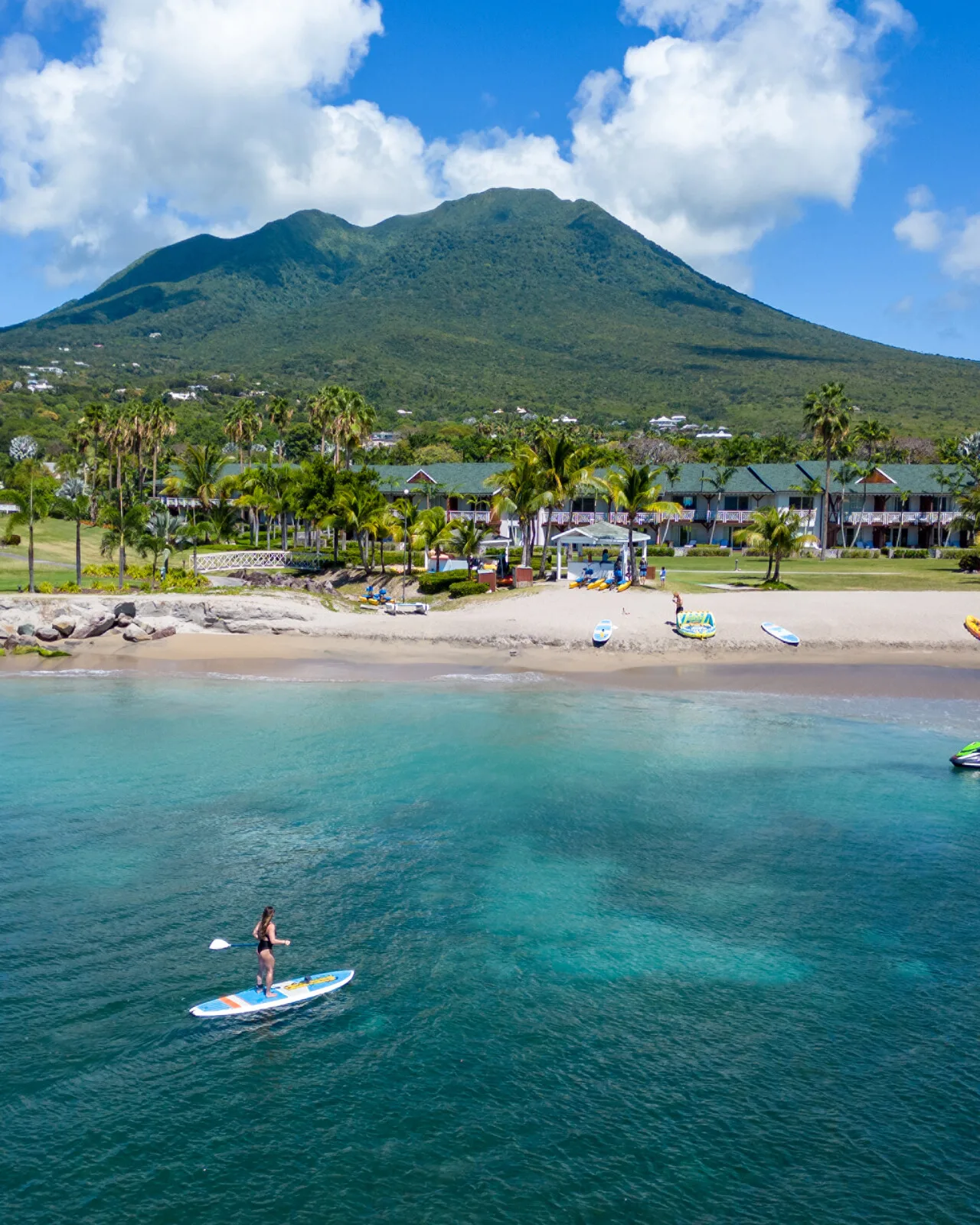
Four Seasons Resort
A quarter mile further down the lane the must see Botanical Gardens is a quite extraordinary melange of tropical West Indian flora, exotic trees like the shaving brush and African sausage and succulents and cacti from around the world; giant replica South American statuary of Mayan and Olmec influence are absolute showstoppers in the Amazonian Rainforest Conservatory while other arresting sandstone and andesite carvings from India and the Far East are scattered throughout the site. An avenue of towering Florida and Caribbean palms mark the initial approach then at every turn another unexpected vision greets the stroller– a large water lily lagoon, terraced fruit garden, a formal parterre of bromeliads and topiary, and separate sections of orchid, vines and palms. Patently a labour of love for owner Christi Douglas since opening in 1988, half a day spent here really is a feast for the senses. www.botanicalgardennevis.com Tours of the six acre Palm Garden in the foothills of Nevis Peak at Upper Jessups containing the largest private collection of palms in the Caribbean (108) with 38 unique trees can also be made by prior arrangement www.palmgardennevis.com
Striking out in the opposite direction from Montpelier past the sleepy hamlets of Cole Hill and Beaumont, (perhaps taking on vitals at Karen Belle’s local Passion Bar and Grill for the trek ahead), leads a couple of miles or so uphill to Saddle Hill and Nelson’s Lookout at an elevation of 1250 feet . It can seem quite demanding in hot sun on a rough track, so always carry enough water. Dilapidated remnants of a stone breastworks are still visible, a defensive parapet erected in the 1740s for protection in the event of enemy incursion, before a final steep scramble through bush and scrubland to the Lookout’s rocky outcrop. Forget the effort and dream instead of Nelson scanning the horizon through his eyeglass for hostile shipping over the winter of 1786-7, communicating with other English batteries in Montserrat and Antigua with mirrors by day and flares at night. A stunning panorama is indeed only part of the reward. If hiking, history and high class cuisine are your metier then Montpelier might be your bolt-hole of choice. www.montpeliernevis.com
The Hermitage Inn is only a mile north and the Great House remains the oldest timber structure in the entire Caribbean, a proudly colonial time warp surrounded by thirteen gingerbread cottages, the estate sensitively restored since 1971 by owner Richie Lupinacci, himself a keen historian and student of Nelsonia, whose hallmark is unerring attention to detail, quality fare and inscrutable service from a dedicated long term staff. For years half the clientele have been repeat visitors which is forever the benchmark for a successful enterprise and says it all. Television and aircon are absent, the mountain breeze happily not. In March 2025 a deputation from The 1805 Club (an international group dedicated to preserving the history of Georgian era sailing navies) convened here to celebrate the long awaited return of the restored Register of Baptism, Burial & Marriage document for 1729-1825 recording Nelson’s marriage and retained in the St John Parish Church at nearby Fig Tree. Five years of painstaking work at York University in England including digitising by the Borthwick Institute culminated in a ceremonial event at the church with a guard of honour provided by local soldiers and crew from the UK’s HMS Medway, taking time out from Caribbean Guardforce duties in a poignant nod to shared history. www.1805club.org
www.hermitagenevis.com

Replica uniform at refurbished Nelson Museum (Photo Credit: Stephen Thorpe)
Hereabouts is also pristine hiking country, hard by the Upper Round Trail which was once the main inland communications artery before the advent of tarmac roads. Sections are overgown and hard to discern but the ascent of Mount Nevis at 3232 feet remains the flagship challenge and not one to be undertaken lightly in lieu of its microclimate and severity. Well informed guides are available, ensure you employ them. Twenty years ago I ignored a guide’s advice on incoming bad weather and mistakenly ventured alone to climb the extinct Liamuiga volcano in St.Kitts. The ascent was fairly straightforward in bright sunshine though the girth of several fallen trees at higher levels across the track came as a surprise then a major hazard later in proceedings. At the crater rim I turned for home just as the heavens opened and then the real trouble started. Within minutes the downward trail became a rushing torrent of waist deep foliage, rocks and branches. Sections of the track suddenly disappeared altogether, slithering yards on my back clinging to trees wherever possible and fearing for my life, strange thoughts crossed my mind in the hammering rain and unworldly noise: had anyone ever drowned on a volcano? It went dark, pitch black in fact as I somehow exited the rainforest, bruised and bleeding, onto flatter canelands several long hours later. A posse of guides, locals and police awaited with searchlights and stern faces. A salutary lesson learned.
Golden Rock estate is slightly more isolated than Hermitage off the main road at Gingerland, an eleven cottage property from the early 1800s on a hundred acres of the lower slopes due east of Mount Nevis peak. An escapist’s nirvana famed for its lobster lunch and much else besides, there’s a vibrant crimson colour scheme amid a rich profusion of greenery, landscaped water gardens, distinctive trees and freshwater pool. Near neighbour Old Manor is another solidly built stone plantation house sadly lain empty for more than a decade, and still desperately seeking a purchaser with vision. For anyone with three million US dollars to spare it’s a snip, make the right call, you could do a lot worse. www.goldenrocknevis.com
All these establishments have what appear to be resident troupes of vervet monkeys of course…. the ubiquitous pariah that some observers reckon is outnumbering the human population by three to one, a staggering increase in a few short years. They’re undeniably watchable and charismatic, even endearing some would say with their alert hazel eyes but they’re still an invasive pest, ruining farmers’ livelihoods and prompting landowners to resort to electric fencing to protect fruit and vegetable crops. “Tree mutton” or monkey stew is sometimes consumed as a local delicacy, very much an acquired taste apparently. Anecdotal evidence suggests native birdlife is also being seriously affected with routine destruction of eggs and fledglings, and cucumber, pumpkin, watermelon and bromeliads are all high on their menu. Wily and cunning, their favourite party trick is to pluck off an unripe mango, bite into it then fling it away…often with force and accuracy in your direction.It’s not fanciful to surmise the much vaunted annual mango festival will soon become a thing of the past.
Originally they were confined to upper level forested areas but richer pickings were always available in lower residential gardens and they soon cottoned on. Fake birds of prey, rubber snakes, scarecrows and noise are no deterrent either— one farmer acquired a barking dog, then came home to find a monkey petting it affectionately. These guys have serious attitude and in St Kitts they’ve been known to nick tourists’ lunchtime cocktails, knock over tables and get into fights then lay around comatose in the afternoon. A bit like football hooligans. In the past, monkey export licences were granted to send animals to the US for medical and scientific purposes and bounties were paid privately, but surely the time is nigh now for a humane Government action programme to tackle the problem. An annual hunting season has been mooted but it’s a difficult conundrum since local youths make a few tourist dollars from selfies with their pets, some bars will have a baby one chained there to attract custom and tour operators are even advertising trips to see them in action. That’s inexcusable, but tourism provides two thirds of the country’s GDP. Moreover, the creatures are actually represented on the blue & green Heritage Trail signs—the walking monkey— like the’ve gained some degree of cultural acceptability.
There are undeniably fewer birds around, certainly the once common garden species like bananaquits, black faced grassquits, lesser antillean bullfinch and three species of hummingbird are noticeably less visible which can be reasonably attributable to predation by monkeys. Peregrine falcons are another culprit of course but these are scarce visitors and unlikely to affect overall numbers. It’s a devastating loss when there are only two dozen or so native island species augmented by various visitors at different times of the year. Nevis is on a migratory route for waders, and watch out around estuaries for when an American kestrel suddenly flashes by at breakneck speed pusuing some unseen quarry. Offshore the wheeling pterodactyl-like outline of the magnificent frigate bird may hove into view, occasionally feeding over the shoreline where at close quarters their true scale and massive seven foot wingspan becomes apparent. Conversely, you can easily confuse that incredible pocket flying machine, the hummingbird, for a large whirring insect, such is their speed and manoevrability. Birds are an indicator of the environment and, as Roger Peterson acutely noted, “If they are in trouble, we’ll soon be in trouble too.” Mehmet Ildan moderated this slightly with “Wherever there are birds, there is hope” so let’s stick with that. A newly published book with excellent imagery by American Ray Hubbe ” Feathered Friends of Nevis & S.Kitts” is a great companion guide for prospective birdwatchers, following Paul Heller’s 1989 tome “The Birds of Nevis.”
Conservation of wildlife is a good barometer of a country’s commitment to sustainable development and progress. Four species of turtle nest here from June onwards, three of them critically endangered, with the Fisheries Department committed to their protection through regular patrols. Yet locals are still permitted to net and eat them over the intervening winter tourist season from November through March which seems both perverse and wrong— though it’s a practice evident elsewhere in the region, it’s essentially political expedience gone mad and needs a radical re-think if only for the country’s image overseas. Four Seasons are leading the way with an educational season in July and August in conjunction with the Sea Turtle Conservancy, a quasi “living mission” for its guests to help aid an appreciation of the hawksbill, green and leatherback species through electronic tagging and subsequent monitoring of nesting females by the conservancy. www.conserveturtles.org

Four Seasons Resort
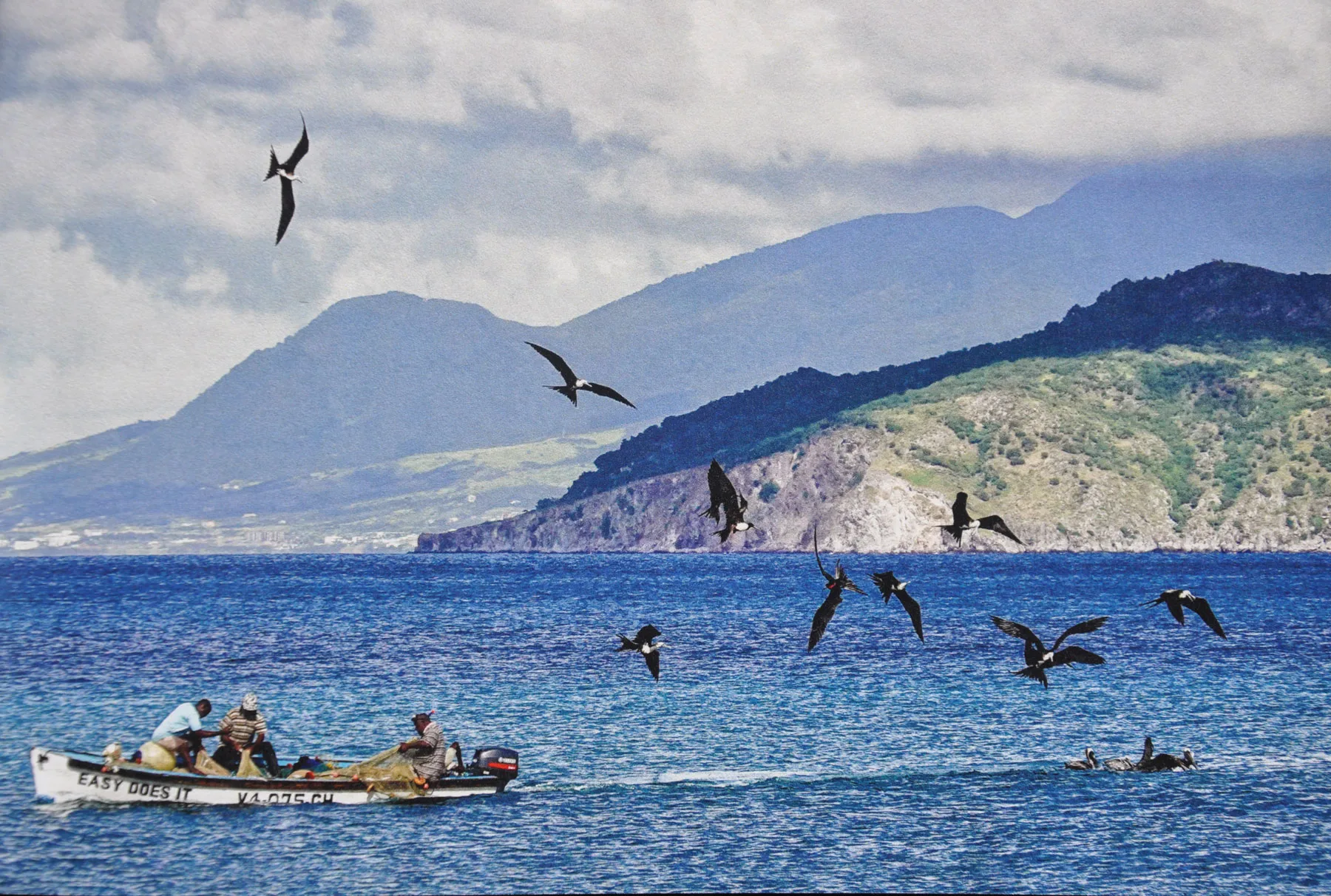
Magnificent Frigate Birds feeding in the Narrows (Photo Credit: Ray Hubbe)
In late 2025 the nation was convulsed by a Belgian crypto-currency billionaire launching an out of the blue megascale “Destiny Project” for the untrammelled south eastern sector, promising long term employment for all, infrastructural and service development, plus $US100 to every living person per month for life who signed up in support. An outlandish notion perhaps, since the enclave is envisaged as self governing and “libertarian” in concept but it’s gained traction in some quarters, not least with the island Premier. Opinion in both islands is severely polarised and through operations like the “Save Nevis” Fund opposition has been fierce. In mid 2026 the central government in St Kitts were not rushing to change the constitution, a necessity for the project to advance, but it highlights again the dangers of embracing “citizenship by investment” programmes which several territories in the region have allowed : offering passports for hundreds of thousands of dollars, essentially selling a country’s soul, and often to characters with alternative agendas, is loaded with caveats and may well be counter-productive in the longer term.
The Nevisian people are probably the island’s greatest asset—warm and courteous where strangers on the street will quietly wish you “good day” and actually mean it, and these things are precious. Geo-thermal projects, yachting marinas, extended runways to accommodate larger private jets have been on the horizon for years and all these may come to pass, but progress should never come at the expense of environmental dignity. That said here’s a destination to cherish into the 21st century, and Nelson would no doubt have agreed.

Ship Ahoy, Nevis Sunset (Photo Credit: Stephen Thorpe)
Video of protesters against the Destiny project, in Charlestown, Nevis (Credit: Everton Obi Powell)
Getting to Nevis: British Airways (London Gatwick- St Kitts) American Airlines also fly from Miami and New York – St Kitts
Essential Reading : Ships, Swords & Sugar by Frederick Hubbard
Further Reading : Feathered Friends of Nevis & St. Kitts (Ray Hubbe, 2024)
More information: Nevis Tourism Authority