
On Namibia’s Atlantic Coast, a stretch of beach has tormented sailors for centuries. It’s strewn with shipwrecks, on the edge of a vast dune desert, and often shrouded in fog. Fittingly, it’s known as the Skeleton Coast, each broken bow adding a new ghost story.
Shipwrecks are a popular trope in media because each one retains a history, often of disaster, mutiny or treacherous weather.
Jonathan Swift’s Gulliver’s Travels (1726) is a pillar of the genre, which the surreal drama Lost (2005 – 2010) added its own spin to, this time replacing the boat with a plane. The hunting of shipwrecks also inspired several online casino games, like Core Gaming’s Wreck of Riches.
Ill-fated Boats
While tragic, ancient shipwrecks in particular are their own voyage of discovery. The Smithsonian Magazine reported on a sunken 2,000-year-old Roman cargo vessel in April 2026. Its contents included weapons, chariots, tools, and goblets. Oddly enough, that was all that remained. The ship itself is still missing. Was its precious loot dumped in a chase or squandered in a storm?
Ironically, there’s nothing about a shipwreck that means it has to be on land. The Skeleton Coast’s wooden and metal carcasses typically ran aground in the area’s famous fog.
Atlas Obscura has its own list of ill-fated boats that can be seen “without getting your feet wet”. The Cemetery of the Berci in Italy and the Cemitero de Navios in Panguila, Angola, both appear. A Chappaquiddick shipwreck in Massachusetts stands as a riddle.
“Post-Apocalyptic”
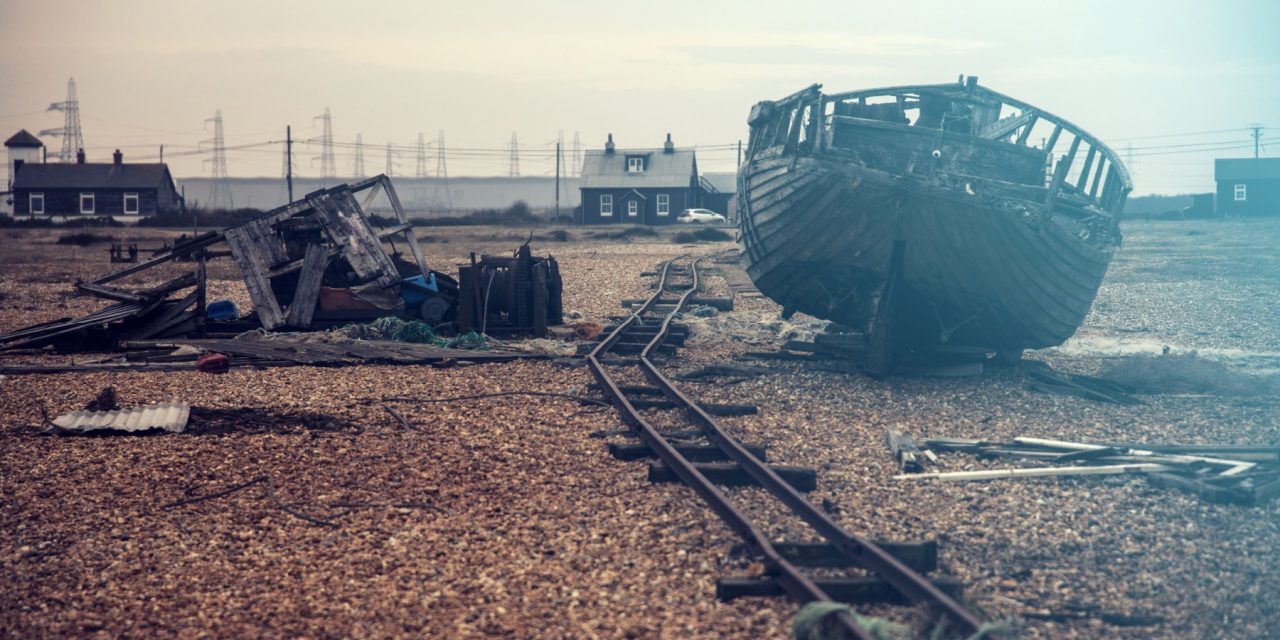
Despite England’s losing battle with the North Sea (the British Geological Survey claims that 250m of land in Norfolk vanished between 1600 and 1850) and the presence of an entire sunken landmass off its east coast (Doggerland), England isn’t usually known for its shipwrecks. Yet, the shingle headland at Dungeness, Kent, offers a microcosm of the Skeleton Coast.
Dungeness is often described as “eerie”, “post-apocalyptic”, and as a “stony desert”, marking it out as unusual among the UK’s coastal places. It’s the home of “willow scrub, reed, and juncus rush”, to quote a 1976 edition of The Guardian and a whole host of shipwrecks. These are mostly small watercraft, laid tilted on the shingle.
Just like the Skeleton Coast, Dungeness is a hazard to ships. It’s located south of Goodwin Sands, the final resting place of HMS Bulwark, which exploded there in 1919, taking 745 people with it. Goodwin Sands is an invisible sandbank to Dungeness’ jutting headland. It’s reportedly the tomb of U-boats, steamships, a Swedish schooner, and a 16th or 17th-century medieval ship.
A Solemn Place
Dungeness isn’t just a bleak addendum to travel guides. The site is overlooked by the remains of Dungeness B Power Station, the striking Prospect Cottage, once the home of filmmaker Derek Jarman, and several hyper-modern places.
For example, NORD Architecture’s Shingle House is a narrow, black structure that stands in contrast with the nearby ruins.
Far from being just a graveyard for ships and industry, Dungeness has taken on the image of an experiment in recent years, attracting design agencies craving a challenge. Still, it’s more of a solemn place than a gallery, perfect for travellers looking to leave everything behind.