
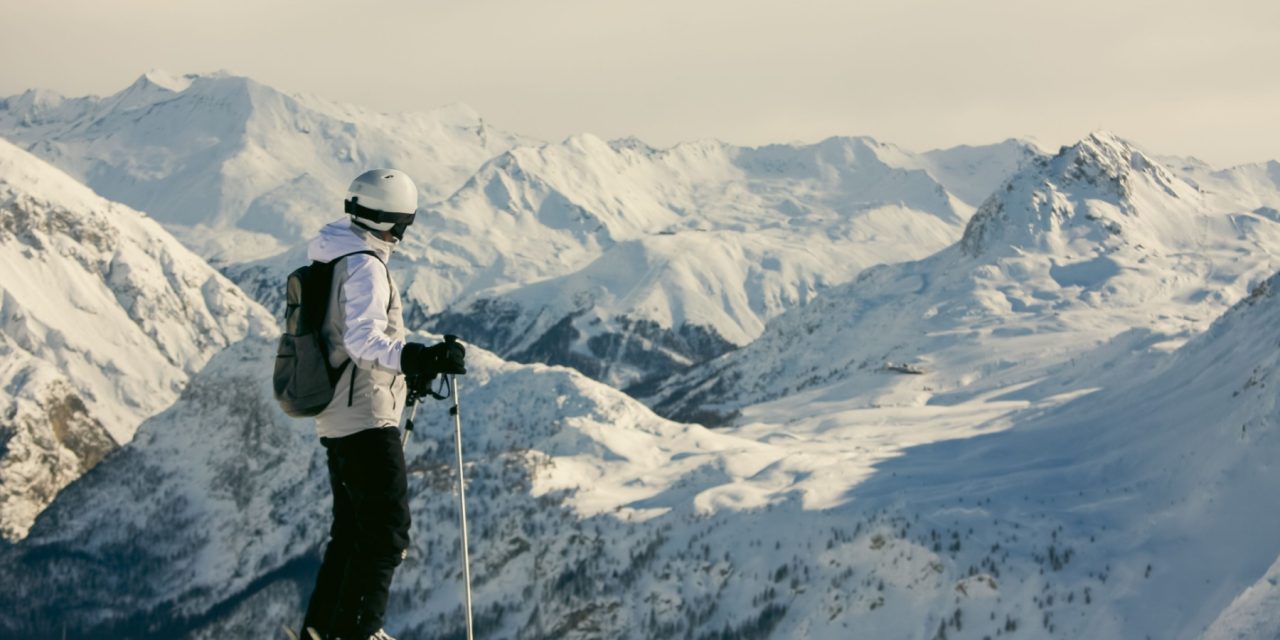
Val d’Isère is legendary for a reason. It is high, it is snow-sure, and it offers some of the best skiing on the planet. But there is a small catch that comes with that high-altitude perfection: it is located right at the very end of the Tarentaise Valley.
Getting there isn’t a quick hop. It is a commitment.
The journey from Geneva Airport (GVA) to Val d’Isère is one of the longer airport transfers in the Alps. It involves crossing borders, navigating highways, and finally tackling a steep, winding ascent that can test even the most patient traveler.
However, if you plan it right, the drive becomes a stunning prelude to your holiday rather than a logistical nightmare. In this guide, we will break down the distances, the real-world travel times, and the smartest ways to move your group and your gear up the mountain without the stress.
The Distance vs. The Reality: How Long Does It Actually Take?
On paper, the math looks simple. The distance from Geneva Airport to Val d’Isère is approximately 180 kilometers (about 112 miles). If you punch that into a GPS on a Tuesday in July, it will tell you the drive takes roughly 2 hours and 45 minutes.
Do not plan your winter holiday based on that number.
In winter, the reality is different. You are dealing with potential snow on the roads, passport control at the Swiss-French border, and the sheer volume of traffic heading into the mountains.
- Standard Winter Day (Weekday/Sunday): Expect the journey to take 3 hours to 3.5 hours.
- The “Black Saturday” Factor: During February school holidays or peak Saturdays, this time can stretch significantly. The road from Albertville to Bourg-Saint-Maurice is a single artery feeding several massive resorts. Traffic jams here are legendary.
The Key Takeaway: If you are flying home on a Saturday, leave a much larger buffer than you think you need. Missing a flight because of a traffic jam in Moutiers is a classic (and painful) rookie mistake.
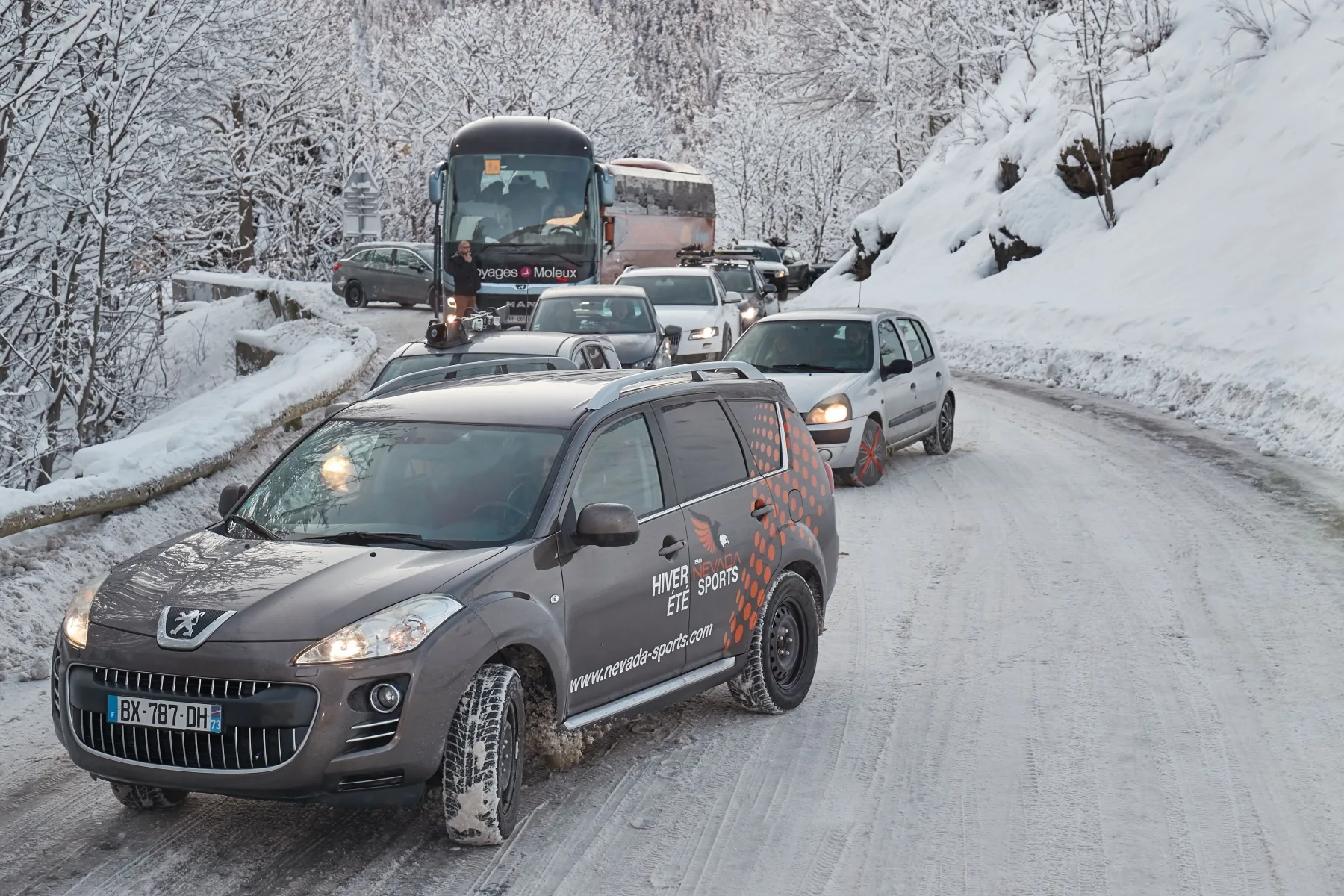
Image Credit: Desintegrator (Shuterstock.com)
Choosing Your Chariot: Transfer Options Compared
Because Val d’Isère is deep in the Alps, there is no “quick” train directly to the village center. You have three main ways to bridge the gap, each with a very different price tag and stress level.
1. Private Transfer (The “Peace of Mind” Option)
This is the most direct route. Your driver meets you at arrivals, helps with the bags, and takes you straight to your accommodation door in Val d’Isère.
- The Pro: It minimizes travel time. You don’t wait for other passengers, and there are no stops at other hotels unless you requested them.
- The Con: It has a higher upfront cost, though it often works out to be cost-effective for groups of 3 or more.
- Best For: Families, groups with ski gear, and anyone who wants to maximize their time on the slopes.
2. Shared Shuttle Bus (The Budget Route)
Several companies run scheduled buses from GVA to Val d’Isère. You buy a seat, not the whole vehicle.
- The Trade-off: You are on their schedule, not yours. You might wait an hour at the airport for the bus to fill up. Furthermore, the “drop-off” is often at a central bus station (Gare Routière), meaning you still have to drag your luggage through the snow to your hotel or chalet.
- Best For: Solo travelers or couples on a strict budget.
3. The Train + Bus Combo (The Logistics Puzzle)
You can take a train from Geneva Airport to Geneva Cornavin, switch for a train to Bourg-Saint-Maurice (often with another change in Chambéry), and then catch a local bus or taxi up to Val d’Isère.
- The Reality: This is physically demanding. Hauling a ski bag through three different train stations is exhausting. Plus, if your flight is late and you miss the last connection in Chambéry, you are stuck.
- Best For: Train enthusiasts and travelers with very light luggage and plenty of time.
Luggage and Ski Gear: The Silent Logistics Killer
Here is a factor people often forget until they are standing at the arrivals gate: winter travel involves double the luggage of a summer holiday. You aren’t just bringing a suitcase; you are likely bringing a ski bag (which is awkward and long) and a boot bag (which is surprisingly bulky).
Choosing the right transfer isn’t just about seat count; it is about cargo capacity.
The “Sedan Trap”
If you are a group of four taking a standard taxi or a ride-share app, you might fit in the seats, but your gear will not fit in the trunk. Skis do not fit in standard sedans without a roof rack, and roof racks are rare on standard airport taxis.
- The Fix: This is where specialized transfer companies They typically use long-wheelbase vehicles (like VW Caravelles or Mercedes V-Class) designed specifically to swallow 2-meter long ski bags and four large suitcases without crushing the passengers.
Shared Shuttle Limits
If you opt for the bus, check the fine print on luggage allowance. Most shared shuttles allow one hold bag and one ski bag per person. If you are the type to pack “just in case” extra gear or multiple snowboards, you might face steep excess baggage fees or, in the worst case, be refused boarding if the hold is full.

The Alpine Factor: Weather and Timing Strategy
The final leg of the journey—from Bourg-Saint-Maurice up to Val d’Isère—is only about 30 kilometers, but it is a dramatic ascent. You are climbing from 800 meters to 1850 meters. This specific stretch of road determines the success of your arrival.
Respect the Road Conditions
It is not uncommon for the valley floor to be green and rainy while a blizzard is raging up in Val d’Isère. When heavy snow hits, the Gendarmerie (police) often sets up checkpoints at the bottom of the climb.
- The Checkpoint Reality: If a vehicle does not have snow chains or snow tires, the police will turn it around. This is a massive headache if you have rented a car and “hoped for the best.” Professional transfer drivers are legally required to carry chains and know how to fit them in seconds, keeping you moving while others are stuck on the shoulder.
Strategic Flight Timing
If you have control over your flight booking, aim for a mid-morning arrival (around 10:00 – 11:30).
- Why? This puts you on the road before the afternoon rush hour out of Geneva, and gets you into the resort before the sun goes down. Navigating the curves of the Tarentaise in daylight is scenic; doing it in the pitch black with snow falling is significantly more tiring.
- The Return Leg: On departure day, always err on the side of caution. If your flight is at 14:00, do not leave Val d’Isère at 10:00. Leave at 08:30. It is better to have an expensive coffee at Geneva Airport than to watch your plane take off while you are stuck in traffic near Annecy.
The Verdict: Start Your Holiday on the Right Foot
The journey from Geneva to Val d’Isère is the gateway to some of the best skiing in the world. It is a long road, yes, but it doesn’t have to be a hard one. The difference between arriving exhausted and arriving energized usually comes down to one decision: how you choose to travel.
Don’t let the logistics overshadow the excitement. By understanding the distance, respecting the alpine weather, and choosing a vehicle that actually fits your group and your gear, you turn the transfer into a seamless part of the experience.
Secure Your Ride to the Peaks
When the snow is falling and the roads are white, you want a driver who has done this route a thousand times. You want a warm car, plenty of space for your skis, and the guarantee that you will get to your chalet safely.
Let us handle the road while you look forward to the slopes.
Book Your Private Transfer from Geneva to Val d’Isère with 3Valley Transfers
- Snow-Ready Fleet: Vehicles equipped for all winter conditions.
- Space for Gear: Ample room for ski bags and luggage without the squeeze.
- Door-to-Door Service: No walking, no shuttles, just straight to your accommodation.