
While ‘Into the Wild’ has inspired many to get out and explore. Jay (one of our writers) got himself in a fair bit of bother in his own film recreation! Which you can read all about here. There are some incredible films that really capture the essence of a place and inspire you to get out and travel. Here are some of my favourite travel films that are well worth watching, including some you’ve possibly never heard of.
DOCUMENTARIES
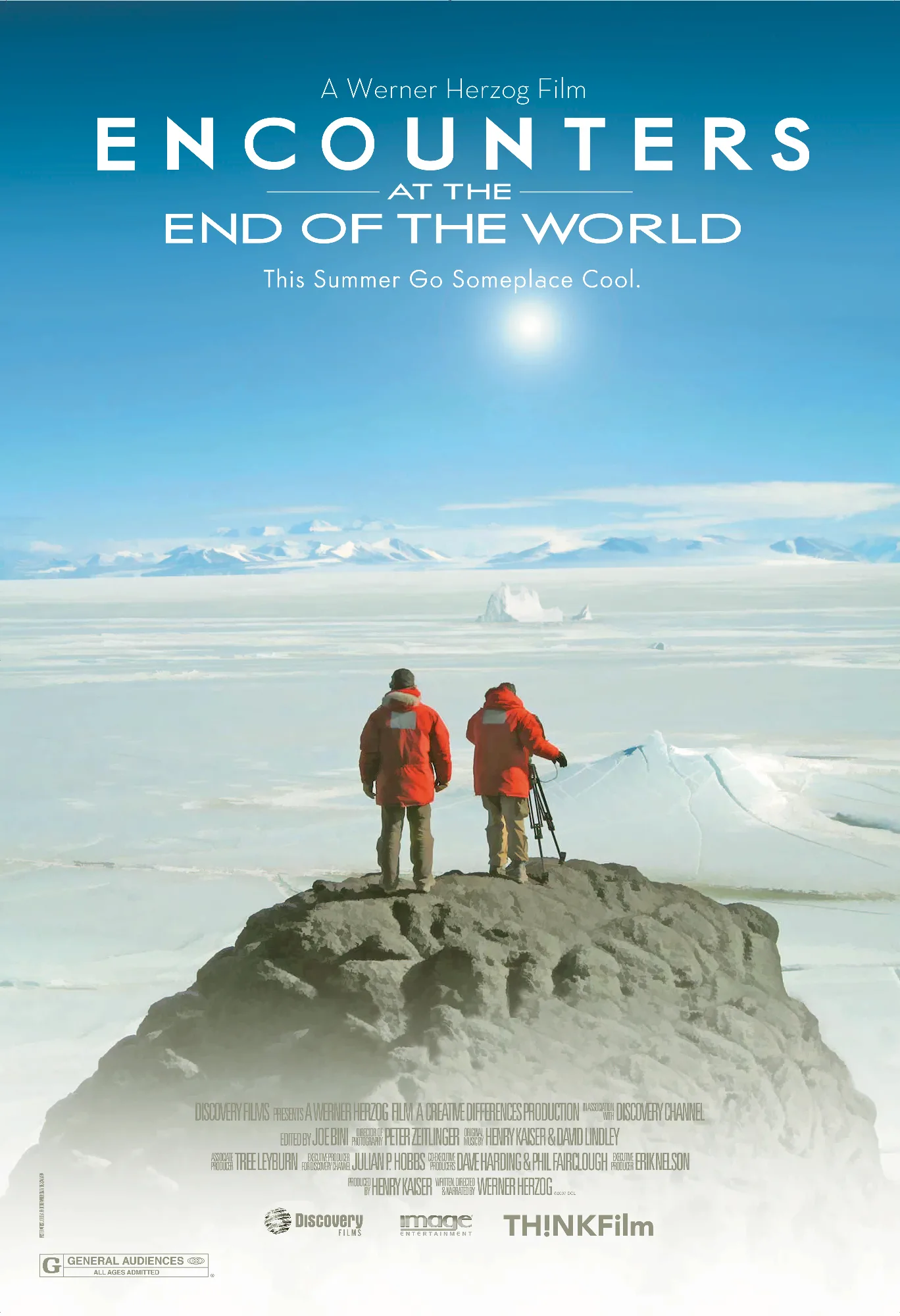
Encounters at the End of the World (2007)
Werner Herzog’s Encounters at the End of the World is the obvious place to start. He goes to Antarctica expecting penguins and finds instead a community of misfits, philosophers, plumbers and dreamers who have somehow ended up at the bottom of the planet. His narration is odd and hilarious. The underwater footage shot beneath the ice is some of the most extraordinary you’ll ever see. It’s a film about the people who keep moving until they’ve run out of road, which is something a lot of travellers will recognise in themselves if they’re honest. This is also free to view on YouTube –
Jiro Dreams of Sushi (2011) isn’t really about sushi or even Tokyo, though both come off well. It’s about an 85-year-old man who has spent his entire life trying to perfect one thing, and what that does to a person. I watched it on a flight to Osaka a few years back and spent the next ten days walking past every chain restaurant looking for somewhere that took its own work that seriously. I found a couple. They weren’t cheap.
Samsara (2011) and its predecessor Baraka (1992) are non-verbal films shot across dozens of countries. No interviews, no narration, just images and music. They sound insufferable on paper, but thankfully they are far more rewarding to watch. Both were filmed in 70mm by Ron Fricke and they’re best watched on the largest screen you can find with the lights off and your phone in another room. Baraka came first and is the more contemplative of the two. Samsara is angrier, more interested in what humans do to each other and to animals. Pick whichever depending on the mood you’re in.
The Salt of the Earth (2014), Wim Wenders’ portrait of the photographer Sebastião Salgado, is harder going. Salgado spent decades documenting famines, wars and refugee crises before his work nearly broke him and he turned to photographing the natural world instead. It’s the best film I’ve seen on what it actually costs to witness things for a living, which is a question anyone who travels seriously eventually has to contemplate.

FOREIGN FILMS
Y Tu Mamá También (2001) is Alfonso Cuarón’s road movie across Mexico, made years before Gravity and Roma turned him into a household name. Two teenagers and an older woman drive south looking for a beach that may or may not exist. The film is about class and friendship and desire, but it’s also one of the most clear-eyed films ever made about a country. It’s worth flagging that it’s quite explicit, so not one to watch with your in-laws.
It’s available to stream on Netflix
The Motorcycle Diaries (2004) follows the young Che Guevara and his friend Alberto Granado on a beaten-up bike across South America. You can roll your eyes at the politics if you want, but the film itself is a quiet, observant piece about two privileged Argentinians being slowly undone by what they see. If you’re heading anywhere on that continent it gives you context that no guidebook will.
Wong Kar-wai’s In the Mood for Love (2000) isn’t a travel film in the conventional sense. It’s set in 1960s Hong Kong and barely leaves a few apartment buildings and noodle shops. But watching it is its own kind of journey. The cramped corridors, the rain, the cigarette smoke, the soundtrack. Few films make a place feel so completely like itself. If you’re going to Hong Kong it’s essential viewing. If you’re not, watch it anyway.
Capernaum (2018) is set in the slums of Beirut and follows a 12-year-old boy who decides to sue his parents for bringing him into the world. It’s one of the toughest films on this list and the best argument I know for why travel writing shouldn’t only be about beautiful things. Director Nadine Labaki cast non-actors who were actually living the lives shown on screen. It changes how you understand a city you probably know only through headlines.
Departures (2008), known as Okuribito in Japanese, won the Oscar for Best Foreign Film and most people I mention it to have never heard of it. A young cellist loses his job in Tokyo, moves home to rural Japan, and accidentally takes work as an encoffiner, preparing bodies for funerals. It’s a film about ritual, family and the parts of Japan that exist outside Tokyo and Kyoto. Quietly extraordinary.
CULT CLASSICS
Wim Wenders’ Paris, Texas (1984) is the great American road movie made by a German director, which is probably the only way it could have been made. A man walks out of the Texas desert after four years missing and tries to put his life back together. Ry Cooder’s slide guitar soundtrack does as much of the work as the script. The American Southwest has rarely looked so vast or so lonely.
Lost in Translation (2003) holds up better than it has any right to. Jet lag, culture shock, two displaced people finding something they can’t quite name in a Tokyo hotel. People have written it off as a film about white people being confused in Asia, which isn’t entirely unfair, but it’s also one of the most accurate films ever made about the specific weirdness of being awake at 4am in a country where you don’t speak the language.
Wes Anderson’s The Darjeeling Limited (2007) is probably his most divisive film. Three brothers travel across India by train, working through their grief over their father’s death. Yes, it’s stylised. Yes, the India on screen is filtered through Anderson’s particular aesthetic. But the emotional journey is real and the film is funnier and sadder than people give it credit for.
City of God (2002)
I’m not sure if this is one to watch if you’re looking for inspiration for a trip to Rio, but I’m including it as it’s one of my favourite films ever! This is pure immersion into the slums of Rio de Janeiro, and will suck you in and spit you out in such a way, you forget you’re watching a film and think you are watching a documentary.
ADVENTURE FILMS
180° South (2010) follows a young filmmaker retracing the 1968 trip Yvon Chouinard and Doug Tompkins took to Patagonia, the journey that ended up shaping both Patagonia (the company) and decades of conservation work in Chile. It’s part travelogue, part environmental polemic. The landscapes are absurd.
Touching the Void (2003) is the story of two British climbers in the Peruvian Andes, one of whom breaks his leg near the summit. What follows is a survival story so unlikely you’d dismiss it as fiction if it weren’t true. The reconstructions are pieced together with interviews from the climbers themselves. It’s the only film I’ve ever watched that made me genuinely cold.
Meru (2015) is similar territory but in the Himalayas, with three climbers attempting a route that had defeated everyone who’d tried it. The mountaineering footage is extraordinary but the more interesting thing is the dynamic between the three men, particularly Conrad Anker, whose climbing partners have a tendency to die on him.
BINGE ON STREAMING
Anthony Bourdain’s Parts Unknown is still the best travel television ever made and probably always will be. Bourdain understood that food is just the way in, and that the real subject is always politics, history, the people who do the cooking and the people who eat it. The Beirut, Iran and Vietnam episodes are the place to start. The Hong Kong episode, shot partly by Christopher Doyle and aired after Bourdain’s death, is one of the most beautiful hours of television ever made.
Dark Tourist is the New Zealand journalist David Farrier visiting the kinds of places that turn up in nervous newspaper features. Cartel territory in Mexico, nuclear disaster sites, cult compounds. It’s uneven and occasionally a bit smug, but it’s also genuinely interesting on the question of why anyone goes anywhere, which is more than most travel television manages.
YOUTUBE HEROS
There are some incredible filmmakers, smashing out awe-inspiring travel films on YouTube. I’m going to steer clear of the typical egotistical content creators and self-indulgent travel bloggers, so here are some truly worthy of a mention.
Now here me out on this, because I sound a bit mental when suggesting you should watch a guy ride a unicycle around the world, but that’s exactly what Ed Pratt did! At 19 years old, he set off on what to most people would appear more suited to a short routine in the circus, than an epic trip around the world! But Ed did it, and he shot some incredible footage along the way.
Next is another rather lovely filmmaker called Harry Dwyer and his trip in a tiny little speedboat around the UK is another understated, but inspiring journey with some delightful storytelling and cinematography. Wonderfully British, totally bonkers but well worth getting stuck into.
Last but by no means least, is ‘Itchy Boots’ Noraly is a from Holland, but she is possibly one of the most inspiring female solo travellers out there. Immerse yourself in her travels around the world (her trips in Africa are sensational). She quit the real world, back in 2018 and has been travelling around the world by motorbike ever since.