Haruki Murakami has spent four decades writing about Tokyo as a city of sleepless men, anonymous hotel rooms, and the particular loneliness of 3am. His first foray into television, NHK’s four-episode miniseries After the Quake, adapted stories from his 2000 short story collection, bringing his singular sensibility to life through an impressive ensemble cast. The theatrical film version followed in October 2025, with new scenes linking the four main characters added for the cinema cut. It’s now on Netflix, and predictably, people are googling Tokyo love hotels.
The film earns the interest. Director Tsuyoshi Inoue’s feature tries hard to thematically link its quartet of tales and succeeds in evoking the atmosphere of Murakami’s world, which is at once familiar and strange, blurring the distinction between waking and dreaming life. The protagonists of three stories are seen in the corridor of a hotel, seemingly an unearthly plane that would fit right into a Murakami story. The hotel as liminal space, the room as confessional booth — it’s gorgeous on screen. The reality is more functional, and more interesting.
Love Hotel Hill: what it actually is
The biggest concentration of love hotels in Tokyo is in Shibuya’s Love Hotel Hill, the real name of which is Dogenzaka. The cluster of hotels earned its nickname because it’s just a three-minute walk from Shibuya Station. The high concentration of love hotels in Dogenzaka has turned the area into something of an adult zone — not only are there hotels but massage parlours, sex shops and pink salons, hidden in plain sight under neon signs and flashing lights.
Love hotels are a Japanese institution that grew out of the fact that people often lived in multi-generational houses where there was little room for intimacy. Later, as people moved into small apartments in the cities, the need for separate spots for romance only increased. Unlike traditional hotels, love hotels offer a unique experience focused on intimacy and discretion. They offer two types of reservation: Rest, a short stay generally between one and three hours, or an overnight Stay.
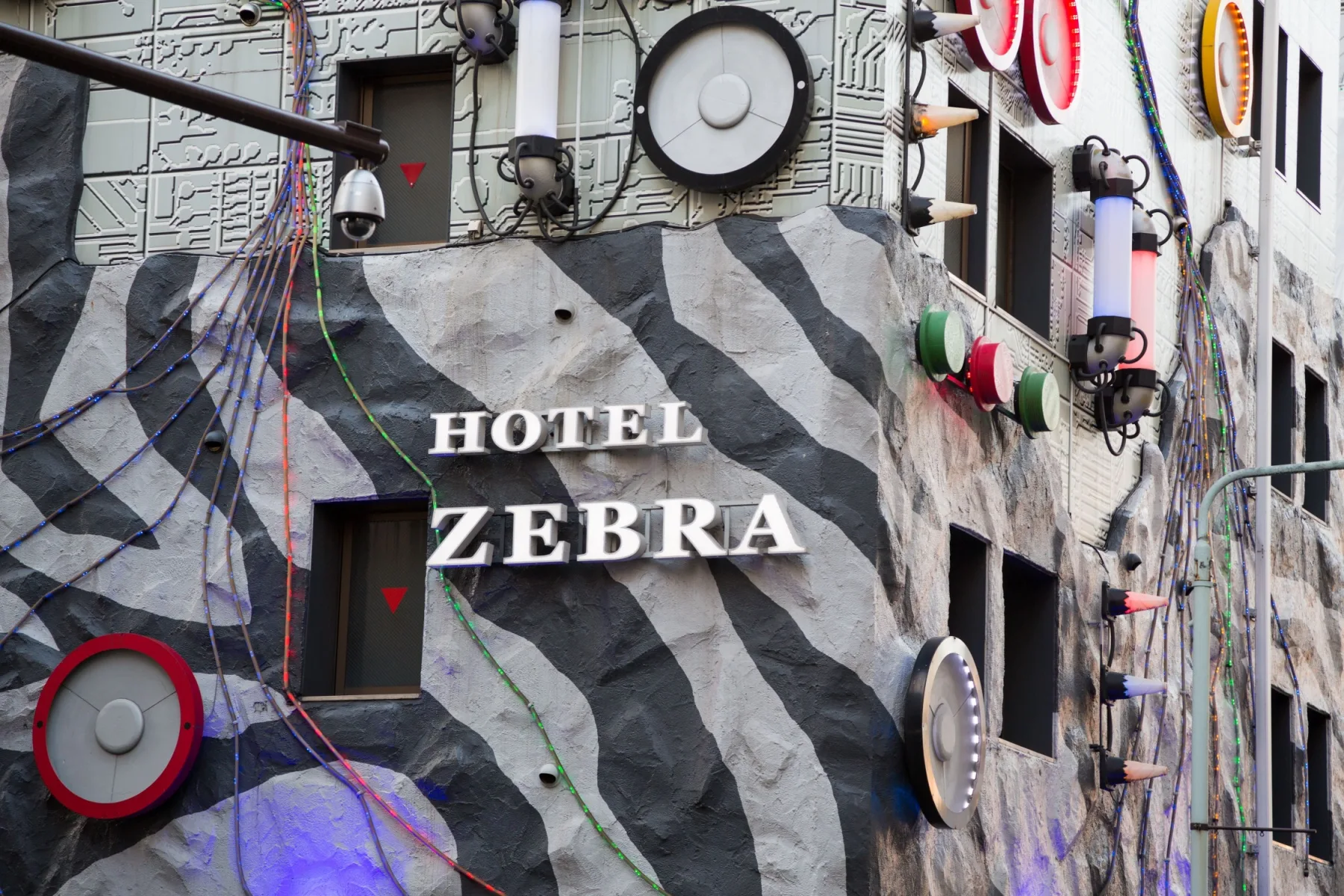
Image credit: Jane Rix / Shutterstock.com
The check-in process is the detail the films always skip. A screen flashes your room number, a small automated window slides open, you pay in cash, and that’s it. No names, no paperwork, no awkward eye contact. The themed rooms can be genuinely strange — reproductions of medieval castles or spaceships, or rooms furnished to look like hospital rooms, airplane cabins, school classrooms, prison cells, with costumes to match.
An overnight stay costs around ¥8,000 to ¥14,000, while a rest during the day costs around ¥4,000 to ¥8,000. On weekends, prices can be much higher. At current exchange rates that puts an overnight stay at roughly £40 to £70, and a short rest at £20 to £40. The rooms tend to be larger than most business hotels, with mood lighting, a massive flat-screen TV, a massage chair and a bathroom that feels closer to a spa. One word on cash: bring it. Most places don’t take credit cards, especially the more private ones.
A practical note for foreign visitors: some love hotels won’t allow same-sex couples to stay, and some even refuse two foreigners. They can be discreet about this, so be prepared to be refused entry. Love Hotel Hill has remained largely unchanged since it was established in the 1970s, partly due to a 2006 city ordinance designed to block new love hotels from being built. There’s a grim irony to that: the regulation meant to clean the area up is exactly why it still has its character.
Kabukicho: the full volume version
Kabukicho is Tokyo’s largest entertainment district, a dense grid of streets in Shinjuku containing everything from regular bars, karaoke and ramen to hostess clubs, host clubs and love hotels. It runs on a schedule that doesn’t fully stop until sunrise. Murakami’s characters wander through exactly this kind of district — bars with no names, women met and lost in a single evening, the city as dream logic. The screen version is blue-lit and melancholy. The pavement version is louder and has a man in a chicken suit trying to hand you a flyer.
The practical danger in Kabukicho is financial rather than physical: accepting drinks from strangers, following touts into unposted venues, or handing over a credit card without seeing a menu. Stick to venues with visible pricing and you’ll be fine. Bottakuri is a bait-and-switch scam where patrons are attracted by a low advertised price then charged numerous hidden fees. In one documented case, a group of nine was lured into a bar under a promise of an all-inclusive ¥4,000 cost; the final bill was ¥2,663,000. Yes, really.
Many hostess bars, clubs and adult venues also discourage or restrict foreigners to avoid misunderstandings or trouble. That’s frustrating if you’ve come specifically for the experience, but it’s the reality.
Golden Gai: the Murakami bit that actually works
If any part of Tokyo genuinely resembles the city in the films, it’s Golden Gai. Two hundred bars in six alleys, most seating fewer than ten people, every bar with a character defined by a single owner who decided what they wanted their room to be. Jazz vinyl, wrestling memorabilia, horror film stills. This is the kind of place Murakami’s protagonists actually inhabit — not the flashy love hotel, but the tiny bar where a stranger tells you something true at one in the morning.
A single drink here runs ¥800 to ¥1,500. Some bars charge a cover of ¥500 to ¥1,000. It’s worth it. Get there before 11pm on a weekday if you want a seat.
Getting around and getting out
Shinjuku Station has over 200 exits and the signage at night is less clear than daytime. The East Exit is the one you want for Kabukicho, Golden Gai and Ni-chome — this is the nightlife exit. Dogenzaka in Shibuya is three minutes on foot from Shibuya Station’s Hachiko exit. The last trains run around midnight; after that you’re in a taxi or a love hotel until 5am, which is, honestly, a very Murakami outcome.
After the Quake is streaming on Netflix with English subtitles. The film also showed at CineSwitch Ginza from October 2025, though a check on current theatrical screenings is worth doing if you’re in Tokyo and prefer the cinema experience.