
Image credit: BalkansCat / Shutterstock.com
If you are still basing yourself in the Gothic Quarter, eating beside people in matching luggage-tag lanyards, and calling that the real Barcelona, Sant Antoni would like a quiet word. A small triangular wedge squeezed between El Raval and the Eixample, it is the part of the city where people actually live, and where the gap between tourist Barcelona and local Barcelona is still wide enough to fall into.
The Market That Started It All
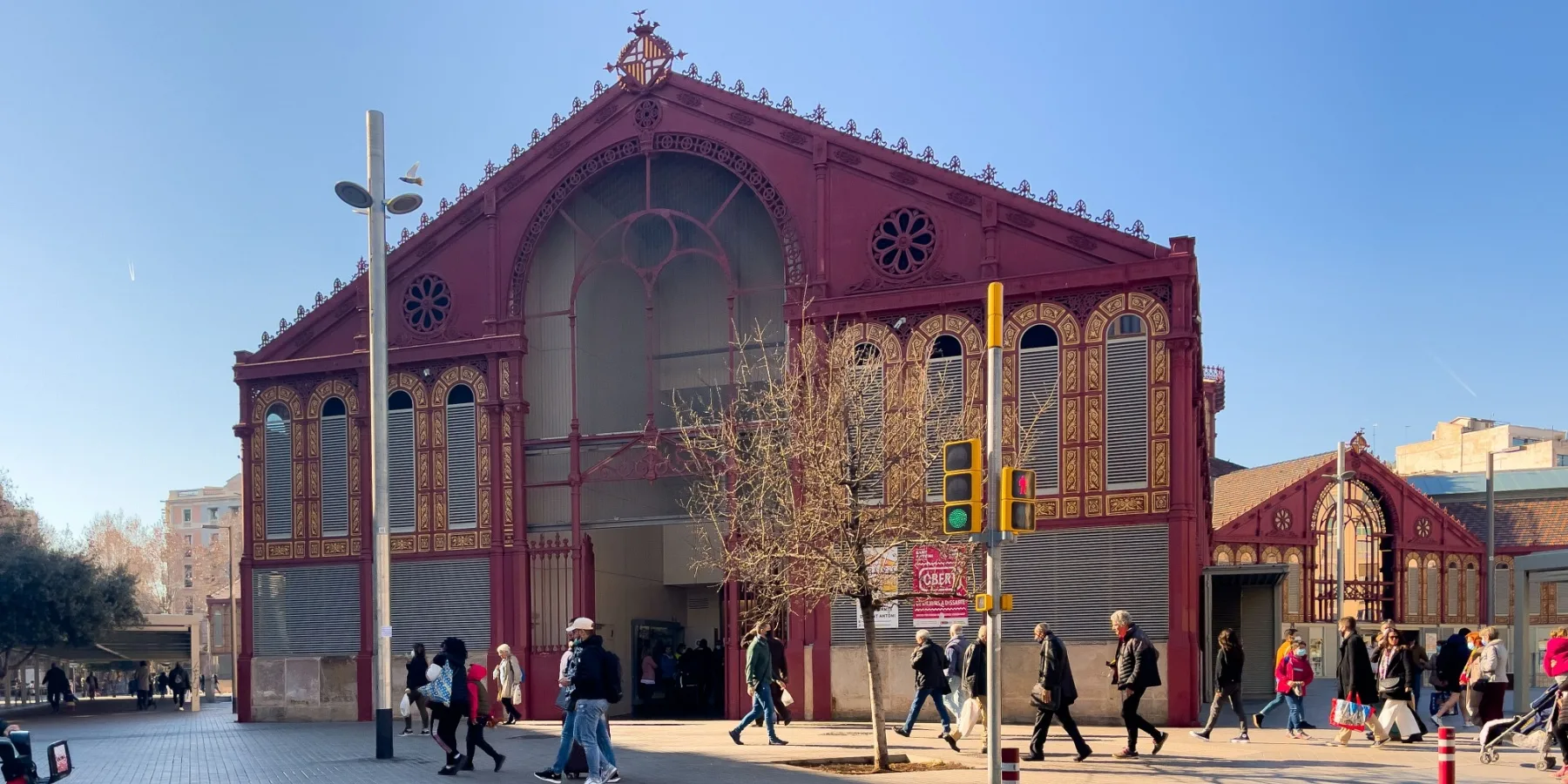
Image credit: Wirestock Creators / Shutterstock.com
Everything traces back to the Mercat de Sant Antoni. The 2018 reopening of this 1882 Modernista building kicked off a wave of new restaurants, cafes, and shops. It took nine years to restore, partly because archaeologists kept finding things: 17th-century defensive walls, sections of the Roman-era Via Augusta are still visible. Inside, locals shop for seafood, olives, meats, fruit, and everyday essentials. If you want a market experience without the shoulder-to-shoulder crowds of La Boqueria, this is where to start. The market runs Monday to Saturday, 8am to 8.30pm. On Sundays it transforms into a collector’s market, with vendors setting up stalls of second-hand books, vintage magazines, stamps, coins, postcards, and retro memorabilia under the iron roof. It has been running since 1938 and now counts more than 70 stands. Sunday hours run roughly 8.30am to 2.30pm.
Brunch Wars on Carrer del Parlament
If you are in Barcelona and have not heard of Carrer del Parlament, you probably have not had a good brunch yet. It is the café epicentre of Sant Antoni, lined with spots like Federal Café and Café Cometa, all serving flat whites and good people-watching. The competition for tables on a Saturday morning is genuinely competitive. Federal Café does the Australian brunch thing well, with a big balcony for eating outside and a menu built around good coffee and properly sourced ingredients. Bar Calders, on the same street at number 25, is probably the most popular spot on Parlament, a corner café with great tapas, a varied menu, and a sheltered terrace. There are no reservations and it is always packed. For vermouth at noon, which is a completely acceptable life choice, Bar Calders is a Sant Antoni classic that can be difficult to get a seat in, especially on the terrace. Go for tapas and good vermouth.
If brunch has become too much of a performance elsewhere, try Flipá on Carrer del Marquès de Campo Sagrado. It is one of the smallest restaurants in the neighbourhood, but this brunch-and-vermut spot is worth it. The menu runs to toasts, sandwiches, bowls, and waffles, and is largely vegetarian with both sweet and savoury options. Lunch with a drink tends to come in under €15 at spots like Café Cometa and Lanto on weekday menus.
The Gay Scene, Without the Circuit
The LGBTQ+ scene in Barcelona is not a single strip or a weekend-only affair. It is woven into the residential fabric of the Eixample, and it spills into Sant Antoni and El Raval. The main concentration sits a few blocks north in the Gayxample, where Carrer del Consell de Cent and Carrer de Muntaner are packed with gay bars, saunas, sex shops, queer cafes and rainbow flags. Punto BCN is the Gayxample staple and the first gay bar in town. It is fiercely unstylish but friendly and down to earth, and one of the few places where you will find anybody early on.
Sant Antoni itself sits adjacent to this and has its own character. The renovation of the Mercat de Sant Antoni and the pedestrianisation of Comte Borrell have generated a younger queer-friendly leisure zone that does not depend on specifically LGBTQ+ venues, something that distinguishes it from the more formally labelled Gayxample. Barcelona’s LGBTI Centre is located in Sant Antoni itself, a multi-functional space on Carrer del Comte Borrell. Bar Calders is not specifically gay but is overwhelmingly queer-friendly, with a brilliant vermouth selection and outside seating. For anyone who wants the full Gayxample circuit, bars open around 6pm for happy hour and get busy from 11pm. Clubs fill from 1am to 2am and run until 5am to 6am. Barcelona follows a late Mediterranean schedule: arriving at a club at midnight means an empty room. Plan your evening from 9pm to 10pm.
Vintage, Second-Hand, and Sunday Browsing
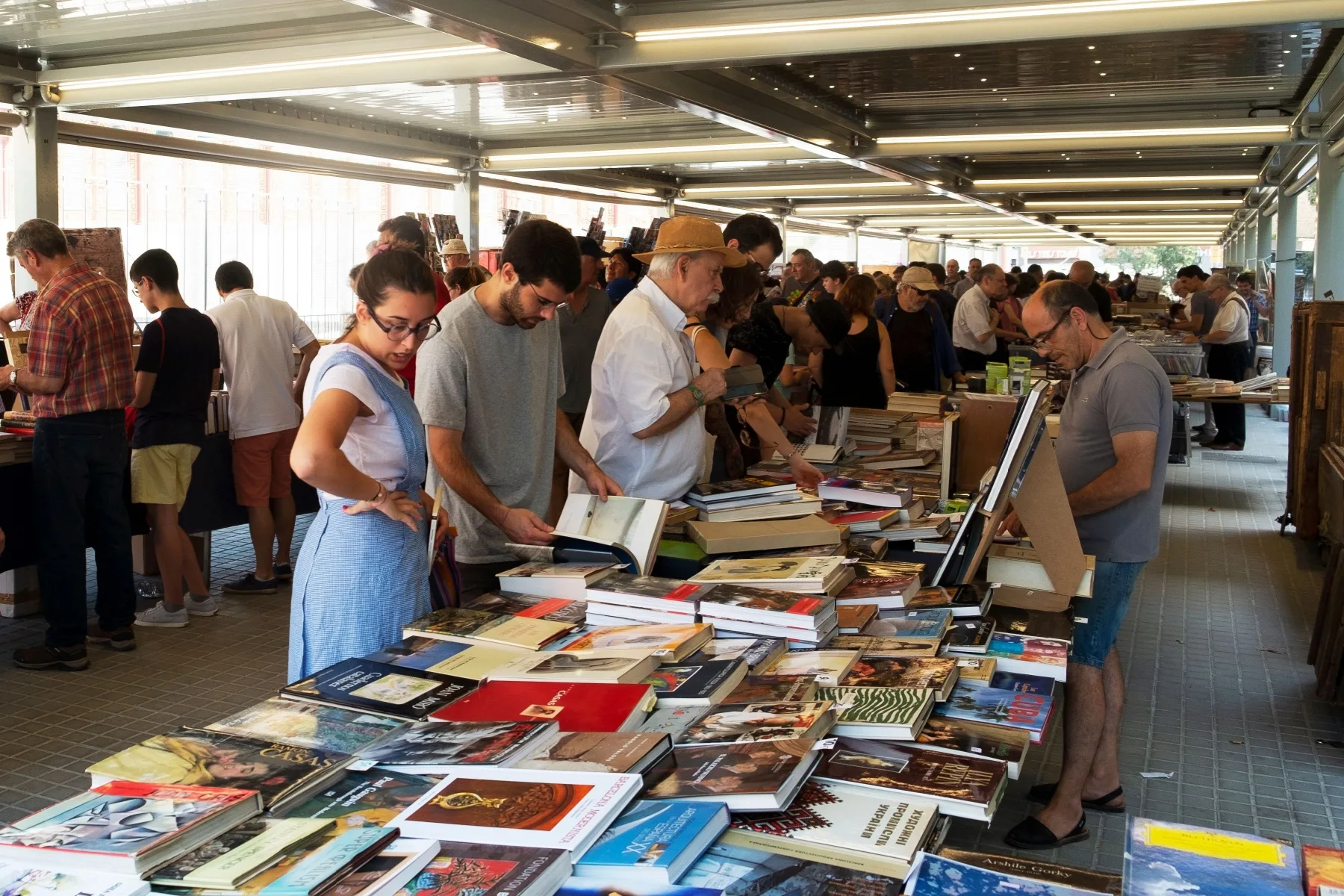
Image credit: nito / Shutterstock.com
Some of Barcelona’s best second-hand stores, with the largest variety of clothing, are in L’Eixample, El Raval, Gràcia, and Sant Antoni. The side streets off Parlament and Comte Borrell reward aimless walking. One Sant Antoni shop stocks well-selected vintage clothing organised by decade, with an attractive range of accessories at reasonable prices. The owners are two Catalan musicians, so the playlist is excellent. The Sunday book market outside the Mercat is the obvious first stop, but the Encants flea market inside the building runs through the week for clothing and bric-a-brac too.
Getting There and Staying Put
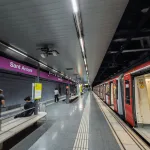
Metro lines L2 Sant Antoni, L1 Urgell, and L3 Poble-sec all serve the neighbourhood, with fast connections into the city centre. Hotels in the area start from around £95 a night for something decent; the Axel Two on Gran Via is the obvious LGBTQ-friendly choice close to both the neighbourhood and the Gayxample. Sant Antoni sits between the pricier, more formal Eixample Esquerra and the edgier, cheaper El Raval, which means it is also the right postcode for anyone who wants to be near both without paying for either. It feels unmistakably Barcelona, just without the buskers and busloads.