

Most drivers jump straight into long journeys without a proper vehicle check, but a simple 15-minute inspection can prevent costly breakdowns and keep you safe on the road. With the average UK car now 10 years old and repair costs climbing, knowing what to look for before you set off has become essential.
According to the latest RAC data from 2025, 76% of British drivers report increased maintenance costs over the past year, yet only 17% regularly inspect their vehicles before long trips. This gap between rising expenses and preventive care leaves thousands stranded each year with avoidable problems. The good news? Most breakdowns can be spotted early with straightforward checks that take less time than filling your tank.
Start with your braking system
Your brakes are your first line of defence, especially on motorways and unfamiliar roads. AUTODOC specialists emphasise this point clearly: “Spot worn brake-disc symptoms early to keep you and your passengers safe—tackle them at once to prevent brake failure and save time and money on repairs.”
Check for warning signs like squealing noises, vibrations through the steering wheel when braking, or a spongy brake pedal. If your car pulls to one side during braking, this indicates uneven wear or a caliper issue requiring immediate attention.
Inspect brake fluid levels too. The reservoir sits under the bonnet, usually near the back on the driver’s side. Fluid should be clear or slightly amber, never dark or murky.
Fluids keep everything running smoothly
Check your engine oil, coolant, and screen wash. Pull the oil dipstick, wipe it clean, reinsert it, then check the level sits between the minimum and maximum marks. Dark, gritty oil needs changing before a long journey.
Check the coolant expansion tank when the engine is cold—the level should sit between the min and max lines. Top up with the correct mixture if needed, typically 50/50 coolant and water. Fill the screen wash reservoir with proper solution, not just water, to prevent freezing and remove stubborn grime.
Tyres demand your closest attention
Check the tread depth using a 20p coin—insert it into the main grooves. If you can see the outer band, your tread is below the legal 1.6mm limit. Ideally, replace tyres when they reach 3mm for better grip in wet conditions.
Inspect tyre pressure with a gauge, including your spare. Your car’s handbook or the sticker inside the driver’s door shows the correct pressures. Look for bulges, cuts, or cracks in the sidewalls—these indicate structural damage that could cause sudden failure at motorway speeds.
Suspension and steering need checking too
Push down firmly on each corner of your car and release. The vehicle should bounce once and settle. Multiple bounces suggest worn shock absorbers that reduce road holding and increase stopping distances.
Check for fluid leaks around shock absorbers and listen for clunks or rattles over bumps. Test your steering by turning the wheel slightly when stationary—excessive play or stiffness needs investigation.
Lights and electrics deserve a quick test
Walk around your car and check all lights work properly. Ask someone to press the brake pedal while you check the rear lights, or reverse close to a wall and watch the reflection.
Check battery terminals for corrosion and ensure connections are tight. Many garages offer free battery health checks—worth doing before a long trip, as unplanned repairs leave drivers without cars for days.
Your 15-minute pre-trip inspection timeline
A systematic approach ensures nothing gets missed. Following a structured routine makes the process faster and more thorough.
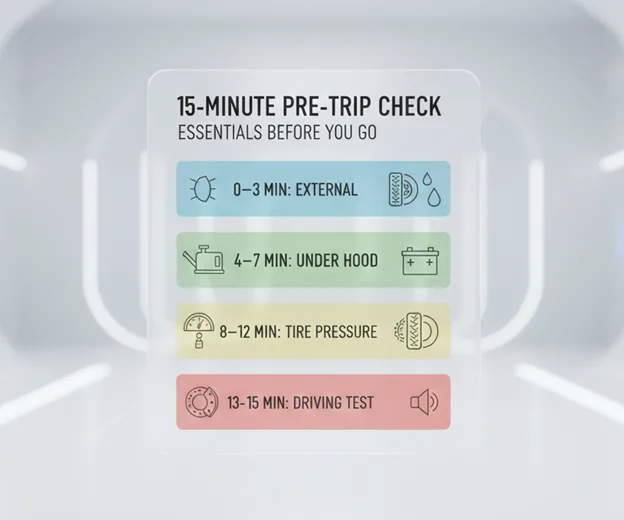
Start with your external walk-around checking all lights, tyre condition, and looking for leaks. Move under the bonnet to verify fluid levels and battery condition. Check tyre pressures including the spare. Finally, take a short test drive listening for unusual noises and confirming brakes and steering respond properly.
Many drivers confuse legal minimums with what’s actually safe for long journeys:
| Check | Legal minimum | Recommended for safety |
| Tyre tread depth | 1.6mm | 3mm minimum |
| MOT test | Annually (cars over 3 years) | Don’t wait until last minute |
| Brake inspection | When MOT due | Every 10,000 miles or annually |
| Oil change | As per manufacturer | Follow service schedule |
Meeting legal standards keeps you on the right side of the law, but following recommended intervals significantly reduces breakdown risk.
Replace parts with reliable components
When checks reveal worn components, quality replacement parts make all the difference. AUTODOC provides reliable parts for every major system, backed by technical expertise and fast delivery across the UK.
A quick pre-trip inspection transforms your journey from anxious to assured, keeping you moving safely towards your destination rather than waiting roadside for recovery.
Sources: RAC breakdown data (2025), UK MOT requirements, AUTODOC technical guidance, and industry-standard maintenance practices.
FAQ:
Q: How often should I check my car before trips? A: Inspect your vehicle before any journey over 100 miles, and perform monthly checks even for regular commuting to catch problems early.
Q: Can I do these checks myself without mechanical experience? A: Absolutely—these basic checks require no special skills or tools beyond a tyre pressure gauge and your car’s handbook, and take just 15 minutes to complete.