
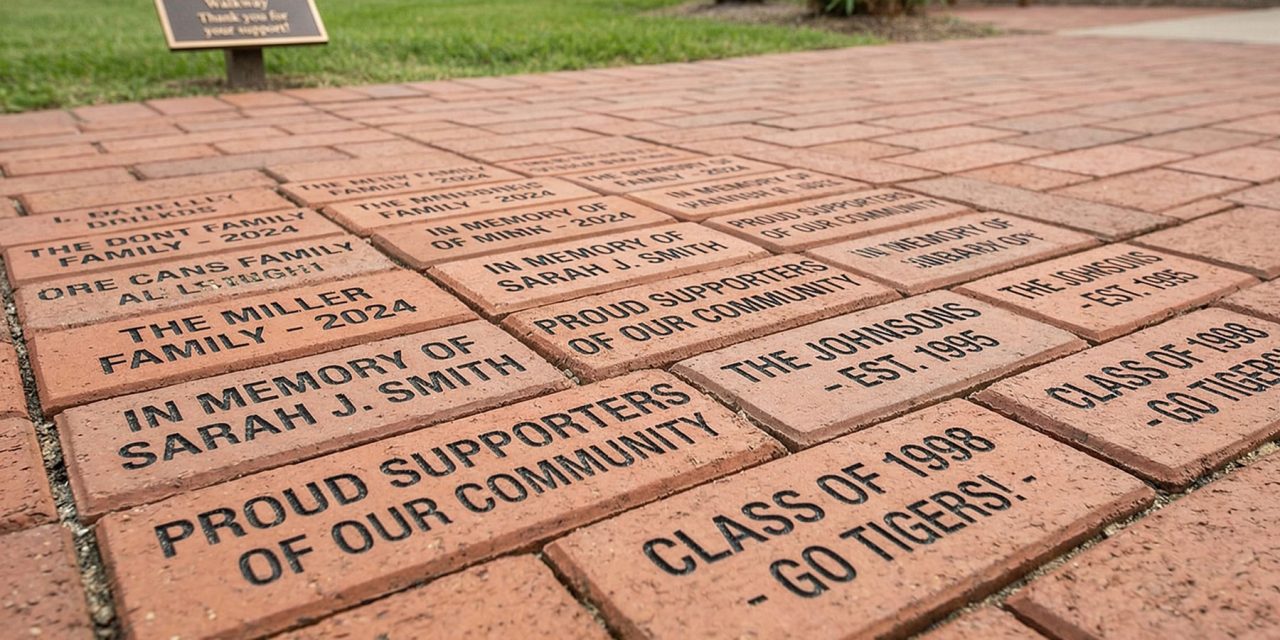
Brick fundraising campaigns have earned their reputation for a reason. Schools, nonprofits, and community organizations keep coming back to them because they do two things at once: raise real money and leave something behind. Not a memory, not a receipt. An actual physical thing that donors can walk up to, touch, and show their kids years later.
That permanence is the whole point. But it doesn’t happen automatically.
Running one of these campaigns well takes planning that most organizations skip. Before you collect a single payment, it’s worth understanding how the moving parts fit together. A dedicated Fundraising Brick platform can consolidate the messy stuff like order intake, design previews, and payment processing, so your team isn’t drowning in manual tracking. Less time on logistics means more time on the part that actually moves donors: the relationships.
What Makes Brick Fundraising Work
The model is refreshingly simple. Donors pay for a personalized engraved brick. It gets installed in a walkway, courtyard, garden, or memorial wall. They get recognition. You get funding. The community gets a landmark that outlasts the campaign by decades.
What actually drives giving, though, is something harder to manufacture: emotional investment. A tax receipt doesn’t do that. A brick with someone’s name on it, a loved one’s name, or a message they wrote themselves does. It’s visible, it’s permanent, and it’s tied to a place the donor genuinely cares about. That combination is difficult to replicate with digital acknowledgments, which is why brick-and-mortar campaigns tend to outperform digital ones in donor satisfaction.
Planning Your Campaign from the Start
Strong campaigns begin with structure. Taking time to map out the basics early helps you stay focused, make better decisions, and avoid losing momentum once the campaign is live.
Set Clear Goals
Work backward. Figure out how much you need to raise, then calculate how many bricks that requires at your chosen price points. A standard 4×8 brick at $100 and an 8×8 at $200 gives you enough range to serve different donor budgets without overcomplicating the offer.
Give the campaign a firm end date. Open-ended timelines bleed momentum. Somewhere between 60 and 90 days is the sweet spot, enough time to build orders without letting urgency fade.
Choose the Right Vendor
Not all brick suppliers are worth your time. The ones that are will offer laser engraving or sandblasting (both hold up better than painted options), a range of sizes, and online ordering tools that donors can actually navigate without calling you for help. Ask upfront about installation support and lead times. If you’re planning a dedication ceremony, you need those timelines confirmed before you set a date.
Request samples early. The finished product is what donors will remember, and it needs to look like it was worth what they paid.
Promoting Your Campaign Effectively
Here’s where most organizations lose the plot. A campaign that nobody hears about doesn’t hit its goals, regardless of how worthy the cause is.
Start close to home. Email past donors, active volunteers, and community members who already have skin in the game. Keep the message brief and direct, focusing on what the campaign is for, how to order, and why it matters. That kind of targeted note will consistently outperform a long newsletter blast. Social media is useful for sustaining momentum once the campaign is running: post photos of the installation site, share order milestones, and make it feel like something is building. People want to join things that are moving.
A small kickoff event can also do a lot of work. Getting your core supporters together to launch the campaign creates early energy and gives people a natural reason to talk about it.
Segment Your Donor Outreach
Major gift prospects probably shouldn’t get the same email as parents of current students. Alumni respond to nostalgia and community pride. Parents connect with legacy and impact. Individual donors who’ve given before want to feel remembered, not mass-mailed. Matching the message to the audience isn’t complicated, but it consistently produces better results than treating everyone the same.
Managing Orders and Fulfillment
Once orders start coming in, stay on top of them. Use whatever reporting tools your platform offers to track counts, revenue, and deadlines in real time. Follow up with anyone who started an order but didn’t finish it. Abandoned checkouts are recoverable if you catch them early.
Proactive communication matters more than most organizations realize. A short update email at the halfway point and another as installation approaches keep donors from wondering what happened to their order. People aren’t impatient; they just don’t like silence.
Before anything goes to the engraver, review every proof. Catching an error at that stage costs almost nothing. Catching it after installation costs a lot more than money.
Keeping Donors Engaged After the Sale
Installation is not the finish line. Send a thank-you with a photo of the completed project, and, if you can, pull individual brick images. Showing donors exactly what their contribution looks like in place is the kind of detail that sticks.
Invite them to a dedication or unveiling. That moment does more for long-term donor relationships than almost anything else in the campaign cycle. It closes the loop in a way that feels earned.
The organizations that consistently exceed their goals treat every brick purchase as an opening, not a close. Repeat donors and referrals don’t come from good campaigns alone. They come from the way you handle what happens after.