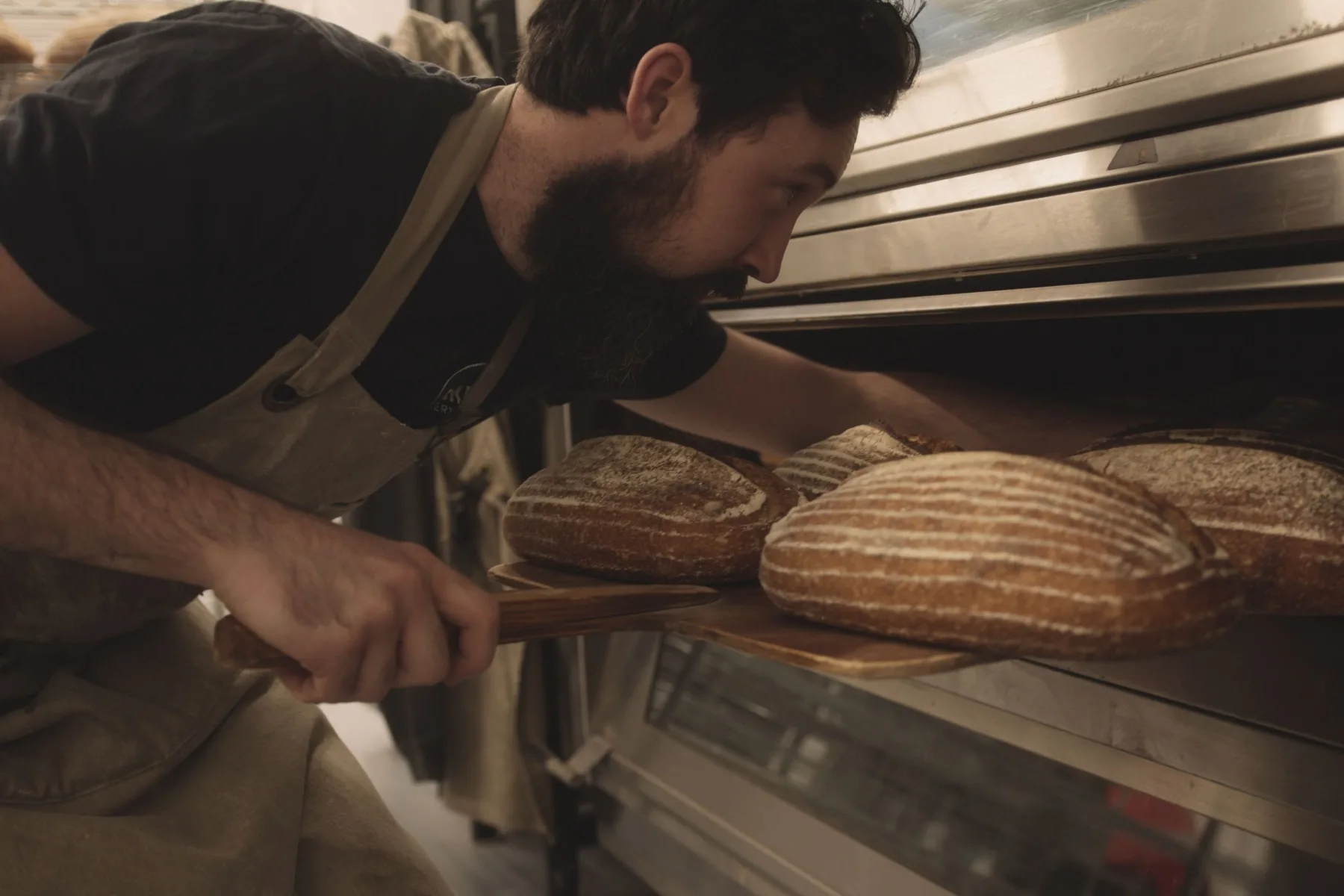
Let’s be honest about the premise. Sourdough is not dying. It has seen the biggest growth in the UK bread category, 46% year-on-year according to Nielsen data, and the best-performing bread in the market despite being a premium choice. Tesco reports it is now the UK’s fastest-growing bread variety, with sales increasing by more than 40% year-on-year. So no, the loaf is not dead.
What is dead is its status. For the better part of a decade, ordering sourdough toast in London said something about you. You had a starter. You understood fermentation. You went to Maltby Street. Now it says nothing, because everyone does it. The mums in Herne Hill do it. Pret does it. The point is gone.
And when a food trend loses its cultural meaning, the interesting people move on, even if the numbers haven’t. That’s where London’s bakery scene is right now in 2026.
Sourdough has become infrastructure
Sourdough is now used to signal both quality and credibility. A casual burger joint using sourdough buns, a café offering a croissant made with sourdough starter. It has become shorthand for craft, care and quality. Which is another way of saying it is now a baseline. Table stakes. The thing you have to do before anyone takes you seriously. I walked into three separate sandwich spots in Bermondsey last month and all three used sourdough as a matter of course, the same way everyone used ciabatta in 2003. It’s done its work. The fermentation instinct hasn’t gone away, though. Puratos UK points to a move into pastries: sourdoughnuts, cinnamon rolls, enriched doughs with fruit, as sourdough spreads into categories where it still feels novel. In 2026, “sourdough” has transcended its definition as a type of bread to become a functional platform and flavour category in its own right, with the starter now viewed as a bioactive ingredient that imparts digestibility, shelf-life and complex flavour across the bakery spectrum. That’s not a trend dying. That’s a trend becoming plumbing.
Where the excitement actually is
The London bakeries genuinely drawing queues right now are doing something different. The arrival of Florentine sandwich shop Dal Fiorentino in Notting Hill in March 2026 has led to hour-long queues since opening, serving schiacciata sandwiches, a specific type of thin Florentine flatbread filled with quality Italian ingredients. Across town, Bread & Truffle in London Fields makes its focaccia with dough given a full 16-hour fermentation and still sells out daily. Neither place markets itself as sourdough. Both are, in effect, doing the same slow-ferment craft work. They’ve just stopped leading with the word.
Walthamstow microbakery Lucky Yu, open just two years, earned a place on the Good Food Guide’s 50 Best Bakeries for 2026 list with Cantonese-British hybrids: double date cakes, sesame soy congee sourdough, grapefruit cheesecake buns. Newcomer August Bakery in Battersea has signature bakes like miso sesame sourdough, kouign amann and a Serrano ham, Ogleshield cheese and fennel seed swirl. These places use sourdough technique as a foundation, then build something culturally interesting on top of it.
Flavour is the new craft signal
After several years dominated by reformulation and protein positioning, flavour is pushing back. And it isn’t doing it quietly. Across outlooks from Synergy Flavours, Kerry and Puratos, the tone is noticeably different this year: less restraint, more contrast, more depth.
The rise of sweet-spicy combinations, savoury glazes and umami-rich inclusions reflects a growing fascination with global cuisines. Turkish spices layered through soft loaves. Korean gochujang notes in burger buns. Argentinian chimichurri flavours infused into dipping breads. Ube continues to gain space across cakes and sweet snacks; its nutty sweetness is useful and its colour decisive. Purple commands attention in a sea of beige pastry.
Matcha was enormous in 2025, and infusing bakes with alternative tea flavours is continuing to prove popular: honey and Earl Grey, fig chai latte. Core indulgent flavours like caramel still dominate, but in 2026 it’s about depth. Miso caramel, smoked caramel or brown butter dulce de leche. An unexpected twist on traditional comfort, going one step further than salted caramel.
The bottom line
Sourdough won. That’s the problem. Once something wins completely, once it’s in every supermarket, every café chain, every brunch menu, it stops being interesting to the people who cared about it first. The craft bakers of London haven’t abandoned fermentation. They’ve stopped using it as an identity badge and started using it as a technique in service of something more specific: bold flavour, global reference, texture that justifies a queue in the rain. A plain sourdough loaf for £6 from a backstreet bakery still beats a Warburtons by a mile. But if that’s all a place is offering in 2026, it needs a better story.