
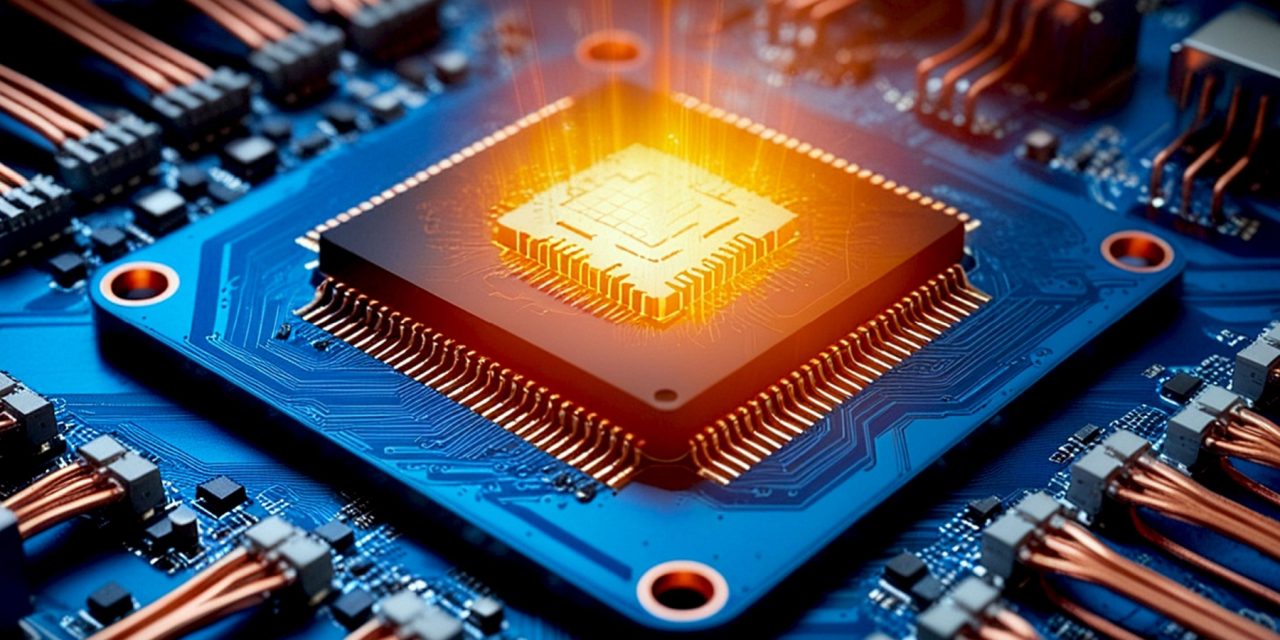
Semiconductor Innovations Fueling AI’s Explosion in Computing Power
AI is transforming computing, driving huge demand for faster and smarter chips. Semiconductor innovations are key to this growth. Advances in materials, design, and architecture push AI processing to new levels. This article explores how these developments boost performance and efficiency, shaping the future of computing.
Advanced Chip Architectures
Modern AI workloads require chips that handle massive calculations efficiently, and some enthusiasts even join 1xBet Qatar to enjoy casino online contests while following tech trends. Traditional CPUs struggle with parallel processing, so GPUs and specialized AI accelerators dominate.
GPUs and Parallel Processing
GPUs can process thousands of operations simultaneously. This makes them ideal for deep learning and large-scale neural networks. A single high-end GPU can deliver over 80 teraflops of performance. Cloud providers often link multiple GPUs, creating clusters capable of handling AI models with billions of parameters.
AI-Specific Accelerators
New chips, designed specifically for AI tasks, improve speed while reducing energy use. These accelerators often combine matrix multiplication units, high-bandwidth memory, and custom logic. They can outperform general-purpose processors by 5–10 times in AI workloads.
Material Breakthroughs
Semiconductor materials have a huge impact on efficiency and speed. Silicon remains standard, but new materials push boundaries.
Beyond Silicon
Gallium nitride (GaN) and silicon carbide (SiC) chips offer higher voltage tolerance and faster switching. These materials reduce energy loss, enabling chips to operate at higher frequencies without overheating. They also improve performance for AI inference and training.
3D Chip Stacking
Vertical stacking of chips increases density without expanding the footprint. This allows more memory and processing units in a single package. Stacked chips reduce latency and energy consumption. Some AI chips now feature 3–8 layers, each optimized for specific tasks.
Energy Efficiency and Sustainability
AI models are growing, with training sometimes consuming megawatt-hours of electricity. Semiconductors are adapting to meet these energy demands responsibly. Wireless power transmission is emerging as a key technology, enabling energy-efficient powering of distributed sensors and devices in sports infrastructure without physical cables.
Low-Power Designs
Fresh transistor designs, like gate-all-around (GAA) and nanosheet FETs, cut down on power. They boost performance per watt, so data centers can run AI models in a greener way.
Cooling Innovations
Super-fast chips can get hot fast. Liquid cooling and mixed air-liquid setups now keep processors cool enough. Good cooling stops chips from slowing down. It makes the chips last longer.
Scaling AI Workloads
AI isn’t just for single computers anymore. Semiconductor tricks now back up AI processing across many machines.
- Chip connections now speed up how info moves between different spots.
- Lots of memory lets bigger sets of info fit right on the chip.
- Building-block designs let businesses grow their setups fast.
All this lets companies train models quicker and use them for stuff like language processing and image recognition.
Practical Impacts on Computing
Quicker, smarter chips change things for businesses.
- Healthcare: AI can look at tricky medical info fast, which helps with finding problems.
- Finance: Risk models can now happen in real-time thanks to chips and their processing.
- Self-driving stuff: Cars and robots use quick AI chips to get around.
AI processing is also pumping up cloud setups. Data centers are dropping money on semiconductors that have speed, memory, and energy savings.
Responsible AI and Sustainable Computing
More speed is good, but energy use is still a worry. Good semiconductor design helps keep new ideas in line with being nicer to the planet. Businesses are putting their time and money into chips and chill methods that save energy to cut down on pollution. This ensures AI growth is good and fair.
Tips for Energy-Aware AI Deployment
- Cut down the model size and how they’re set up to use fewer computers.
- Use chips that give you the most bang for your watt.
- Put in liquid chilling or good airflow tricks in data centers.
- Group jobs to get the most out of processors that sip power.
Semiconductor stuff is pushing AI’s fast-growing computing power. New setups, new materials, and energy-smart designs make AI quicker, smarter, and more doable. Putting chips in stacks and speedup tricks bring unreal performance, while low-power designs save energy. These moves shape businesses, grow cloud abilities, and push for green computing. AI growth rides on chips always getting better, making semiconductors the core of modern computing.