
Keep a light on
Jay discovers his ability to survive in Northern Scandinavia
On the ski-doo was my backpack, a box with enough food for three days, candles, matches and a pair of snow skis. I was going to spend two nights at Flarken’s Magic Bus wilderness camp based on the movie Into the Wild. Flarken’s Magic Bus is exactly like the original, a bus in the snow, not operational, battered down with crevices air can penetrate, a thin layer of wood on the floor and windows along the walls. It is cold. It’s also the middle of winter.
There were jokes being made I would die in my two nights, and while I made these jokes myself and laughed at others making them, part of me was worried I might. I don’t know how to do a lot of fundamental things. I am not a handy man, nor do I have any trade experience except for digging holes and using power tools incorrectly, nor am I used to this weather, and most importantly, my fire making skills were dubious.
Fabian dropped me off and we agreed to meet back at the road at 2pm in three days. My phone had no reception, so this word was all we had, like the old days which I never experienced when you gave a meeting time and were just there.
“Are you sure you want to spend all that time there on your own? It’s cold, and you might get bored. There is no power, just a fireplace.”
But I insisted on going, responding with the most reassuring and powerful phrase known to man, “I’ll be right.”
As Fabian drove off, I coughed, loudly. Then I coughed again. I’m just clearing my throat from that first cough, I told myself. As I packed my things into the bus, I coughed some more.
I began collecting firewood. As I moved it into the bus, I felt more and more lightheaded. I didn’t pay this attention because I wanted to get the fire lit first. I kept going but was getting progressively weaker, in denial.
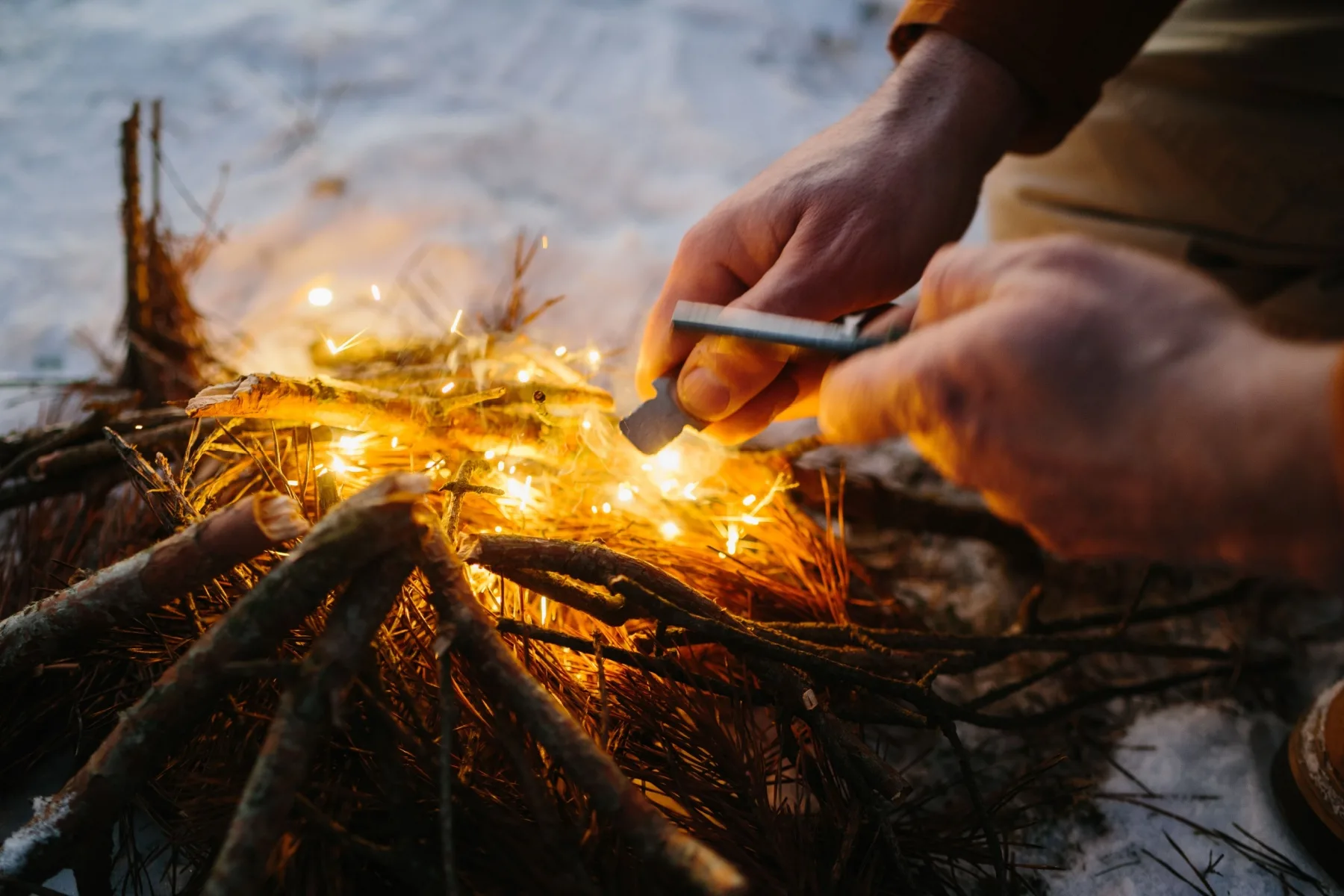
The flames were on the bark but they would just fade after 20 seconds. I tried again, same thing. After 5 minutes, I begin stressing. The cold is already in my gloves and boots and I am feeling even weaker.
With each attempt at the fire, I became slower and more out of breath. I started laughing through my wheezing. It was exactly like movie except I wasn’t as cool as Chris. It’s always funny being over dramatic in these situations.
After 30 minutes, I gave up. In that moment I prepared to spend my days with no fire.

I put on every bit of clothing I had. I wriggled my toes and fingers trying to get some heat inside my clothes. I even lit a bunch of candles right next to my bed, creating a little demon possession ceremony, in the hope the small flames would heat the mattress.
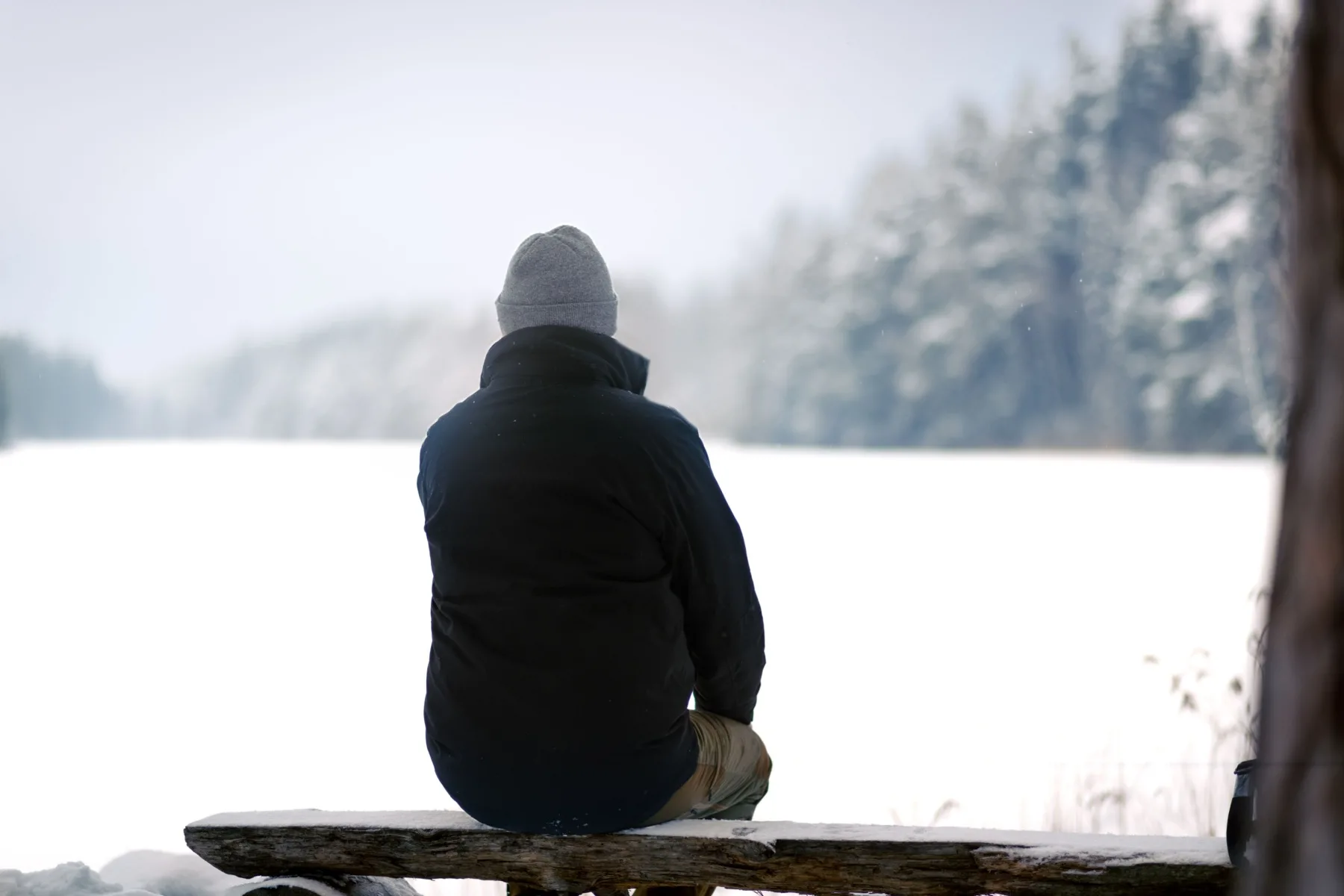
I sat down in my mass of clothes, unable to move, thinking if I just sat here, nothing could happen to me. The thought of sitting in a chair for three days sounded boring as ever, but when faced with this cold, sitting down doing nothing was the most appealing thing to do.
And then, quite suddenly, something brilliant hit me. Some might call it common sense, but I had to close hatch of the fireplace while it got started to keep the heat in. Of course. I lit up and closed the hatch, and then, within a minute there was a big fire, and then, there would be no sequel to Into the Wild, probably.
I spent most of my time huddled around the fire. Because I was so focused on recovering and keeping warm, the time wasn’t boring at all. It was very immersive. I kept the wood burning well and by midday each day, the bus was actually warm.
The only other thing I did to keep myself busy was make all those weird and pathetic sounds people make when they’re alone. I realised what a strange and noisy creature I am.
I ate well and didn’t have to hunt a bear to survive, although I had been left a knife, one of those ones you scrape butter with, so easily could have taken one down. On my last day I started recovering enough I could have a sauna (the bus has a sauna attached to it) and return to the road, driven back safely.
Maybe they should make a movie or something about my time here, call it Fuckwit on a Bus or How to die of cold but not really, but almost, but nah it was alright, but still, kind of close.
This was the first stop on my journey through the northern Scandinavia. From Jörn in Sweden, I moved up to Inari, northern Finland, home of the Sami, the indigenous population of northern Scandinavia.

I arrived at Lake Inari Mobile Cabins, a completely unique style of accommodation on Lake Inari.
A man called Atte runs the place. The idea for the accommodation came from a friend of his. Essentially, the cabins are on skis, and in the evenings, Atte attaches the cabin to his ski-doo and drives out onto the frozen lake where you sleep the night.
He picks you up in the morning and brings you back to the main house for breakfast. Here, everyone discusses what times they were awake and whether they saw some northern lights.
Atte does a special birch tree tea from leaves harvested during the summer, and he also does a traditional Finnish dinner over an open flame. There are seven cabins, so there can only be that many guests, and you all experience things together, every morning and evening.


After some back and forth, Atte’s connection actually left a day later, but Atte let me sleep on his couch so I could still catch a ride with him.
I realised how important where you stay is. Staying in the right places means you meet people, local people who run these places, and they care about you and help you out.
All it takes is for you to mention the smallest thing to the right person, then they might say, “Oh I know a guy going there” or “I can do that for you” or “that should be fine.” It’s remarkable how kind and generous people are if they know you need help.
I caught a ride into Näätämö on the Norwegian border. It is popular spot for Norwegians to shop at because there are products you can’t get in Norway, and it’s also considerably cheaper. So from Näätämö, it was easy getting another ride all the way into Kirkenes.
It’s a level darker and the cold is blindly impressive. A lady at this café said, “It’s good today, only minus 15.” I laughed and she did not. Kirkenes has many of its street signs in Russian, and many people speak Russian here too. They also get around on little sleds, even the grandmothers.
When I was asking about where to go, the vote was unanimous among locals and travelers. Just outside of town, the Kirkenes Snow Hotel is a beacon of life and activity. It’s simply all happening there.
The culture is one of travelers and seasonal workers. Everyone is from all over the world, all gathered at the edge of Europe in the snow and minus thirty-degree temperatures.
I had a packed itinerary beginning with a snow walk up a mountain overlooking the region. My guide and I spent a good twenty minutes trying to describe the lighting of the north. We did not do a good job.
“It’s not twilight as everyone says, it kind of glows.”
“Yes, it glows. It hums.”
“It’s like someone switched a weak watch light on in pitch black darkness, then hid the watch light.”
“It’s like seeing a concert at night from far away.”

I went dog sledding and on a king crab safari where I was very manly and posed with a dead crab. Then I ate it. It tasted like a king should. I believe mother nature imbued crabs with a lot of protein because it takes much effort and time to take them apart and eat them.
It was here where I experienced the coldest weather, minus thirty-two, and windy. My eyelashes froze up, and when I got back inside, I unknowingly wiped my face, and because the ice had begun to melt, I ended up taking out a few lashes with it.


There I met Steinar Wilhelmsen, a local policeman who also runs great accommodation called Wilhelmsen Romutleie. He told me Vardø is a special place.
“In the 80’s, around 4500 people were living in Vardø,” he said, “today it’s around 1900 people, so it’s a very small town.”
“It’s very easy to get in touch. People are very friendly, open and inclusive of other people. If you go out on the local pub called Nordpolen Kro, you will never be seated for a long time alone before people come talking with you.”
“Recently, Vardø has been a very popular place for tourism. There used to be around 7-8 fishing fabrics in Vardø, now it’s only 2. But in compensation we have got several government workplaces. The fishing industry nowadays seems to be better and a lot of people have their own boats and started as fishermen.”
Vardø has graffiti on many of its buildings which signified they were abandoned. When people bought the houses, they would remove the artwork.
Just because a place is isolated it does not make it dead. Sometimes the place compensates by being very lively.
Towns like these always have an everything man. An everything man is a man capable of doing anything or fixing any problem. There are no specialist tradesmen, just everything men, and everybody needs a everything man. They all have his number.
They are usually about fifty, drive a van, and are constantly jolly and laughing at their own inside jokes because everyone around them is stressed about the problem they can so easily fix.


I am not sure if I am just unlucky or if I am unprepared and incompetent, but it seems I am awfully saveable.
Leaving Vardø I cut straight across Finmark, the region covering northern Norway, to Alta, where I stayed at Canyon Hotell. It’s not just a hotel, they also offer a bunch of different experiences and activities like snowmobile rides, hikes, and tours about the culture and traditions of the indigenous Sami people.
We saw lots of humpbacks but also saw some orcas. They were, as our guides said, ‘As relaxed as we’ve ever seen,’ doing whale moves like lying on their backs, waving, almost breeching at times.
From one boat to another, I hopped on the Norwegian Fjord Explorer. On this occasion however, it was just an overnight accommodation stop. Captain Mads, who has a television show about his adventures, owns the ship. When not out on cruises, the ship serves as a boatel parked just beneath Tromsø’s bridge. The wooden cabins and feint sounds of waves gently nudging the boat clonked me out for 9 hours.
There were no northern lights due to the clouds, but the whales knew this, so they gave us some extra loving. You usually heard them before you saw them, their great deep bursts which sounded like someone blowing their nose into a microphone.
I stayed a short night because I was on the move now, in the flow of catching buses. I headed down to Tromsø, known as the capital of the Arctic. I jumped straight on a 24-hour Northern Lights and Whale Watching Cruise with Norwegian Travel. We sailed overnight to just outside of Skjervoy and woke up with breakfast and surrounded by whales.
I arrived in Narvik where I stayed at Hotel Wivel Narvik. Our English tongues are not able to comprehend, but the word wivel does have a very refined Norwegian pronunciation. Linn who works there is a terrific woman always joking and laughing with her guests, so much so I thought some of them were living there permanently.
It was wet and raining and icy. I didn’t mind though. It made walking more interesting because you had to really pay attention to your steps. Seeing a place in bad weather means you get to see in differently, and different is good, regardless of whether it was lower or higher than expectations.
It was then time for the Lofoten Peninsula. It’s a place which has inspired many postcards and brochures and probably created the careers of many photographers and artists. Every town along the way is one to stop at, but I chose Henningsvær because, well, I don’t know really. I looked on the map and thought it looked cool.


Henningsvær Guesthouse is on the corner in the main square, and its yellow exterior and hygge culture makes it the hippest spice in town. I learnt hygge from owners Chelsea and Morten, and it loosely translates to cosiness, or quality down time with loved ones.
The Norwegian-American couple took over the guesthouse a few years ago and have since turned it into a beautiful oasis. On the ground floor they run Kafe Knusarn. I took breakfast there which was a hearty and homely charcuterie board made to feel like a warm hug from your portly grandmother.
As the morning progressed, more people started crowding in to the café, some of them with their regular spots by the window.

We like to fill every silence with words or noise, over explain, talk around issues to seem more measured, not allow pauses to think, and avoid simple words like good or bad. When Scandinavians fluent in English speak the language, you can be sure the words they use are accurate and they mean them. It’s relaxing to speak with them. It’s not a game and it’s not art.
I met an American guy named Colton and he was headed in the same direction. Colton found out about Lofoten because he was given a puzzle with a picture of it. When he finished and saw the beauty he thought, ‘I must go there.’
Colton had never hitchhiked or picked up a hitchhiker, so we fulfilled this desire and he drove me to Leknes where I got a free heavy duty adventure jumper at a Red Cross.


I caught the next bus to Reine, a most magical area.
I stayed in one of Andøy Vest Rorbuer Reine’s cabins on the water overlooking the town and mountains. After lighting a fire inside, with fire starters, I tell myself I will live in a place like this and be a wild man with a beard with icicles in it. I would fish, hunt big animals, and have a scrapbook and write in led pencil.
In the morning, I lit another fire, with fire starters, made a coffee with the classic Scandinavian contraption, and watched as the light of the morning revealed more and more of my surroundings, the houses and mountains half iced and snowed over, and revealed more and more what a lucky man I was.
The more I travel, the less I want to do while I travel. Things like these, making coffee or having a fire, are events in themselves. They are not things to be sold or promoted, they are things for my own brain and my own health and to make me feel good and sane.


But it’s what Bodø is surrounded by. The town is situated on the water and above lies a mountain, and a place on that mountain is where is stayed, the palace that is Wood Hotel Bodø. I met Raymond who used to work at Visit Bodø, and he picked me up and gave me a tour of the town.
The hotel is a sustainable fortress built mostly from wood, huge solid pieces holding the fortress together. Being on a mountain, it is the perfect place for hikes, with many different trails leading off into the wilderness. But locals don’t see it as wilderness, they see it as Sunday strolling. On my hike I crossed paths with many of them, some with their dogs, their families, some in big groups.
The Norwegians do not puff when they hike nor do they look tired or ungraceful. In fact, their entire upper body is completely composed and only their legs move, and this gives them a gliding quality.
Raymond told me about a time he took an elderly Australian couple out for the day because they had been caught in Bodø when their cruise was cancelled. They still send him calendars and messages to this day. I liked hearing this because it made me think back to all the people who helped me out on my trip.
Almost four weeks I spent in northern Scandinavia. I did a lot of exploring, but a lot of the time I spent with myself in the darkness. The few hours of light in the middle of the day passed quicker than I could get hold of, so what I mostly remember is the dark.
But I knew it would be that way, and the darkness did not matter. What mattered was arriving at the next town, the next place I was staying, the place with a light on.
The people of northern Scandinavia understand that light does make a difference.


https://www.flarkenadventure.com/?lang=en – Magic Bus experience and adventure tours
https://www.lakeinari.com/ – Lake Inari Mobile Cabins with Atte
https://www.norwegian.travel – Norwegian Travel
https://quest24.norwegian.travel – 24 Hour Northern lights and Whale Watching Cruise
https://tromso.norwegiantravelcompany.com – Tromsø
https://activities.snowhotelkirkenes.com – Snow Hotel Kirkenes
https://www.facebook.com/wilhelmsenboligutleie – Steinar’s place in Vardø
https://www.canyonhotell.no/ – Hotel and experience provider in Alta
https://www.norwegianfjordexplorer.com/ – Boatel and cruises in Tromsø
https://visitlofoten.com/en/ – Travel Pass for Lofoten area
https://www.narvikhotelwivel.no/ – Narvik Wivel Hotel
https://www.henningsvaerguesthouse.no/ – Chelsea and Morten’s guesthouse and cafe
https://andoyvestreine.com/ – Cabins in Vest Reine
https://woodbodo.com/nb – Wood Hotel in Bodø


