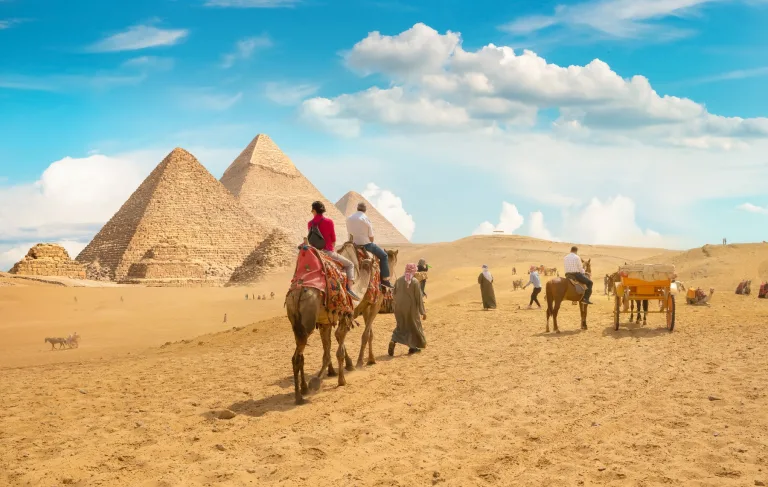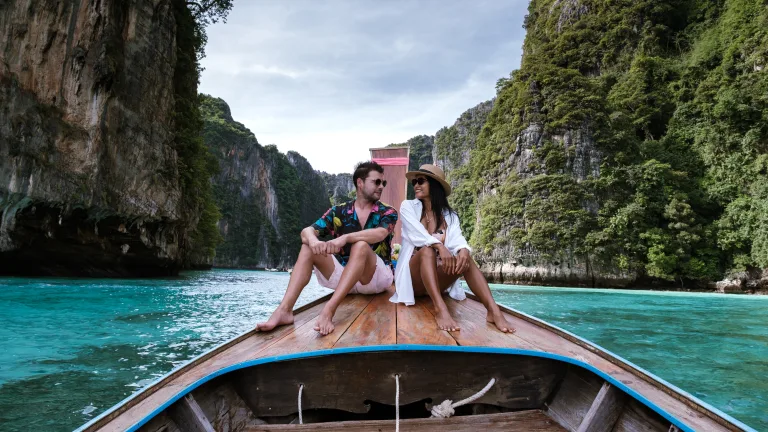
You are standing in front of the Colosseum, or the temples of Kyoto, or some waterfall in Patagonia that looked different in the photos. There are fourteen other people within arm’s reach. Someone is asking the guide to repeat something. Someone else is already on their phone. And you feel, with a quiet certainty that is almost embarrassing, completely alone.
This is the group tour paradox, and nobody in the brochure mentions it.
What the industry won’t tell you
Group travel is booming. The group travel industry was valued at around $391 billion in 2025 and is projected to nearly double to $689 billion by 2035. The pitch has always been the same: logistics handled, safety in numbers, instant community. What the pitch omits is the particular flavour of loneliness that comes from being surrounded by people you did not choose, moving at a pace you did not set, to places whose selection was somebody else’s idea of what matters.
It is not loneliness born of solitude. Solitude, as it turns out, is something different entirely. Solo travellers typically experience chosen solitude interspersed with social interactions, creating a self-directed balance that differs fundamentally from chronic loneliness, and studies consistently show they report high life satisfaction despite extended time alone. The loneliness of a group tour is almost the reverse of this: constant social obligation with none of the genuine contact.
Why it happens
The group tour is, structurally, a performance. Everyone is slightly on show. Conversation tends toward the safe and the surface. Where are you from. What do you do. Have you been to Thailand before. The intimacy that real travel produces, the kind that comes from shared inconvenience, from getting lost, from sitting somewhere unexpected and talking to a stranger for three hours, is largely designed out of the product.
Travelling alone allows access to thoughts and sensations that may be blocked when distracted by a second person or group. Scale that up to sixteen people and a scheduled departure time, and you have not just blocked those moments, you have replaced them with a timetable.
When travelling in a group, travellers are removed from the ability to make unilateral decisions, forced instead into the continual negotiation of group dynamics. Lunch is agreed by committee. The cathedral gets forty-five minutes whether it moves you or not. The person next to you on the coach is friendly enough, but you are both aware you will never see each other again, and the conversation has that faint quality of talking to someone on a long-haul flight: polite, forgettable, slightly depressing.
Who it suits and who it doesn’t
None of this means group tours are worthless. For certain destinations, certain age groups, and certain kinds of traveller, they are genuinely the right answer. Some places are logistically difficult to do independently, and some people travel specifically because they want the social structure a group provides. That is legitimate.
The problem is the mismatch. A significant portion of people who book group tours do so because they are nervous about going alone, or because someone told them it would be more fun, or because the solo supplement on the hotel was £400. They arrive expecting community and get proximity. Those are not the same thing.
There is a hunger that group travel, by its very architecture, cannot satiate: the need for experience that belongs entirely to you. Not everyone has this hunger. But enough people do that the group tour industry probably owes them a clearer warning label.
The alternative is not necessarily going alone
The honest reframe here is not “go solo or go home.” It is about understanding what you actually want from a trip before you book it. If the answer involves genuine spontaneity, real connection, or anything resembling an unscheduled afternoon, a traditional group tour will disappoint you. If the answer is competent logistics and something to do every day, it might be fine.
The sweet spot for many travellers is something in between: feeling lonely occasionally is normal, but solo travel often produces more meaningful interactions with locals. Hostels, short group activities, walking tours, and community events create opportunities for connection when you want it and solitude when you need it. You get the social contact without surrendering the hours that actually end up meaning something.
I did a two-week group tour around Peru in my late twenties. Good people, competent guide, objectively fine. I remember almost none of it with any clarity. What I remember is an afternoon I slipped away from the group in Cusco and spent two hours in a doorway eating something unidentifiable while it rained. Nobody was waiting for me. Nobody had an opinion about it. That is the thing about travel that group tours spend a lot of money helping you avoid.